• HOME
  • NEWS
  • EXPLORE
    • CAREER
      • Companies
      • Jobs
    • EVENTS
    • iGEM
      • News
      • Team
    • PHOTOS
    • VIDEO
    • WIKI
  • BLOG
  • COMMUNITY
    • FACEBOOK
    • INSTAGRAM
    • TWITTER
Saturday, August 15, 2026
BIOENGINEER.ORG
No Result
View All Result
  • Login
  • HOME
  • NEWS
  • EXPLORE
    • CAREER
      • Companies
      • Jobs
        • Lecturer
        • PhD Studentship
        • Postdoc
        • Research Assistant
    • EVENTS
    • iGEM
      • News
      • Team
    • PHOTOS
    • VIDEO
    • WIKI
  • BLOG
  • COMMUNITY
    • FACEBOOK
    • INSTAGRAM
    • TWITTER
  • HOME
  • NEWS
  • EXPLORE
    • CAREER
      • Companies
      • Jobs
        • Lecturer
        • PhD Studentship
        • Postdoc
        • Research Assistant
    • EVENTS
    • iGEM
      • News
      • Team
    • PHOTOS
    • VIDEO
    • WIKI
  • BLOG
  • COMMUNITY
    • FACEBOOK
    • INSTAGRAM
    • TWITTER
No Result
View All Result
Bioengineer.org
No Result
View All Result
Home NEWS Science News Biology

Plant researcher receives 1.5 million euros

Bioengineer by Bioengineer
May 8, 2019
in Biology
Reading Time: 2 mins read
0
IMAGE
Share on FacebookShare on TwitterShare on LinkedinShare on RedditShare on Telegram

New project on a carnivorous plant
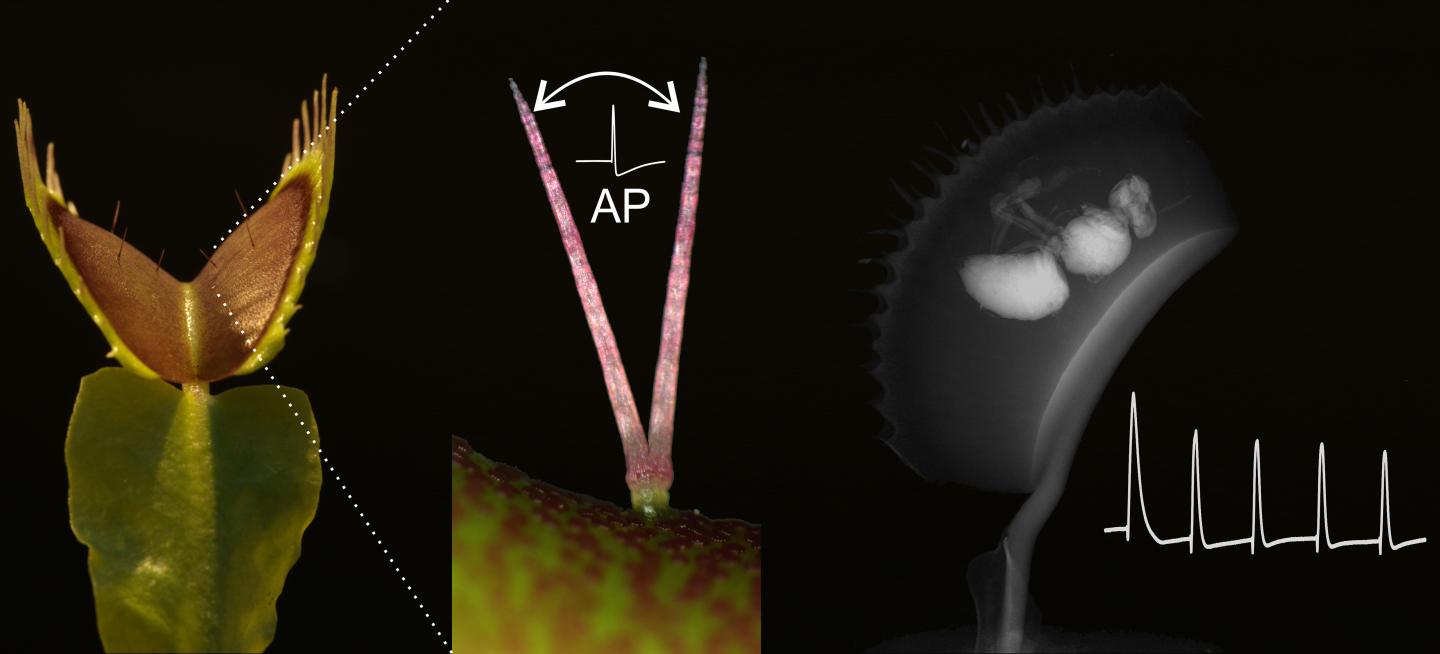
IMAGE

Credit: Soenke Scherzer

In its Reinhart Koselleck programme, the German Research Foundation (DFG) supports selected scientific projects. Anyone who wants to succeed with their application must be able to demonstrate outstanding scientific achievements and plan a particularly innovative project.

Rainer Hedrich from Julius-Maximilians-Universität Würzburg (JMU) in Bavaria, Germany, meets these criteria. Over the past few years, funded by an ERC grant from the European Research Council, the professor has repeatedly published new and exciting findings about the carnivorous Venus flytrap (Dionaea muscipula). One of his findings was that this plant can count up to five.

Now Hedrich wants to get even deeper into the mathematical abilities of Dionaea. He also wants to find out how and when plants learned to count during evolution. The DFG is providing him with around 1.5 million euros from the Koselleck programme. The JMU professor will be able to use the money freely for personnel and scientific equipment in line with the scientific progress of the project.

Venus flytrap counts electrical signals

The ability to estimate or count the number of objects is widespread in the animal kingdom. But also plants can do this, as Hedrich has shown with the Venus flytrap. The Venus flytrap lives in a nutrient-poor environment and catches insects and other animals as supplementary food with its folding trap. When an insect lands on the trap and touches special sensory hairs, electrical signals are triggered that spread across the surface of the cells. As soon as the moving prey triggers two signals, the trap closes and holds the victim – now the cycle of prey processing begins.

Hedrich’s team has shown that the Venus flytrap repeatedly counts and stores the number of electrical signals (action potentials) in the course of this cycle. With this information, the flytrap can estimate the size and nutrient content of the prey. “The plant is therefore constantly weighing up whether it is worth continuing the complex digestive cycle or not,” said Hedrich. In this way, it can balance the cost-benefit ratio of the prey catch.

Research programme of the project

Which molecular mechanisms underlie this frequency-dependent decision making? The Würzburg professor now hopes to investigate this in the Koselleck project. “In addition to the components of the action potential, we will also identify the cell types that generate and transmit the electrical signal,” said Hedrich.

The project also uses Dionaea mutants, in which the transmission of stimuli between electrical excitation and the rapid closing of the trap is disturbed. With their help, the core components of the plant’s “short-term memory” are to be identified. By comparing it with other carnivorous plants, the JMU researcher hopes to determine the cellular basis for the process of counting, hapto-electrical signal transduction and the decision-making based on this.

###

Media Contact
Dr. Rainer Hedrich
[email protected]

Original Source

https://go.uniwue.de/venuskosell

Tags: BiologyBiomechanics/BiophysicsCell BiologyEvolutionPlant Sciences
Share13Tweet8Share2ShareShareShare2

Related Posts

Synthetic pyrenoid reconstruction reveals EPYC1-driven carbon concentration mechanisms and evolution

Synthetic pyrenoid reconstruction reveals EPYC1-driven carbon concentration mechanisms and evolution

August 15, 2026
Endophytic Flavobacterium boosts root hairs and drought tolerance through ERF–CEP5 signaling

Endophytic Flavobacterium boosts root hairs and drought tolerance through ERF–CEP5 signaling

August 15, 2026

Photosystem II Reaction Centre Status Controls Non-Photochemical Quenching Rates in Plants

August 15, 2026

New method unlocks insights from preserved tissues

August 15, 2026
Please login to join discussion

POPULAR NEWS

  • Study maps early follicle oocyte proteins and cisplatin-induced changes in mice

    29 shares
    Share 12 Tweet 7
  • Synthetic pyrenoid reconstruction reveals EPYC1-driven carbon concentration mechanisms and evolution

    29 shares
    Share 12 Tweet 7
  • Air Pollution Linked to COVID-19 Pneumonia, Especially in Those With Heart Disease

    29 shares
    Share 12 Tweet 7
  • Decoding clinical masking in SAA-positive Parkinson’s disease with a peripheral diagnostic panel

    29 shares
    Share 12 Tweet 7

About

We bring you the latest biotechnology news from best research centers and universities around the world. Check our website.

Follow us

Recent News

Study maps early follicle oocyte proteins and cisplatin-induced changes in mice

Synthetic pyrenoid reconstruction reveals EPYC1-driven carbon concentration mechanisms and evolution

Air Pollution Linked to COVID-19 Pneumonia, Especially in Those With Heart Disease

Subscribe to Blog via Email

Enter your email address to subscribe to this blog and receive notifications of new posts by email.

Join 85 other subscribers
  • Contact Us

Bioengineer.org © Copyright 2023 All Rights Reserved.

Welcome Back!

Login to your account below

Forgotten Password?

Retrieve your password

Please enter your username or email address to reset your password.

Log In
No Result
View All Result
  • Homepages
    • Home Page 1
    • Home Page 2
  • News
  • National
  • Business
  • Health
  • Lifestyle
  • Science

Bioengineer.org © Copyright 2023 All Rights Reserved.