• HOME
  • NEWS
  • EXPLORE
    • CAREER
      • Companies
      • Jobs
    • EVENTS
    • iGEM
      • News
      • Team
    • PHOTOS
    • VIDEO
    • WIKI
  • BLOG
  • COMMUNITY
    • FACEBOOK
    • INSTAGRAM
    • TWITTER
Tuesday, November 17, 2026
BIOENGINEER.ORG
No Result
View All Result
  • Login
  • HOME
  • NEWS
  • EXPLORE
    • CAREER
      • Companies
      • Jobs
        • Lecturer
        • PhD Studentship
        • Postdoc
        • Research Assistant
    • EVENTS
    • iGEM
      • News
      • Team
    • PHOTOS
    • VIDEO
    • WIKI
  • BLOG
  • COMMUNITY
    • FACEBOOK
    • INSTAGRAM
    • TWITTER
No Result
View All Result
Bioengineer.org
No Result
View All Result
Home NEWS Science News Science

Half a face enough for recognition technology

Bioengineer by Bioengineer
May 1, 2019
in Science
Reading Time: 2 mins read
0
Share on FacebookShare on TwitterShare on LinkedinShare on RedditShare on Telegram

UK researchers achieve 100 percent recognition rates for half and three-quarter faces

Facial recognition technology works even when only half a face is visible, researchers from the University of Bradford have found.

Using artificial intelligence techniques, the team achieved 100 per cent recognition rates for both three-quarter and half faces. The study, published in Future Generation Computer Systems, is the first to use machine learning to test the recognition rates for different parts of the face.

Lead researcher, Professor Hassan Ugail from the University of Bradford said: “The ability humans have to recognise faces is amazing, but research has shown it starts to falter when we can only see parts of a face. Computers can already perform better than humans in recognising one face from a large number, so we wanted to see if they would be better at partial facial recognition as well.”

The team used a machine learning technique known as a ‘convolutional neural network’, drawing on a feature extraction model called VGG – one of the most popular and widely used for facial recognition.

They worked with a dataset containing multiple photos – 2800 in total – of 200 students and staff from FEI University in Brazil, with equal numbers of men and women.

For the first experiment, the team trained the model using only full facial images They then ran an experiment to see how well the computer was able to recognise faces, even when shown only part of them. The computer recognised full faces 100 per cent of the time, but the team also had 100% success with three-quarter faces and with the top or right half of the face. However, the bottom half of the face was only correctly recognised 60 per cent of the time and eyes and nose on their own, just 40 per cent.

They then ran the experiment again, after training the model using partial facial images as well. This time, the scores significantly improved for the bottom half of the face, for eyes and nose on their own and even for faces with no eyes and nose visible, achieving around 90% correct identification.

Individual facial parts, such as the nose, cheek, forehead or mouth had low recognition rates in both experiments.

The results are promising, according to Professor Hassan:

“We’ve now shown that it’s possible to have very accurate facial recognition from images that only show part of a face and we’ve identified which parts are most useful. This opens up greater possibilities for the use of the technology for security or crime prevention.

“Our experiments now need validating on a much larger dataset. However, in the future it’s likely that image databases used for facial recognition will need to include partial images as well, so that the models can be trained correctly to recognise a face even when not all of it is visible.”

###

Media Contact
Abigail Chard
abigail@campuspr.co.uk
http://dx.doi.org/10.1016/j.future.2019.04.025

Tags: Computer ScienceRobotry/Artificial IntelligenceSoftware EngineeringTechnology/Engineering/Computer ScienceTheory/Design
Share12Tweet8Share2ShareShareShare2

Related Posts

Five or more hours of smartphone usage per day may increase obesity

July 25, 2019
IMAGE

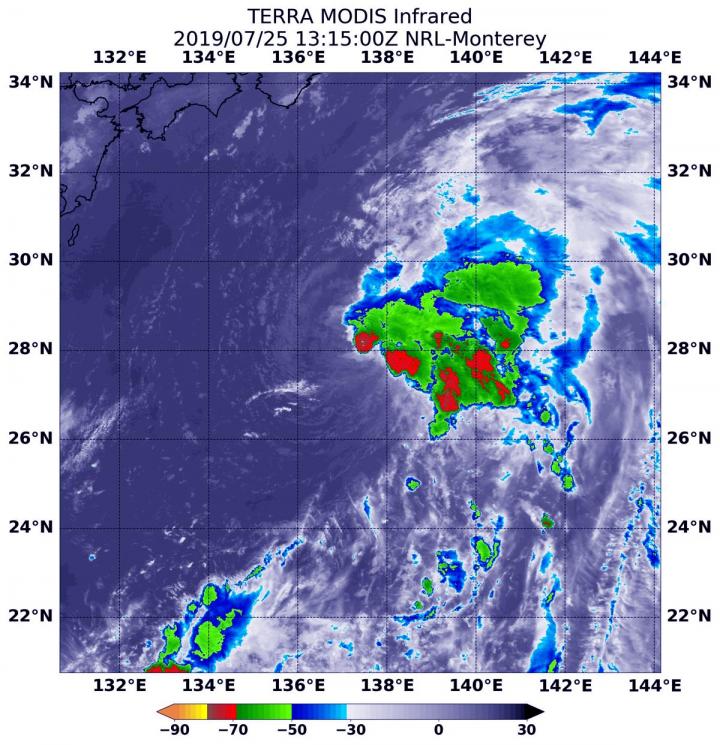
NASA’s terra satellite finds tropical storm 07W’s strength on the side

July 25, 2019

NASA finds one burst of energy in weakening Depression Dalila

July 25, 2019

Researcher’s innovative flood mapping helps water and emergency management officials

July 25, 2019
Please login to join discussion

POPULAR NEWS

  • Alloplastic Temporomandibular Joint Replacement Offers Uncertain Benefits After Mandibular Neoplasm Resection

    Alloplastic Temporomandibular Joint Replacement Offers Uncertain Benefits After Mandibular Neoplasm Resection

    29 shares
    Share 12 Tweet 7
  • Serum Mass Spectrometry Predicts Treatment Response in HER2-Positive Breast Cancer

    29 shares
    Share 12 Tweet 7
  • Polypharmacy Linked to Higher Odds of Sarcopenia in Older Adults

    29 shares
    Share 12 Tweet 7
  • Adapted Virtual Presence Tool Proves Feasible in Pilot Manikin Simulation Courses

    29 shares
    Share 12 Tweet 7

About

We bring you the latest biotechnology news from best research centers and universities around the world. Check our website.

Follow us

Recent News

Supplemental Intraocular Lenses Correct Pseudophakic Refractive Errors in Complex Eyes

PPM1H Loss Displaces Presynaptic Alpha-Synuclein Through LRRK2 Kinase Activity in Neurons

Hormone Antagonism Controls Pineapple Internal Browning Through Coordinated Transcriptional Activation

Subscribe to Blog via Email

Enter your email address to subscribe to this blog and receive notifications of new posts by email.

Join 88 other subscribers
  • Contact Us

Bioengineer.org © Copyright 2023 All Rights Reserved.

Welcome Back!

Login to your account below

Forgotten Password?

Retrieve your password

Please enter your username or email address to reset your password.

Log In
No Result
View All Result
  • Homepages
    • Home Page 1
    • Home Page 2
  • News
  • National
  • Business
  • Health
  • Lifestyle
  • Science

Bioengineer.org © Copyright 2023 All Rights Reserved.