• HOME
  • NEWS
  • EXPLORE
    • CAREER
      • Companies
      • Jobs
    • EVENTS
    • iGEM
      • News
      • Team
    • PHOTOS
    • VIDEO
    • WIKI
  • BLOG
  • COMMUNITY
    • FACEBOOK
    • INSTAGRAM
    • TWITTER
Tuesday, May 12, 2026
BIOENGINEER.ORG
No Result
View All Result
  • Login
  • HOME
  • NEWS
  • EXPLORE
    • CAREER
      • Companies
      • Jobs
        • Lecturer
        • PhD Studentship
        • Postdoc
        • Research Assistant
    • EVENTS
    • iGEM
      • News
      • Team
    • PHOTOS
    • VIDEO
    • WIKI
  • BLOG
  • COMMUNITY
    • FACEBOOK
    • INSTAGRAM
    • TWITTER
  • HOME
  • NEWS
  • EXPLORE
    • CAREER
      • Companies
      • Jobs
        • Lecturer
        • PhD Studentship
        • Postdoc
        • Research Assistant
    • EVENTS
    • iGEM
      • News
      • Team
    • PHOTOS
    • VIDEO
    • WIKI
  • BLOG
  • COMMUNITY
    • FACEBOOK
    • INSTAGRAM
    • TWITTER
No Result
View All Result
Bioengineer.org
No Result
View All Result
Home NEWS Science News Science

New way to ‘see’ objects accelerates the future of self-driving cars

Bioengineer by Bioengineer
April 23, 2019
in Science
Reading Time: 2 mins read
0
Share on FacebookShare on TwitterShare on LinkedinShare on RedditShare on Telegram

ITHACA, N.Y. – Researchers have discovered a simple, cost-effective, and accurate new method for equipping self-driving cars with the tools needed to perceive 3D objects in their path.

The laser sensors currently used to detect 3D objects in the paths of autonomous cars are bulky, ugly, expensive, energy-inefficient – and highly accurate.

These Light Detection and Ranging (LiDAR) sensors are affixed to cars’ roofs, where they increase wind drag, a particular disadvantage for electric cars. They can add around $10,000 to a car’s cost. Despite their drawbacks, most experts have considered LiDAR sensors the only plausible way for self-driving vehicles to safely perceive pedestrians, cars and other hazards on the road.

Now, Cornell researchers have discovered that a simpler method, using two inexpensive cameras on either side of the windshield, can detect objects with nearly LiDAR’s accuracy and at a fraction of the cost. The researchers found that analyzing the captured images from a bird’s eye view rather than the more traditional frontal view more than tripled their accuracy, making stereo cameras a viable and low-cost alternative to LiDAR.

“One of the essential problems in self-driving cars is to identify objects around them – obviously that’s crucial for a car to navigate its environment,” said Kilian Weinberger, associate professor of computer science and senior author of the paper, which will be presented at the 2019 Conference on Computer Vision and Pattern Recognition, June 15-21 in Long Beach, California.

“The common belief is that you couldn’t make self-driving cars without LiDARs,” Weinberger said. “We’ve shown, at least in principle, that it’s possible.”

The first author of the paper is Yan Wang, doctoral student in computer science.

Ultimately, Weinberger said, stereo cameras could potentially be used as the primary way of identifying objects in lower-cost cars, or as a backup method in higher-end cars that are also equipped with LiDAR.

###

The research was partly supported by grants from the National Science Foundation, the Office of Naval Research and the Bill and Melinda Gates Foundation.

Cornell University has dedicated television and audio studios available for media interviews supporting full HD, ISDN and web-based platforms.

Media Contact
Jeff Tyson
[email protected]
http://news.cornell.edu/stories/2019/04/new-way-see-objects-accelerates-future-self-driving-cars

Tags: Computer ScienceRobotry/Artificial IntelligenceTechnology/Engineering/Computer ScienceVehicles
Share12Tweet8Share2ShareShareShare2

Related Posts

Five or more hours of smartphone usage per day may increase obesity

July 25, 2019
IMAGE

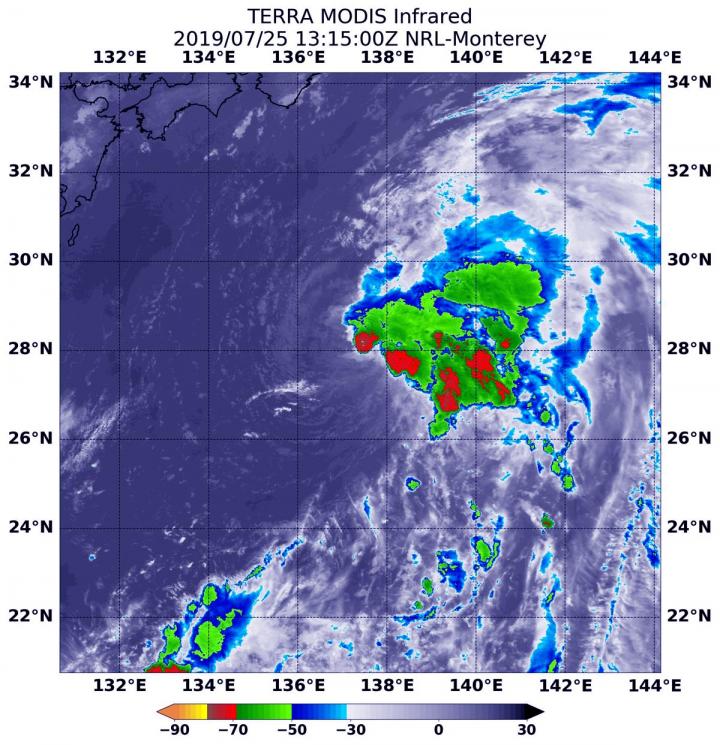
NASA’s terra satellite finds tropical storm 07W’s strength on the side

July 25, 2019

NASA finds one burst of energy in weakening Depression Dalila

July 25, 2019

Researcher’s innovative flood mapping helps water and emergency management officials

July 25, 2019
Please login to join discussion

POPULAR NEWS

  • Research Indicates Potential Connection Between Prenatal Medication Exposure and Elevated Autism Risk

    841 shares
    Share 336 Tweet 210
  • New Study Reveals Plants Can Detect the Sound of Rain

    728 shares
    Share 290 Tweet 182
  • Salmonella Haem Blocks Macrophages, Boosts Infection

    62 shares
    Share 25 Tweet 16
  • Breastmilk Balances E. coli and Beneficial Bacteria in Infant Gut Microbiomes

    57 shares
    Share 23 Tweet 14

About

We bring you the latest biotechnology news from best research centers and universities around the world. Check our website.

Follow us

Recent News

Humans and Zebra Finches Share Similar Speech Learning Techniques #ASA190

New Study Uncovers How Fungal Parasites Attack Strawberries and Raspberries

City of Hope Researchers to Present Groundbreaking Immunotherapy and Precision Medicine Advances Across Multiple Cancer Types at ASCO 2026

Subscribe to Blog via Email

Enter your email address to subscribe to this blog and receive notifications of new posts by email.

Join 82 other subscribers
  • Contact Us

Bioengineer.org © Copyright 2023 All Rights Reserved.

Welcome Back!

Login to your account below

Forgotten Password?

Retrieve your password

Please enter your username or email address to reset your password.

Log In
No Result
View All Result
  • Homepages
    • Home Page 1
    • Home Page 2
  • News
  • National
  • Business
  • Health
  • Lifestyle
  • Science

Bioengineer.org © Copyright 2023 All Rights Reserved.