• HOME
  • NEWS
  • EXPLORE
    • CAREER
      • Companies
      • Jobs
    • EVENTS
    • iGEM
      • News
      • Team
    • PHOTOS
    • VIDEO
    • WIKI
  • BLOG
  • COMMUNITY
    • FACEBOOK
    • INSTAGRAM
    • TWITTER
Thursday, April 2, 2026
BIOENGINEER.ORG
No Result
View All Result
  • Login
  • HOME
  • NEWS
  • EXPLORE
    • CAREER
      • Companies
      • Jobs
        • Lecturer
        • PhD Studentship
        • Postdoc
        • Research Assistant
    • EVENTS
    • iGEM
      • News
      • Team
    • PHOTOS
    • VIDEO
    • WIKI
  • BLOG
  • COMMUNITY
    • FACEBOOK
    • INSTAGRAM
    • TWITTER
  • HOME
  • NEWS
  • EXPLORE
    • CAREER
      • Companies
      • Jobs
        • Lecturer
        • PhD Studentship
        • Postdoc
        • Research Assistant
    • EVENTS
    • iGEM
      • News
      • Team
    • PHOTOS
    • VIDEO
    • WIKI
  • BLOG
  • COMMUNITY
    • FACEBOOK
    • INSTAGRAM
    • TWITTER
No Result
View All Result
Bioengineer.org
No Result
View All Result
Home NEWS Science News

It’s not a bird! It’s not a plane! It’s the fastest flying mammal, says UT study

Bioengineer by Bioengineer
November 9, 2016
in Science News
Reading Time: 2 mins read
0
Share on FacebookShare on TwitterShare on LinkedinShare on RedditShare on Telegram
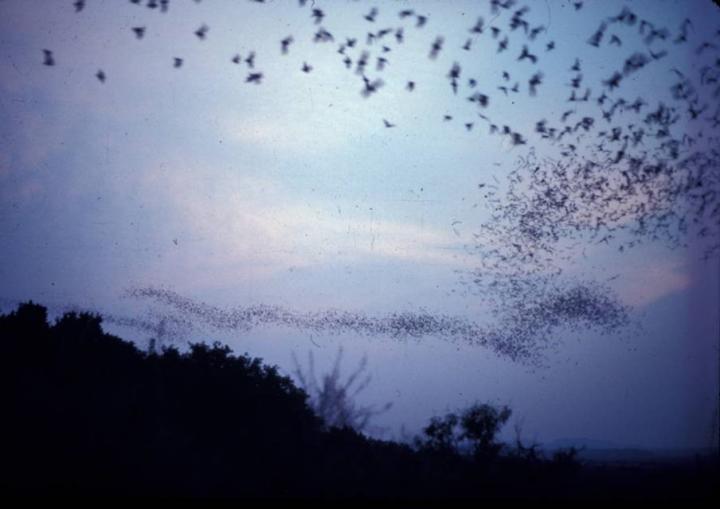
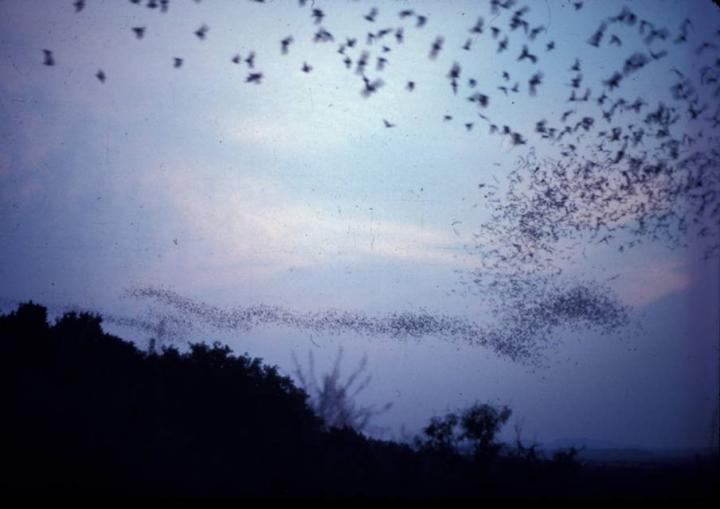
IMAGE

Credit: Gary McCracken

KNOXVILLE– When most people think of animals moving at high speed, they envision cheetahs or swiftly diving raptors. They can now add the Brazilian free-tailed bat — a tiny nocturnal mammal — to the list.

A new study from the University of Tennessee, Knoxville, shows that the Brazilian free-tailed bat can achieve flight speeds faster than those previously documented for any bat or bird. They are achieving short bursts of ground speeds of up to 100 miles per hour.

The research was published today in the journal Royal Society Open Science. The study's lead author is Gary McCracken, UT professor of ecology and evolutionary biology and one of the world's leading experts on bats.

Other collaborators include researchers from the Max Planck Institute for Ornithology and the University of Konstanz, both in Germany, and from Boston University and Brown University.

Much of the current literature has indicated that birds fly faster and bats are slower and more maneuverable. The new study demonstrates otherwise.

The researchers conducted the study in southwestern Texas using a novel airplane tracking method. They caught seven Brazilian free-tailed bats, each weighing 11 to 12 grams, as they emerged from the entrance of the Frio Cave at night. They then attached 0.5-gram radio transmitters to their backs using surgical glue.

Until now, the fastest bird records were collected during short flight segments using tracking radar and high-speed video. McCracken and his collaborators used an airplane to follow the complete flight track of the bats. They followed one bat per night.

The researchers' models indicate that tail winds did not assist the bats' flight speed. They observed that the bats did exactly what airplanes and birds do, depending on wind conditions.

"When they have a headwind, they fly faster. When they have a tailwind, they slow up," he said. "This is exactly what has been demonstrated in other flight machines, from airplanes to birds."

The study results suggest a reevaluation of the performance abilities and capabilities of bats, McCracken said, noting that their flight performance has been underappreciated.

###

CONTACT:

Lola Alapo (865-974-3993, [email protected])

Media Contact

Lola Alapo
[email protected]
865-974-3993
@UTKnoxville

UT System

Share12Tweet8Share2ShareShareShare2

Related Posts

Lentinus edodes-Derived β-Glucan Suppresses Human Cervical Cancer Progression via DMBT1 Pathway

April 2, 2026
Advanced Sensors Reduce Costs in Genetic Disorder Research

Advanced Sensors Reduce Costs in Genetic Disorder Research

April 2, 2026

Stard7: An Emerging but Mysterious Factor in Colorectal Cancer

April 2, 2026

Advancing Blood Purification: Innovations Beyond Traditional Dialysis

April 2, 2026
Please login to join discussion

POPULAR NEWS

  • blank

    Revolutionary AI Model Enhances Precision in Detecting Food Contamination

    96 shares
    Share 38 Tweet 24
  • Imagine a Social Media Feed That Challenges Your Views Instead of Reinforcing Them

    1007 shares
    Share 398 Tweet 249
  • Promising Outcomes from First Clinical Trials of Gene Regulation in Epilepsy

    51 shares
    Share 20 Tweet 13
  • Popular Anti-Aging Compound Linked to Damage in Corpus Callosum, Study Finds

    44 shares
    Share 18 Tweet 11

About

We bring you the latest biotechnology news from best research centers and universities around the world. Check our website.

Follow us

Recent News

Lentinus edodes-Derived β-Glucan Suppresses Human Cervical Cancer Progression via DMBT1 Pathway

Advanced Sensors Reduce Costs in Genetic Disorder Research

Stard7: An Emerging but Mysterious Factor in Colorectal Cancer

Subscribe to Blog via Email

Enter your email address to subscribe to this blog and receive notifications of new posts by email.

Join 78 other subscribers
  • Contact Us

Bioengineer.org © Copyright 2023 All Rights Reserved.

Welcome Back!

Login to your account below

Forgotten Password?

Retrieve your password

Please enter your username or email address to reset your password.

Log In
No Result
View All Result
  • Homepages
    • Home Page 1
    • Home Page 2
  • News
  • National
  • Business
  • Health
  • Lifestyle
  • Science

Bioengineer.org © Copyright 2023 All Rights Reserved.