• HOME
  • NEWS
  • EXPLORE
    • CAREER
      • Companies
      • Jobs
    • EVENTS
    • iGEM
      • News
      • Team
    • PHOTOS
    • VIDEO
    • WIKI
  • BLOG
  • COMMUNITY
    • FACEBOOK
    • INSTAGRAM
    • TWITTER
Tuesday, May 12, 2026
BIOENGINEER.ORG
No Result
View All Result
  • Login
  • HOME
  • NEWS
  • EXPLORE
    • CAREER
      • Companies
      • Jobs
        • Lecturer
        • PhD Studentship
        • Postdoc
        • Research Assistant
    • EVENTS
    • iGEM
      • News
      • Team
    • PHOTOS
    • VIDEO
    • WIKI
  • BLOG
  • COMMUNITY
    • FACEBOOK
    • INSTAGRAM
    • TWITTER
  • HOME
  • NEWS
  • EXPLORE
    • CAREER
      • Companies
      • Jobs
        • Lecturer
        • PhD Studentship
        • Postdoc
        • Research Assistant
    • EVENTS
    • iGEM
      • News
      • Team
    • PHOTOS
    • VIDEO
    • WIKI
  • BLOG
  • COMMUNITY
    • FACEBOOK
    • INSTAGRAM
    • TWITTER
No Result
View All Result
Bioengineer.org
No Result
View All Result
Home NEWS Science News Chemistry

Engineering researcher uses network science to understand how materials work

Bioengineer by Bioengineer
April 18, 2019
in Chemistry
Reading Time: 3 mins read
0
IMAGE
Share on FacebookShare on TwitterShare on LinkedinShare on RedditShare on Telegram

IMAGE

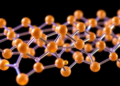
Credit: Courtesy of Florida State University

TALLAHASSEE, Fla. — Network science is how mathematicians and software designers construct complicated social networks like Facebook. But a group of Florida State University researchers has found that these equations can tell engineers a lot about the composition of different materials.

Using network science — part of a larger mathematical field called graph theory — FAMU-FSU Professor of Mechanical Engineering William Oates, former graduate student Peter Woerner and Associate Professor Kunihiko “Sam” Taira mapped long range atomic forces onto an incredibly complex graph to simulate macroscopic material behavior.

The group then developed and applied a method that greatly simplifies the graph so that other researchers could replicate the process with other materials.

The work is published in the journal PLOS ONE.

Oates said using graph theory allows researchers to better understand how the molecules that compose a material work on a macroscopic level.

“All atoms have electrons and nuclei with positive charges, they create forces between the ions,” Oates said. “Trying to describe that as a global structure is challenging. There are methods to model molecules, but the challenge is how to describe macroscopic behavior. Knowing how the molecules interact is only half of the problem. Network science provides a unique bridge that allows us to take molecule dynamics to the macroscopic world.”

Ultimately, researchers want to understand all the atomic interactions in a given material so that they can understand how and why materials behave in certain ways, Oates said. But when you keep track of all the atomic interactions in a material, it becomes a huge problem to solve on a computer.

Oates’ group worked to make it a much smaller problem.

In looking at a graph that shows the atoms in a material, Oates said to think of atoms and the forces between them as beads and springs. The atomic charges connect these beads, and they vibrate in complicated ways — some faster and some slower.

For engineering purposes, it wasn’t necessary to keep track of all the forces. So, the group applied a method to figure out how the forces in the graph could be reconnected without creating errors.

Using that knowledge, their algorithm deleted certain atomic forces within the graph and rewired it so they kept important information while making it easier to compute macroscopic behavior.

“You cut out the unimportant stuff and keep the important parts to make the simulations run substantially faster,” Oates said. “That was really the goal — to simplify it in order to accelerate computational materials research.”

Oates’ research is funded by the National Science Foundation’s EAGER program, a one-year infusion of funding that allows a faculty member to pursue a high-risk but potentially transformative research idea.

This first study was more of a proof of concept, he said. He will now look at whether this graph theoretic method can tell researchers how to make a material more efficient or how it might transport energy faster.

“We might be able to use these network models to help facilitate that design process,” Oates said.

###

Aditya Nair, a doctoral student in the FAMU-FSU College of Engineering, also contributed to this study.

Media Contact
Kathleen Haughney
[email protected]

Original Source

https://news.fsu.edu/news/science-technology/2019/04/18/a-social-equation-engineering-researcher-uses-network-science-to-understand-how-materials-work/

Tags: Atomic/Molecular/Particle PhysicsChemistry/Physics/Materials SciencesMaterials
Share12Tweet8Share2ShareShareShare2

Related Posts

Humans and Zebra Finches Share Similar Speech Learning Techniques #ASA190 — Chemistry

Humans and Zebra Finches Share Similar Speech Learning Techniques #ASA190

May 11, 2026
Unveiling Dark Matter Through Molecular Insights — Chemistry

Unveiling Dark Matter Through Molecular Insights

May 11, 2026

From Touch to Sight: A Bioinspired Multisensory Framework Endows Robots with Human-Like Perception

May 11, 2026

Announcing the 2026 Carbon Future Young Investigator Award Winners

May 11, 2026
Please login to join discussion

POPULAR NEWS

  • Research Indicates Potential Connection Between Prenatal Medication Exposure and Elevated Autism Risk

    841 shares
    Share 336 Tweet 210
  • New Study Reveals Plants Can Detect the Sound of Rain

    728 shares
    Share 290 Tweet 182
  • Salmonella Haem Blocks Macrophages, Boosts Infection

    62 shares
    Share 25 Tweet 16
  • Breastmilk Balances E. coli and Beneficial Bacteria in Infant Gut Microbiomes

    57 shares
    Share 23 Tweet 14

About

We bring you the latest biotechnology news from best research centers and universities around the world. Check our website.

Follow us

Recent News

Humans and Zebra Finches Share Similar Speech Learning Techniques #ASA190

New Study Uncovers How Fungal Parasites Attack Strawberries and Raspberries

City of Hope Researchers to Present Groundbreaking Immunotherapy and Precision Medicine Advances Across Multiple Cancer Types at ASCO 2026

Subscribe to Blog via Email

Enter your email address to subscribe to this blog and receive notifications of new posts by email.

Join 82 other subscribers
  • Contact Us

Bioengineer.org © Copyright 2023 All Rights Reserved.

Welcome Back!

Login to your account below

Forgotten Password?

Retrieve your password

Please enter your username or email address to reset your password.

Log In
No Result
View All Result
  • Homepages
    • Home Page 1
    • Home Page 2
  • News
  • National
  • Business
  • Health
  • Lifestyle
  • Science

Bioengineer.org © Copyright 2023 All Rights Reserved.