• HOME
  • NEWS
  • EXPLORE
    • CAREER
      • Companies
      • Jobs
    • EVENTS
    • iGEM
      • News
      • Team
    • PHOTOS
    • VIDEO
    • WIKI
  • BLOG
  • COMMUNITY
    • FACEBOOK
    • INSTAGRAM
    • TWITTER
Monday, August 31, 2026
BIOENGINEER.ORG
No Result
View All Result
  • Login
  • HOME
  • NEWS
  • EXPLORE
    • CAREER
      • Companies
      • Jobs
        • Lecturer
        • PhD Studentship
        • Postdoc
        • Research Assistant
    • EVENTS
    • iGEM
      • News
      • Team
    • PHOTOS
    • VIDEO
    • WIKI
  • BLOG
  • COMMUNITY
    • FACEBOOK
    • INSTAGRAM
    • TWITTER
  • HOME
  • NEWS
  • EXPLORE
    • CAREER
      • Companies
      • Jobs
        • Lecturer
        • PhD Studentship
        • Postdoc
        • Research Assistant
    • EVENTS
    • iGEM
      • News
      • Team
    • PHOTOS
    • VIDEO
    • WIKI
  • BLOG
  • COMMUNITY
    • FACEBOOK
    • INSTAGRAM
    • TWITTER
No Result
View All Result
Bioengineer.org
No Result
View All Result
Home NEWS Science News

New study: Male chimpanzees can be players and good fathers

Bioengineer by Bioengineer
November 9, 2016
in Science News
Reading Time: 2 mins read
0
Share on FacebookShare on TwitterShare on LinkedinShare on RedditShare on Telegram
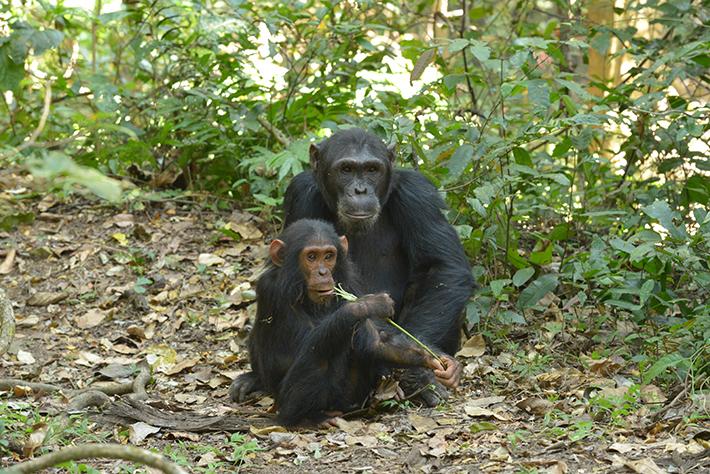
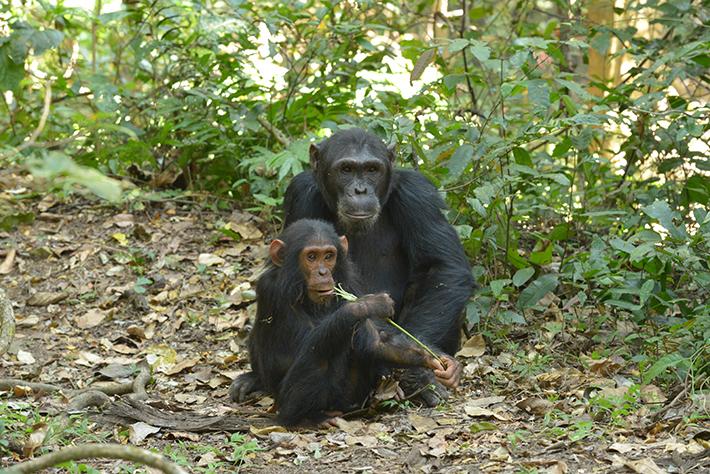
IMAGE

Credit: Joel Bray, Arizona State University

WASHINGTON (Nov. 8, 2016)–New research suggests that male chimpanzees are more invested in protecting their own offspring than previously thought. Researchers found male chimpanzees spend time with non-mating female chimpanzees that are caring for their offspring. This finding is unexpected since the species is highly promiscuous and researchers previously questioned whether male chimpanzees could recognize their offspring.

Because males spending time with nursing mothers did not increase the likelihood that they would be the father of that mother's next infant, the findings support the paternal effort hypothesis, in which males associate more with mothers in order to protect their offspring, rather than curry favor with the female. The research contributes to the broader anthropological question of why human fathers invest so much in offspring.

The authors of the paper, "Chimpanzee Fathers Bias Their Behavior Toward Their Offspring," conducted their research based on long-term data from Gombe Stream National Park in Tanzania where long-term data collection is supported by the Jane Goodall Institute. Using more than 25 years of behavioral data digitized at the University of Minnesota, Duke University, the Lincoln Park Zoo, Franklin & Marshall College and The George Washington University, the researchers examined patterns based on 17 father chimpanzees and 49 mother-infant pairs to see if the males could recognize their offspring and if the male's behavior was different around them. The researchers found the males associated with mothers of their offspring early in infancy and interacted with their infants more than expected.

"As anthropologists, we want to understand what patterns could have existed early in human evolution that help explain how human behavior evolved," said Carson Murray, assistant professor of anthropology at the George Washington University and lead author of the paper. "This research suggests that males may sometimes prioritize relationships with their offspring rather than with potential mates. For a species without pair-bonds where it was assumed fathers didn't know which infants were their own, this is an important finding."

The significance of the finding lies in the evidence that chimpanzees, one of human's closest living relatives, not only have paternal recognition but also invested in offspring rather than only focusing on future mating effort. The researchers found the males would spend time grooming and caring for their offspring.

"Our findings are not only further evidence that chimpanzee fathers recognize their offspring in a promiscuous species, but also that fathers behave differently around their offspring," said Margaret Stanton, postdoctoral scientist at GW's Center for the Advanced Study of Human Paleobiology and co-author of the paper.

The scientists stress that while the study is an important piece of research, it does not answer the overall question of how human paternal behavior evolved and is instead one piece of the anthropological puzzle.

###

The research was published in Royal Society Open Science on Wednesday.

This work was supported by federal grants from the National Institutes of Health (R00HD057992, R01-AI058715), and the National Science Foundation (DBS-9021946, SBR-9319909, BCS-0452315, IIS-0431141, BSC-0648481 and IOS LTREB-1052693).

Media Contact

Emily Grebenstein
[email protected]
202-994-3087
@GWtweets

http://www.gwu.edu

Share12Tweet8Share2ShareShareShare2

Related Posts

Development of a machine-learning risk stratification tool for vasoactive medication need after two-bolus fluid resuscitation in pediatric suspected sepsis

Development of a machine-learning risk stratification tool for vasoactive medication need after two-bolus fluid resuscitation in pediatric suspected sepsis

August 31, 2026
Method for quantification of microplastic release from plastic-based materials during weathering

Method for quantification of microplastic release from plastic-based materials during weathering

August 31, 2026

Machine Learning Model Development and Evaluation for Non-contact Lower Limb Injury Risk Prediction in Elite Male Rugby Union: A Multi-team, Multi-season Analysis

August 31, 2026

Gastrointestinal Parasitism in Cattle and Water Buffaloes in Pakistan: Prevalence and Associated Risk Factors

August 31, 2026
Please login to join discussion

POPULAR NEWS

  • Development of a machine-learning risk stratification tool for vasoactive medication need after two-bolus fluid resuscitation in pediatric suspected sepsis

    29 shares
    Share 12 Tweet 7
  • Method for quantification of microplastic release from plastic-based materials during weathering

    29 shares
    Share 12 Tweet 7
  • Machine Learning Model Development and Evaluation for Non-contact Lower Limb Injury Risk Prediction in Elite Male Rugby Union: A Multi-team, Multi-season Analysis

    29 shares
    Share 12 Tweet 7
  • Gastrointestinal Parasitism in Cattle and Water Buffaloes in Pakistan: Prevalence and Associated Risk Factors

    29 shares
    Share 12 Tweet 7

About

BIOENGINEER.ORG

We bring you the latest biotechnology news from best research centers and universities around the world. Check our website.

Follow us

Recent News

Development of a machine-learning risk stratification tool for vasoactive medication need after two-bolus fluid resuscitation in pediatric suspected sepsis

Method for quantification of microplastic release from plastic-based materials during weathering

Machine Learning Model Development and Evaluation for Non-contact Lower Limb Injury Risk Prediction in Elite Male Rugby Union: A Multi-team, Multi-season Analysis

Subscribe to Blog via Email

Enter your email address to subscribe to this blog and receive notifications of new posts by email.

Join 85 other subscribers
  • Contact Us

Bioengineer.org © Copyright 2023 All Rights Reserved.

Welcome Back!

Login to your account below

Forgotten Password?

Retrieve your password

Please enter your username or email address to reset your password.

Log In
No Result
View All Result
  • Homepages
    • Home Page 1
    • Home Page 2
  • News
  • National
  • Business
  • Health
  • Lifestyle
  • Science

Bioengineer.org © Copyright 2023 All Rights Reserved.