• HOME
  • NEWS
  • EXPLORE
    • CAREER
      • Companies
      • Jobs
    • EVENTS
    • iGEM
      • News
      • Team
    • PHOTOS
    • VIDEO
    • WIKI
  • BLOG
  • COMMUNITY
    • FACEBOOK
    • INSTAGRAM
    • TWITTER
Monday, January 12, 2026
BIOENGINEER.ORG
No Result
View All Result
  • Login
  • HOME
  • NEWS
  • EXPLORE
    • CAREER
      • Companies
      • Jobs
        • Lecturer
        • PhD Studentship
        • Postdoc
        • Research Assistant
    • EVENTS
    • iGEM
      • News
      • Team
    • PHOTOS
    • VIDEO
    • WIKI
  • BLOG
  • COMMUNITY
    • FACEBOOK
    • INSTAGRAM
    • TWITTER
  • HOME
  • NEWS
  • EXPLORE
    • CAREER
      • Companies
      • Jobs
        • Lecturer
        • PhD Studentship
        • Postdoc
        • Research Assistant
    • EVENTS
    • iGEM
      • News
      • Team
    • PHOTOS
    • VIDEO
    • WIKI
  • BLOG
  • COMMUNITY
    • FACEBOOK
    • INSTAGRAM
    • TWITTER
No Result
View All Result
Bioengineer.org
No Result
View All Result
Home NEWS Science News Health

PSU study shows green roofs could reduce indoor air pollution

Bioengineer by Bioengineer
April 10, 2019
in Health
Reading Time: 2 mins read
0
IMAGE
Share on FacebookShare on TwitterShare on LinkedinShare on RedditShare on Telegram

IMAGE

Credit: Portland State University

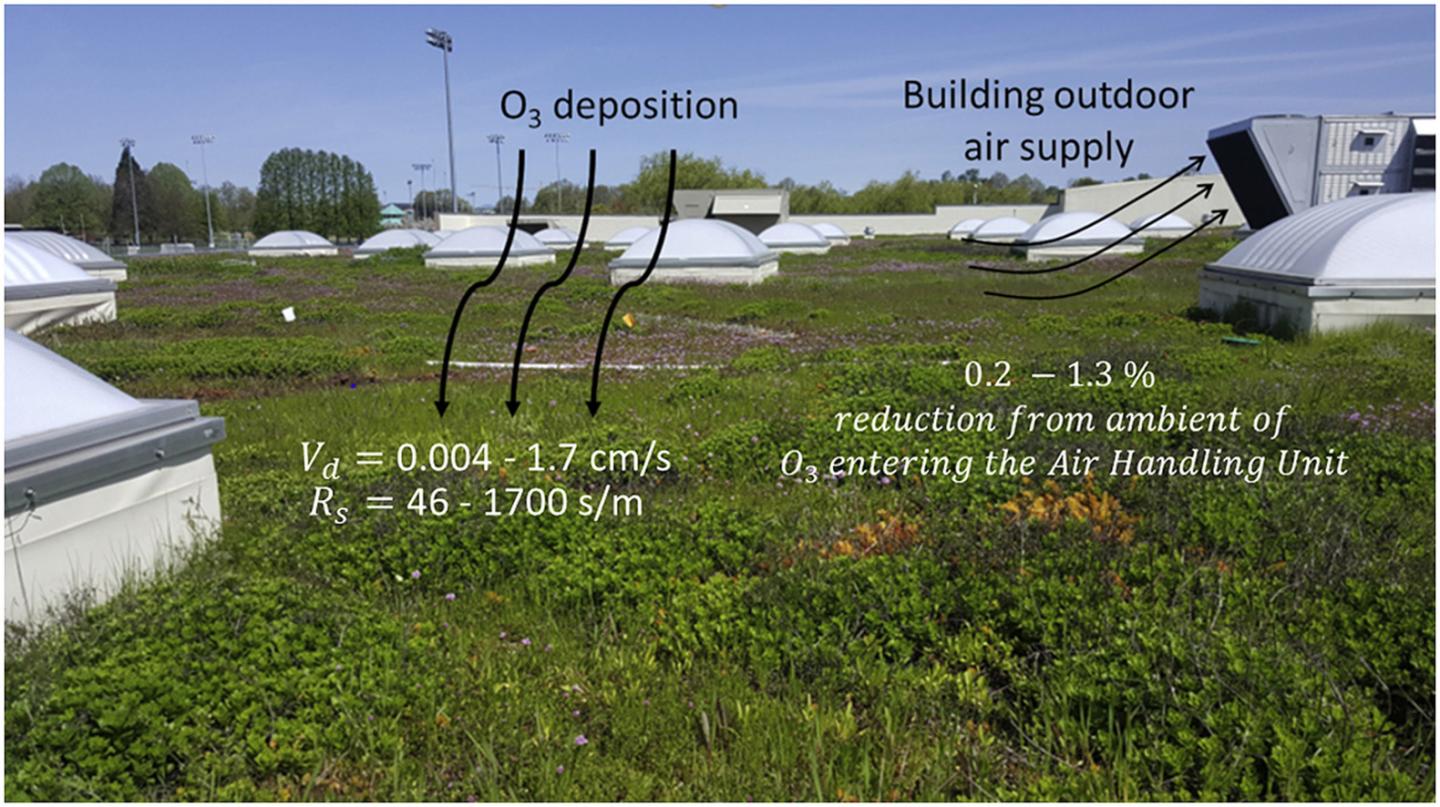
Green roofs – roofs that are planted with vegetation — may improve the indoor air quality of commercial buildings by cutting the amount of ozone coming into the buildings from the outside, according to new research from Portland State University.

The findings add to the already known environmental benefits of green roofs, including reducing carbon dioxide, decreasing storm water runoff and cutting down on urban heat, according to PSU researchers.

The researchers from PSU’s departments of Mechanical and Materials Engineering, Biology and the university’s Honors College, set up measuring devices on the roof of a big-box retail store in North Portland that was split between a green roof and a more conventional white membrane roof.

They measured the air coming into the building from outdoor intake vents, and found that the air coming in from the green roof area had modestly lower ozone levels than the air coming in from the unplanted area. They found that the vegetation trapped and filtered the ozone in the outdoor air.

The trapping effect is a process known as dry deposition, in which airborne particles collect or deposit themselves on solid surfaces. It’s a natural process that is key to removing pollutants from the atmosphere.

The study was conducted over a two-day period. The authors said the findings warrant a longer-term study – one that could include measuring other pollutants as well as ozone.

###

The study was published in the March 15 edition of Building and Environment.

About Portland State University

As Oregon’s only urban public research university, Portland State offers tremendous opportunity to over 27,000 students from all backgrounds. Our mission to “let knowledge serve the city” reflects our dedication to finding creative, sustainable solutions to local and global problems. Our location in the heart of Portland, one of America’s most dynamic cities, gives our students unmatched access to career connections and an internationally acclaimed culture scene. U.S. News & World Report ranks PSU as Oregon’s most innovative university and among the most innovative in the nation.

Media Contact
Todd Rosenstiel
[email protected]

Original Source

https://www.pdx.edu/syndication/psu-study-shows-green-roofs-could-reduce-indoor-air-pollution

Related Journal Article

http://dx.doi.org/10.1016/j.buildenv.2019.01.023

Tags: Atmospheric ChemistryAtmospheric ScienceBiomechanics/BiophysicsEcology/EnvironmentMolecular BiologyPlant SciencesPollution/RemediationPublic Health
Share12Tweet8Share2ShareShareShare2

Related Posts

Senior Nursing Students Encounter End-of-Life Experiences

January 11, 2026

Kawasaki Disease Linked to Hepatitis and Torque Teno Virus

January 11, 2026

Developing Efficient Protocols for Respiratory Virus Biobank

January 11, 2026

Young Male Refugees’ Mental and Sexual Health Insights

January 11, 2026
Please login to join discussion

POPULAR NEWS

  • Enhancing Spiritual Care Education in Nursing Programs

    154 shares
    Share 62 Tweet 39
  • PTSD, Depression, Anxiety in Childhood Cancer Survivors, Parents

    146 shares
    Share 58 Tweet 37
  • Robotic Ureteral Reconstruction: A Novel Approach

    66 shares
    Share 26 Tweet 17
  • Impact of Vegan Diet and Resistance Exercise on Muscle Volume

    47 shares
    Share 19 Tweet 12

About

We bring you the latest biotechnology news from best research centers and universities around the world. Check our website.

Follow us

Recent News

Senior Nursing Students Encounter End-of-Life Experiences

Kawasaki Disease Linked to Hepatitis and Torque Teno Virus

Developing Efficient Protocols for Respiratory Virus Biobank

Subscribe to Blog via Email

Success! An email was just sent to confirm your subscription. Please find the email now and click 'Confirm' to start subscribing.

Join 71 other subscribers
  • Contact Us

Bioengineer.org © Copyright 2023 All Rights Reserved.

Welcome Back!

Login to your account below

Forgotten Password?

Retrieve your password

Please enter your username or email address to reset your password.

Log In
No Result
View All Result
  • Homepages
    • Home Page 1
    • Home Page 2
  • News
  • National
  • Business
  • Health
  • Lifestyle
  • Science

Bioengineer.org © Copyright 2023 All Rights Reserved.