Credit: GU
FRANKFURT. Microbes are already used on a wide scale for the production of fuels and base chemicals, but for this most of them have to be "fed" with sugar. However, since sugar-based biotechnology finds itself in competition with food production, it is faced with increasingly fierce criticism. Carbon dioxide has meanwhile become the focus of attention as an alternative raw material for biotechnological processes. Goethe University Frankfurt has now taken charge of a collaborative European project, the aim of which is to advance the development of processes for microbial, CO2-based biotechnology. The project will be funded over the next three years with two million Euro.
"This application-oriented work is the logical continuation of our successful endeavours over many years to understand the metabolism of CO2-reducing acetogenic bacteria. We can now start to steer their metabolism in such a way that they produce valuable substances and fuels which are interesting for mankind", says Professor Volker Müller, professor at the Institute of Molecular Biosciences of Goethe University Frankfurt. He is coordinating this transnational project in the framework of the "Industrial Biotechnology" European Research Area Network (ERA-NET), within which the German research groups are financed by the Federal Ministry of Education and Research. This means that Goethe University Frankfurt now plays a pivotal role in the development of a next-generation technology.
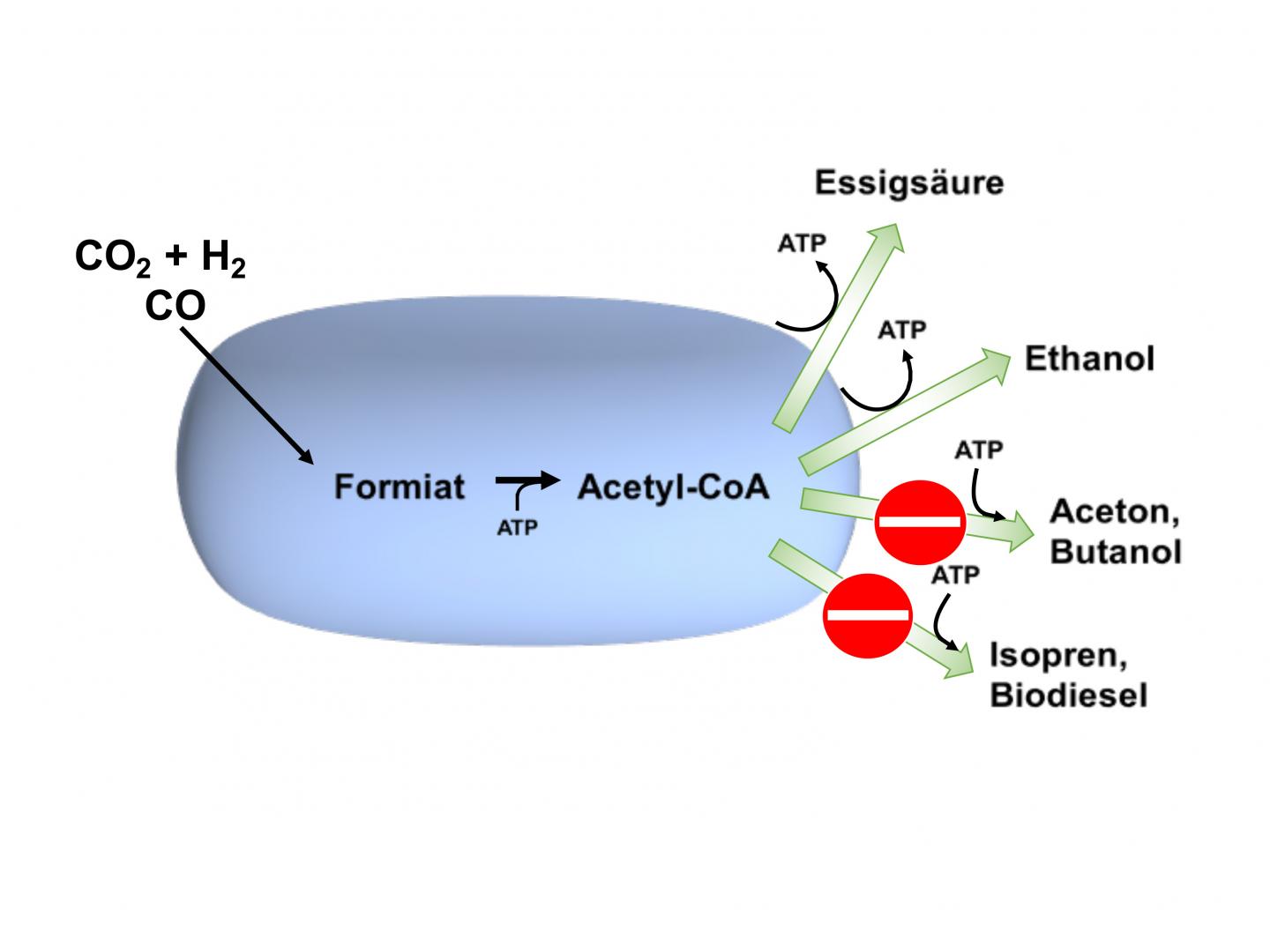
The special group of acetogenic bacteria converts carbon dioxide (CO2) in a fermentation process which is independent of light and oxygen. The bacteria use hydrogen (H2) or carbon monoxide (CO) or a mix of both (synthesis gas) as a source of energy. However, the bacteria produce very little cellular energy in this metabolic process. This drastically limits the product range possible with gas fermentation, so that at present only acetic acid and ethanol can be manufactured on an industrial scale. That is why the collaborative European project has set itself the objective of genetically modifying suitable acetogenic bacteria in such a way that these energetic barriers can be overcome. Partners in the consortium are Goethe University Frankfurt as well as the universities in Ulm, Göttingen and La Coruna. ArcelorMittal, the largest steel manufacturer worldwide, is the industrial partner.
This microbial, CO2-based biotechnology could in future be an environmentally friendly alternative for the reprocessing of industrial waste gases rich in energy and carbon and reduce our dependency on crude oil. The microbial fixation and transformation of CO2 into raw materials produced biologically additionally makes it possible to reduce greenhouse gas emissions.
###
A diagram can be downloaded from: http://www.uni-frankfurt.de/63820642
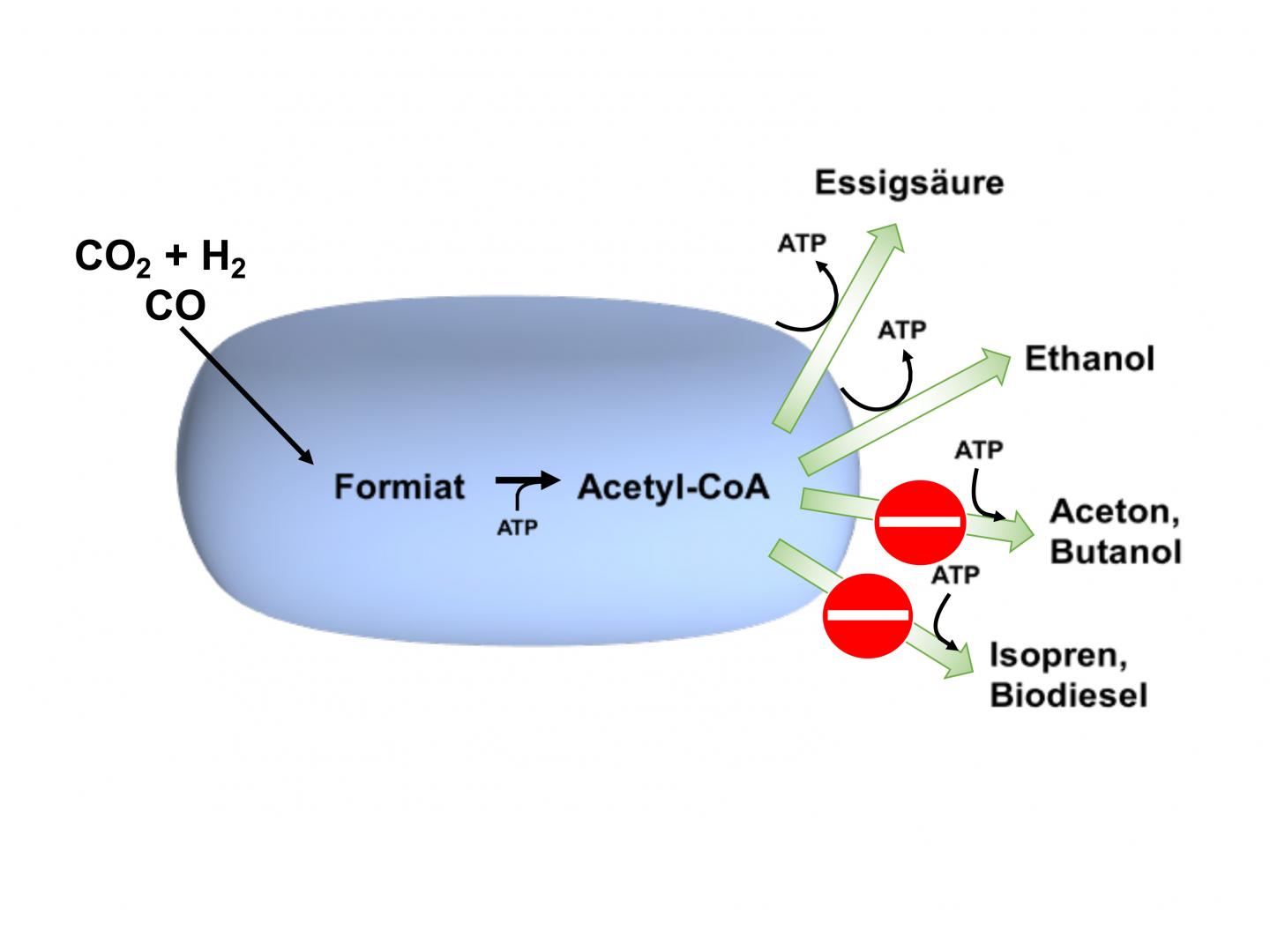
Acetogenic (acetic acid-producing) bacteria produce acetic acid or ethanol from H2 + CO2 or CO. Energy is released in the form of ATP (adenosine triphosphate) in the process. The synthesis of other products interesting for industry from the intermediate product acetyl-CoA, however, also uses up ATP. The aim of this project is to alter the energy balance of the bacteria by means of genetic modification in such a way that the production of such energy-consuming compounds will also be possible.
Media Contact
Prof. Dr. Volker Müller
[email protected]
49-069-798-29507
@goetheuni
http://www.uni-frankfurt.de