• HOME
  • NEWS
  • EXPLORE
    • CAREER
      • Companies
      • Jobs
    • EVENTS
    • iGEM
      • News
      • Team
    • PHOTOS
    • VIDEO
    • WIKI
  • BLOG
  • COMMUNITY
    • FACEBOOK
    • INSTAGRAM
    • TWITTER
Thursday, May 21, 2026
BIOENGINEER.ORG
No Result
View All Result
  • Login
  • HOME
  • NEWS
  • EXPLORE
    • CAREER
      • Companies
      • Jobs
        • Lecturer
        • PhD Studentship
        • Postdoc
        • Research Assistant
    • EVENTS
    • iGEM
      • News
      • Team
    • PHOTOS
    • VIDEO
    • WIKI
  • BLOG
  • COMMUNITY
    • FACEBOOK
    • INSTAGRAM
    • TWITTER
  • HOME
  • NEWS
  • EXPLORE
    • CAREER
      • Companies
      • Jobs
        • Lecturer
        • PhD Studentship
        • Postdoc
        • Research Assistant
    • EVENTS
    • iGEM
      • News
      • Team
    • PHOTOS
    • VIDEO
    • WIKI
  • BLOG
  • COMMUNITY
    • FACEBOOK
    • INSTAGRAM
    • TWITTER
No Result
View All Result
Bioengineer.org
No Result
View All Result
Home NEWS Science News Biology

Blue light could treat superbug infections

Bioengineer by Bioengineer
April 2, 2019
in Biology
Reading Time: 2 mins read
0
IMAGE
Share on FacebookShare on TwitterShare on LinkedinShare on RedditShare on Telegram

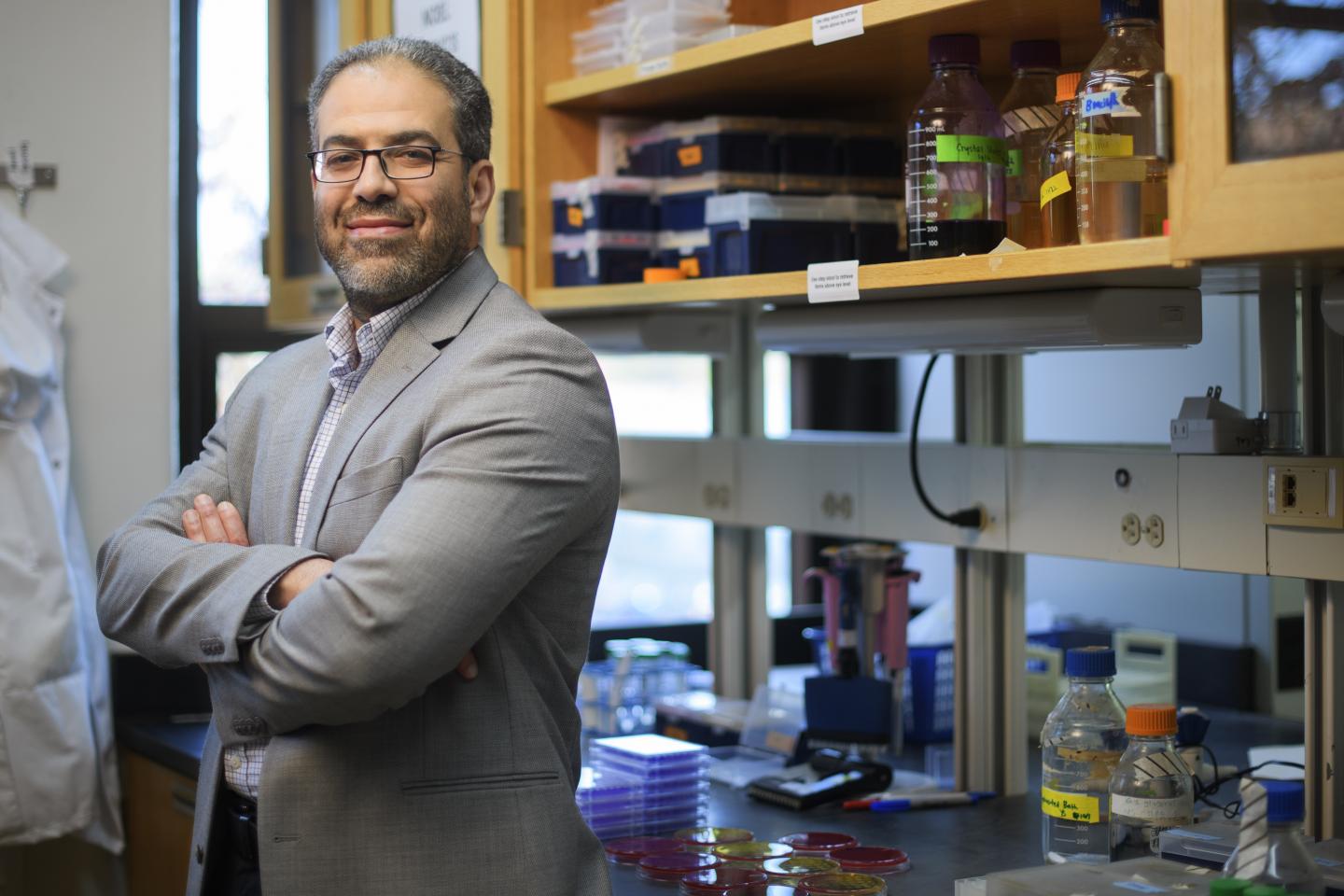
MRSA, a superbug with the ability to dodge many common antibiotics, could be cured with blue light
IMAGE

Credit: Purdue University/Rebecca Wilcox

Methicillin-resistant Staphylococcus aureus (MRSA), a bacterium that causes infection in various parts of the body, is often called a “superbug” thanks to its ability to dodge many common antibiotics. Although most MRSA infections aren’t serious, some can be life-threatening, sometimes resulting in amputation of the infected appendage.

Rather than rolling the dice with a multi-drug combination or wasting precious time trying to determine which medicine to prescribe, doctors could soon use a new method for disarming the superbugs: light therapy.

Researchers at Purdue University and Boston University have discovered that exposing the bug to blue light can render it defenseless against antiseptics as mild as hydrogen peroxide. The findings were published in the journal Advanced Science.

“This new tool can treat any superficial wound infected with MRSA, which are typically very difficult to treat,” said Mohamed Seleem, a professor of microbiology at Purdue’s College of Veterinary Medicine. “The device itself is very small and easy to use. We’re hoping that in the next few years, anyone could carry it around in their purse.”

Compared with a Neutrogena light therapy mask for acne, know this is much more portable and sensible. It looks like a small box with a hole for light to come through, which contains the light to the wound.

Some bacteria, including certain strains of staph, produce pigments. These pigments are associated with the organism’s ability to damage the host, and if you know how to reduce the pigment, then, you might be able to reduce the organism’s activity in the body. This practice is known as photobleaching.

“When you bleach something in the wash machine, you’re extracting the color using chemicals. What we’re doing here is similar, but we’re using blue light,” said Seleem, who researches antimicrobial resistance and infectious disease.

After achieving promising results in vitro, the researchers exposed mice with MRSA-infected wounds to different wavelengths of light. The infections responded especially well to light in the blue region, and combined with a low-concentration hydrogen peroxide, were reduced significantly.

###

The technology is patented through Purdue’s Office of Technology Commercialization. Ji-Xin Cheng, a professor of biomedical engineering at Boston University, is working to arrange clinical trials through BU.

Media Contact
Kayla Zacharias
[email protected]

Original Source

https://www.purdue.edu/newsroom/releases/2019/Q2/blue-light-could-treat-superbug-infections.html

Related Journal Article

http://dx.doi.org/10.1002/advs.201900030

Tags: BiologyMicrobiology
Share12Tweet8Share2ShareShareShare2

Related Posts

Early Delivery Improves Outcomes for Mothers and Babies in Hypertensive Pregnancies — Biology

Early Delivery Improves Outcomes for Mothers and Babies in Hypertensive Pregnancies

May 21, 2026
How Atlantic Herring Rewired Their Reproductive Strategy to Thrive in Changing Oceans — Biology

How Atlantic Herring Rewired Their Reproductive Strategy to Thrive in Changing Oceans

May 20, 2026

Study Finds Young Fraser River Chinook Salmon Swimming in Chemical Mixture

May 20, 2026

Thousands of UK Beekeepers Contribute Honey to Advance Environmental Science

May 20, 2026
Please login to join discussion

POPULAR NEWS

  • blank

    New Study Reveals Plants Can Detect the Sound of Rain

    733 shares
    Share 292 Tweet 183
  • ESMO 2025: mRNA COVID Vaccines Enhance Efficacy of Cancer Immunotherapy

    302 shares
    Share 121 Tweet 76
  • Research Indicates Potential Connection Between Prenatal Medication Exposure and Elevated Autism Risk

    846 shares
    Share 338 Tweet 212
  • Breastmilk Balances E. coli and Beneficial Bacteria in Infant Gut Microbiomes

    58 shares
    Share 23 Tweet 15

About

We bring you the latest biotechnology news from best research centers and universities around the world. Check our website.

Follow us

Recent News

NutriGrow Delphi Sets Standards for Preterm Nutrition Reporting

Critical Path Institute Unveils New Coalition to Propel Human-Relevant Drug Development Tools

Critical Path Institute Grants $249,719 to Odylia Therapeutics to Propel Gene Therapy for USH1C-Related Vision Loss

Subscribe to Blog via Email

Enter your email address to subscribe to this blog and receive notifications of new posts by email.

Join 82 other subscribers
  • Contact Us

Bioengineer.org © Copyright 2023 All Rights Reserved.

Welcome Back!

Login to your account below

Forgotten Password?

Retrieve your password

Please enter your username or email address to reset your password.

Log In
No Result
View All Result
  • Homepages
    • Home Page 1
    • Home Page 2
  • News
  • National
  • Business
  • Health
  • Lifestyle
  • Science

Bioengineer.org © Copyright 2023 All Rights Reserved.