• HOME
  • NEWS
  • EXPLORE
    • CAREER
      • Companies
      • Jobs
    • EVENTS
    • iGEM
      • News
      • Team
    • PHOTOS
    • VIDEO
    • WIKI
  • BLOG
  • COMMUNITY
    • FACEBOOK
    • INSTAGRAM
    • TWITTER
Saturday, February 7, 2026
BIOENGINEER.ORG
No Result
View All Result
  • Login
  • HOME
  • NEWS
  • EXPLORE
    • CAREER
      • Companies
      • Jobs
        • Lecturer
        • PhD Studentship
        • Postdoc
        • Research Assistant
    • EVENTS
    • iGEM
      • News
      • Team
    • PHOTOS
    • VIDEO
    • WIKI
  • BLOG
  • COMMUNITY
    • FACEBOOK
    • INSTAGRAM
    • TWITTER
  • HOME
  • NEWS
  • EXPLORE
    • CAREER
      • Companies
      • Jobs
        • Lecturer
        • PhD Studentship
        • Postdoc
        • Research Assistant
    • EVENTS
    • iGEM
      • News
      • Team
    • PHOTOS
    • VIDEO
    • WIKI
  • BLOG
  • COMMUNITY
    • FACEBOOK
    • INSTAGRAM
    • TWITTER
No Result
View All Result
Bioengineer.org
No Result
View All Result
Home NEWS Science News Biology

Deciphering the walnut genome

Bioengineer by Bioengineer
March 26, 2019
in Biology
Reading Time: 2 mins read
0
IMAGE
Share on FacebookShare on TwitterShare on LinkedinShare on RedditShare on Telegram

Findings could lead to new walnut varieties
IMAGE

Credit: UC Davis

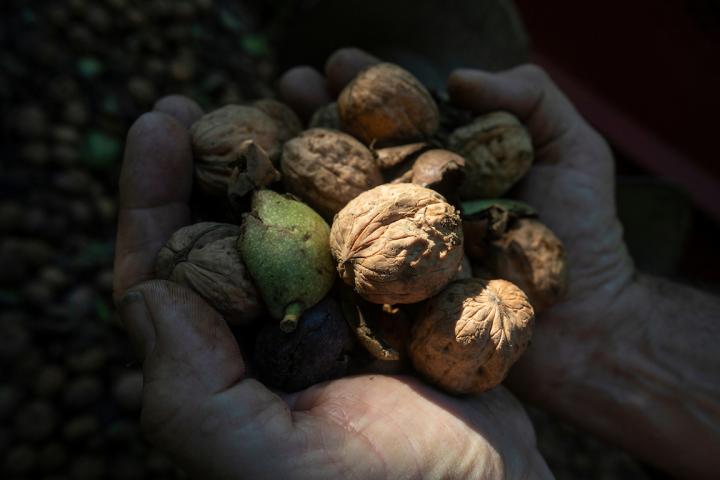
California produces 99 percent of the walnuts grown in the United States. New research could provide a major boost to the state’s growing $1.6 billion walnut industry by making it easier to breed walnut trees better equipped to combat the soil-borne pathogens that now plague many of California’s 4,800 growers.

In a new study, a team of scientists at the University of California, Davis, and USDA’s Agricultural Research Service (ARS) used a unique approach to sequence the genomes of the English walnut and its wild North American relative by tapping into the capabilities of two state-of-the-art technologies: long-read DNA sequencing and optical genome mapping. The resulting genome sequences are believed to be of the highest quality ever assembled of any woody perennial.

“By sequencing the genome of a walnut hybrid, we produced complete genome sequences for both parents in the time normally required to produce the sequence of one genome,” said Ming-Cheng Luo, leading genomics investigator on the project and a research geneticist in the Department of Plant Sciences at UC Davis.

This approach could be applied to genome sequencing of trees and many other woody perennials, opening the door to a better understanding of the genetic blueprints of almonds, pecans, pistachios and grapes.

“Like walnut, these other crops naturally cross-pollinate and are therefore highly variable,” said Jan Dvorak, co-principal investigator and genetics professor at the Department of Plant Sciences at UC Davis. “Variability has always greatly complicated our ability to produce a high-quality genome sequence for such crops, but these new technologies now make it possible,” Dvorak added.

In California, walnuts are grown commercially using rootstocks chosen specifically for their ability to tolerate various soil-borne diseases.

“We chose to cross the widely used English walnut specifically with the wild Texas black walnut because of its native resistance to several soil-borne diseases and root nematodes, which are serious pests of walnut in California,” said Dan Kluepfel, a USDA-ARS scientist and principal investigator of the walnut-rootstock development project.

The assembled genome sequences of the two walnut species also will now help researchers identify genetic markers that breeders can use to develop new varieties with improved pathogen and pest resistance.

###

Major contributors to the project included UC Davis scientists Tingting Zhu, Le Wang, and Agriculture and Agri-Food Canada scientist Frank You.

The study was published online Monday (March 25) in Horticulture Research. The research was funded by the California Walnut Board and the USDA’s National Institute of Food and Agriculture Specialty Crop Research Initiative.

Media Contact
Amy Quinton
[email protected]

Original Source

http://www.ars.usda.gov/news-events/news/research-news/2019/deciphering-the-walnut-genome/?utm_medium=email&utm_source=govdelivery

Related Journal Article

http://dx.doi.org/10.1038/s41438-019-0139-1

Tags: AgricultureFood/Food ScienceGeneticsPlant Sciences
Share12Tweet8Share2ShareShareShare2

Related Posts

New Study Uncovers Mechanism Behind Burn Pit Particulate Matter–Induced Lung Inflammation

New Study Uncovers Mechanism Behind Burn Pit Particulate Matter–Induced Lung Inflammation

February 6, 2026

DeepBlastoid: Advancing Automated and Efficient Evaluation of Human Blastoids with Deep Learning

February 6, 2026

Navigating the Gut: The Role of Formic Acid in the Microbiome

February 6, 2026

AI-Enhanced Optical Coherence Photoacoustic Microscopy Revolutionizes 3D Cancer Model Imaging

February 6, 2026
Please login to join discussion

POPULAR NEWS

  • Robotic Ureteral Reconstruction: A Novel Approach

    Robotic Ureteral Reconstruction: A Novel Approach

    82 shares
    Share 33 Tweet 21
  • Digital Privacy: Health Data Control in Incarceration

    63 shares
    Share 25 Tweet 16
  • Study Reveals Lipid Accumulation in ME/CFS Cells

    57 shares
    Share 23 Tweet 14
  • Breakthrough in RNA Research Accelerates Medical Innovations Timeline

    53 shares
    Share 21 Tweet 13

About

We bring you the latest biotechnology news from best research centers and universities around the world. Check our website.

Follow us

Recent News

Neg-Entropy: The Key Therapeutic Target for Chronic Diseases

Multidisciplinary Evidence-Based Guidelines for Therapeutic Drug Monitoring of Biologics in Inflammatory Bowel Disease

Early Tuberculosis Treatment Lowers Sepsis Mortality in People with HIV

Subscribe to Blog via Email

Enter your email address to subscribe to this blog and receive notifications of new posts by email.

Join 73 other subscribers
  • Contact Us

Bioengineer.org © Copyright 2023 All Rights Reserved.

Welcome Back!

Login to your account below

Forgotten Password?

Retrieve your password

Please enter your username or email address to reset your password.

Log In
No Result
View All Result
  • Homepages
    • Home Page 1
    • Home Page 2
  • News
  • National
  • Business
  • Health
  • Lifestyle
  • Science

Bioengineer.org © Copyright 2023 All Rights Reserved.