UNIGE researchers demonstrate that maternal and environmental control of seed dormancy is carried out through novel epigenetic mechanisms
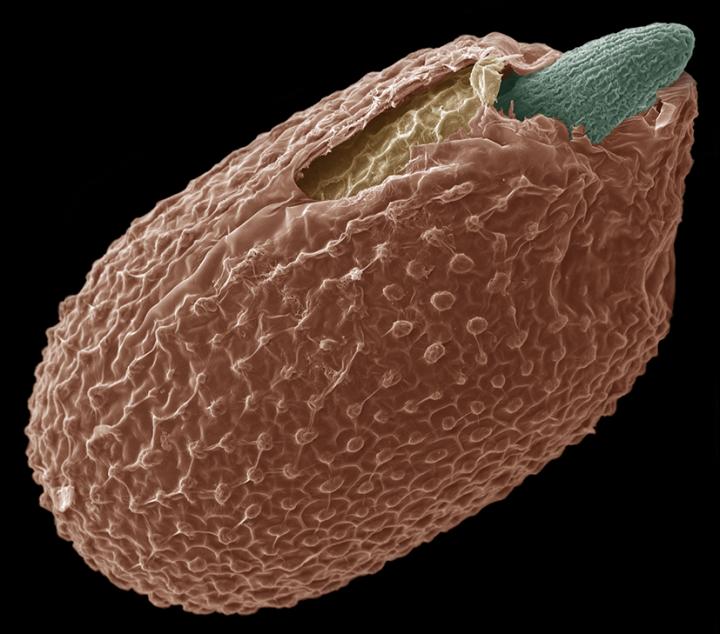
Credit: © UNIGE / Sylvain Loubéry
Seeds remain in a dormant state – a temporary blockage of their germination – as long as environmental conditions are not ideal for germination. The depth of this sleep, which is influenced by various factors, is inherited from their mother, as researchers from the University of Geneva (UNIGE), Switzerland, had previously shown. Today, they reveal in the journal eLife how this maternal imprint is transmitted through small fragments of so-called ‘interfering’ RNAs, which inactivate certain genes. The biologists also reveal that a similar mechanism enables to transmit another imprint, that of the temperatures present during the development of the seed. The lower this temperature was, the higher the seed’s dormancy level will be. This mechanism allows the seed to optimize the timing of its germination. The information is then erased in the germinated embryo, so that the next generation can store new data on its environment.
Dormancy is implemented during seed development in the mother plant. This property allows the seeds to germinate during the appropriate season, to prevent all the offspring of a plant from developing in the same place and competing for limited resources, and to promote plant dispersal. Seeds also lose their dormancy at variable times. “Subspecies of the same plant can have different levels of dormancy depending on the latitudes at which they are produced, and we wanted to understand why”, explains Luis Lopez-Molina, Professor at the Department of Botany and Plant Biology of the UNIGE Faculty of Science.
The paternal gene is silenced
Like all organisms with sexual reproduction, the seed receives two versions of each gene, a maternal and a paternal allele, which may have different levels of expression. The UNIGE biologists had shown in 2016 that the dormancy levels of Arabidopsis thaliana, a model organism used in laboratories, are inherited from the mother. Indeed, in the seed, the level of expression of a dormancy regulating gene called allantoinase (ALN) is the same as that of the maternal allele. This implies that it is the maternal allele of ALN that is mainly expressed, to the detriment of the paternal allele.
In the current study, the researchers show that this maternal imprint is transmitted by an epigenetic mechanism, which influences the expression of certain genes without altering their sequence. The paternal allele of ALN is ‘silenced’ by biochemical modifications called methylations, which are carried out in the promoter region of the gene in order to inactivate it.
“These methylations are themselves the result of a process in which different enzymatic and factor complexes are involved, as well as small fragments of so-called ‘interfering’ RNA. This is a unique example of genomic imprinting, because it is made in the absence of the enzyme usually responsible for methylation”, says Mayumi Iwasaki, researcher in the Geneva group and the first author of the article.
The imprint of past cold prevents the seed from awakening
The environmental conditions present during the seed formation also leave their mark, as its dormancy level increases with decreasing temperatures. “We have discovered that, in this case, both alleles of the ALN gene are strongly repressed in the seed. This is due to a similar epigenetic mechanism, but not all of the actors are the same as those used to silence the paternal allele”, says Luis Lopez-Molina.
This imprint of the cold enables the seed to keep information on past temperatures, in order to include them in the choice of the optimal time of germination. After germination, the ALN gene is reactivated in the embryo. The memory of the cold will then be cleared, allowing the counters to be reset for the next generation.
“Studying how maternal and environmental factors cause dormant seeds to awaken is of crucial importance for agriculture, especially to prevent early germination in an environment subject to climate change”, concludes Mayumi Iwasaki. The ecological stakes are also high, because increasing temperatures could reduce the dormancy of the seed bank and thus modify the distribution of plant species under a given latitude. This would have multiple consequences, both direct and indirect, for native animal and plant species.
###
Media Contact
Luis Lopez-Molina
[email protected]
Related Journal Article
http://dx.