• HOME
  • NEWS
  • EXPLORE
    • CAREER
      • Companies
      • Jobs
    • EVENTS
    • iGEM
      • News
      • Team
    • PHOTOS
    • VIDEO
    • WIKI
  • BLOG
  • COMMUNITY
    • FACEBOOK
    • INSTAGRAM
    • TWITTER
Tuesday, July 7, 2026
BIOENGINEER.ORG
No Result
View All Result
  • Login
  • HOME
  • NEWS
  • EXPLORE
    • CAREER
      • Companies
      • Jobs
        • Lecturer
        • PhD Studentship
        • Postdoc
        • Research Assistant
    • EVENTS
    • iGEM
      • News
      • Team
    • PHOTOS
    • VIDEO
    • WIKI
  • BLOG
  • COMMUNITY
    • FACEBOOK
    • INSTAGRAM
    • TWITTER
  • HOME
  • NEWS
  • EXPLORE
    • CAREER
      • Companies
      • Jobs
        • Lecturer
        • PhD Studentship
        • Postdoc
        • Research Assistant
    • EVENTS
    • iGEM
      • News
      • Team
    • PHOTOS
    • VIDEO
    • WIKI
  • BLOG
  • COMMUNITY
    • FACEBOOK
    • INSTAGRAM
    • TWITTER
No Result
View All Result
Bioengineer.org
No Result
View All Result
Home NEWS Science News Biology

A varied menu

Bioengineer by Bioengineer
March 25, 2019
in Biology
Reading Time: 3 mins read
0
IMAGE
Share on FacebookShare on TwitterShare on LinkedinShare on RedditShare on Telegram

IMAGE

Credit: Plant Biomechanics Group Freiburg

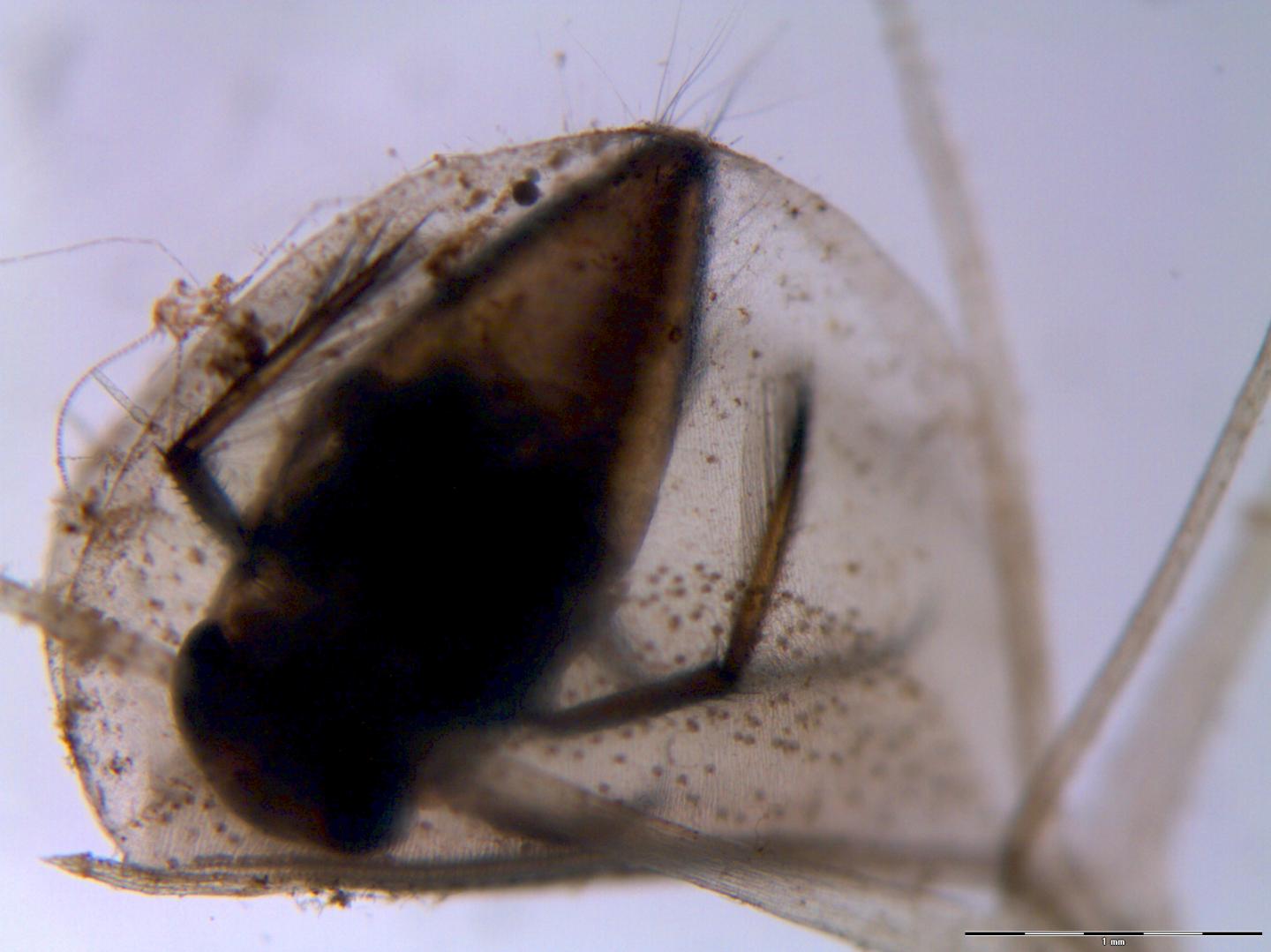
The Freiburg biologists Dr. Simon Poppinga, Anna Westermeier and Prof. Dr. Thomas Speck, working in cooperation with researchers from the Ruhr University Bochum and the Institute of Botany of the Czech Academy of Sciences in T?ebo? (Czech Republic), have for the first time reconstructed in detail the “menu” of the carnivorous waterwheel plant (Aldrovanda vesiculosa). This shows that the plant is not at all fussy about what it eats, and catches anything and everything that fits into its trap and triggers the snap mechanism. The team has published its results in the open-access journal Integrative Organismal Biology.

Using its snap traps, which are only a few millimeters in size, the waterwheel plant catches prey animals that live underwater. The traps snap shut within about 20 milliseconds of mechanical stimulation. The basic trapping principle of the waterwheel plant is the same as the terrestrial Venus flytrap (Dionaea muscipula). However, the two types differ not only with regard to the mediums in which they live, that is water and air respectively, but also in the size, rapidity and movement mechanics of their traps. The researchers believe it is important to establish whether the plants have adapted to catching special types of prey, in order to better understand their ecology and evolution. This knowledge is also key to possible conservation measures, because increasing loss of suitable habitat is threatening the waterwheel plant with extinction.

The scientists undertook comparative analyses of the prey composition of a total of eight different populations of the waterwheel plant in Germany and the Czech Republic. This showed that the prey’s mode of locomotion is irrelevant to Aldrovanda, because besides fast swimming prey, the researchers also often found slow crawling animals such as snails in the traps. The 43 prey taxa identified ranged from tiny water mites to comparatively large mosquito larvae and back swimmers that barely fit into the traps. Likewise, the trap size does not act as a morphological filter for certain prey sizes, as large traps also contained small prey animals (and vice versa). Since the waterwheel plant occurs in highly fragmented habitats, which may be very different in terms of the composition of their animal inhabitants, the diverse diet of Aldrovanda could be an advantage over a stricter prey specialization, the researchers speculate.

The Plant Biomechanics Group at the Botanical Garden of the University of Freiburg has a research focus into the investigation of plant movement principles, especially the fast traps of carnivorous plants. The team has already investigated the Aldrovanda traps in respect to their biomechanics and functional morphology as part of an international research cooperation and have transferred their deformation principle into a biomimetic facade shading, the Flectofold.

###

Original publication: Horstmann M., Heier L., Kruppert S., Weiss L.C., Tollrian R., Adamec L., Westermeier A., Speck T., Poppinga S. (2018): Comparative prey spectra analyses on the endangered aquatic carnivorous waterwheel plant (Aldrovanda vesiculosa, Droseraceae) at several naturalized microsites in the Czech Republic and Germany. Integrative Organismal Biology. doi:10.1093/iob/oby012 https://academic.oup.com/iob/article/1/1/oby012/5419227

Press Release on the snap mechanism of the waterwheel plant
https://www.pr.uni-freiburg.de/pm-en/press-releases-2018/how-the-waterwheel-plant-snaps?set_language=en

Article in the online magazine of the University of Freiburg on Flectofold biomimetic facade shading
https://www.pr.uni-freiburg.de/pm-en/online-magazine/research-and-discover/plant-structures-inspire-cool-concepts?set_language=en

Contact: Plant Biomechanics Group, University of Freiburg

Media Contact
Simon Poppinga
[email protected]

Original Source

https://www.pr.uni-freiburg.de/pm-en/press-releases-2019/a-varied-menu?set_language=en

Related Journal Article

http://dx.doi.org/10.1093/iob/oby012

Tags: BiologyPlant Sciences
Share22Tweet12Share3ShareShareShare2

Related Posts

Here are a few rewritten headlines for a science magazine post, each with a slightly different tone: Intriguing & poetic: How do organs sculpt themselves? Sea stars hold the secret Direct & research-focused: Sea stars reveal the hidden rules of organ formation Metaphorical & inviting: Tiny architects beneath the waves: What sea stars teach us about building organs Short & punchy: Star-shaped clues to how our organs take shape Question-led: Could a sea star show us how organs form? Elegant & feature-style: The body’s blueprint, glimpsed in a sea star’s arm

July 6, 2026
Bacteria evolve faster with unconventional gene copies — Biology

Bacteria evolve faster with unconventional gene copies

July 6, 2026

Neighbours rewire soil feedback via root microbiome shifts

July 6, 2026

Evolution-Inspired Biosensors Revolutionize Lipid Tracking in Real Time

July 2, 2026
Please login to join discussion

POPULAR NEWS

  • Detection of EDCs in Breast Milk and Infant Urine Up to Six Months Highlights Early Exposure Risks

    77 shares
    Share 31 Tweet 19
  • New Drug Candidate Developed at McMaster Shows Potential for Treating Brain Cancer

    58 shares
    Share 23 Tweet 15
  • Saying Goodbye to PGY-6: Pediatric Fellowship Realities

    103 shares
    Share 41 Tweet 26
  • KTU Researchers Explore Ultrasound’s Role in Enhancing Blood Flow Beyond Diagnostics

    53 shares
    Share 21 Tweet 13

About

We bring you the latest biotechnology news from best research centers and universities around the world. Check our website.

Follow us

Recent News

Flame retardant BDE-209 targets molecularly linked to ulcerative colitis

Ultra-high frequency particle impacts mimic rockbursts to shatter hard rock

Kidney transplant outcomes in older adults studied by German researchers

Subscribe to Blog via Email

Enter your email address to subscribe to this blog and receive notifications of new posts by email.

Join 83 other subscribers
  • Contact Us

Bioengineer.org © Copyright 2023 All Rights Reserved.

Welcome Back!

Login to your account below

Forgotten Password?

Retrieve your password

Please enter your username or email address to reset your password.

Log In
No Result
View All Result
  • Homepages
    • Home Page 1
    • Home Page 2
  • News
  • National
  • Business
  • Health
  • Lifestyle
  • Science

Bioengineer.org © Copyright 2023 All Rights Reserved.