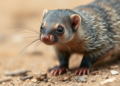
New research suggests disrupting the ability of wolves to travel on the linear developments can reduce the ability of wolves to access caribou habitat, without building fences or culling wolves
Woodland caribou populations have been dwindling towards local extinction across much of their range and scientists believe that predators, and specifically wolves, are a leading cause of the decline. Wolf populations are thought to have increased and expanded into caribou range due to the expansion of linear features, such as pipelines and roads, resulting from oil, gas and forestry development.
Controversial practices such as wolf culling and building fenced enclosures have been implemented to reduce the encounters between wolves and at-risk woodland caribou in the Canadian Oil Sands.
New research suggests there may be more effective and less invasive strategies to reduce the ability of wolves to encounter caribou. Researchers used motion-triggered cameras to capture photographs of wolves, caribou, and other wildlife species in the Canadian Oil Sands. The study captured more than 500,000 photographs that were used to study the habitat use patterns of the animals and test management strategies aimed at reducing the impacts of the linear developments on caribou.
The results showed that disrupting the ability of wolves to travel on the linear developments can reduce the ability of wolves to access caribou habitat, without building fences or culling wolves.
A paper describing the research is published in the March issue of the Journal of Animal Ecology, a British Ecological Society journal. The paper reveals new methods for using motion-triggered cameras to study animals. In doing so, researchers found that spreading logs, felling trees, or roughing the soil surface of the linear developments can be used as a habitat recovery strategy to disrupt the ability of humans and predators to access the critical habitats of at-risk caribou.
Disrupting the ability of animals to travel on linear developments is different than recovering the habitat. It takes decades for the habitat to recover in these northern caribou ranges and the cost of reclamation is considered prohibitive. However, disrupting travel on these same features can be more easily implemented, scaled-up across ranges, and reduce the predator’s ability to encounter caribou immediately.
Jonah Keim, the lead author of the study, and his collaborators, Subhash Lele of the University of Alberta, Philip DeWitt of the Ontario Ministry of Natural Resources & Forestry, Jeremy Fitzpatrick (Edmonton, Alberta), and Noemie Jenni of Matrix Solutions Inc. have been conducting studies in ecology and data science for more than two decades. In 2011, members of the team co-authored a study revealing the abundances, diets and habitat use patterns of caribou, wolves and moose.
The study suggested that removing wolves may have unintended consequences. This January, the team released the results of a second camera study that shows how to reduce the use of caribou habitat by wolves. Surprisingly, they found that moving recreational snowmobiling trails away from caribou habitats may help draw wolves away from caribou – reducing the opportunistic killings of caribou by wolves.
Encounters between wolves and caribou can be managed by reducing wolf populations or by reducing the ability of wolves to access caribou. The research shows that the expansion of linear features has enabled wolves to more readily travel into caribou range and encounter caribou. Disrupting the ease-of-travel on linear features can reverse the impact on wolf-caribou encounters without wolf culling.
###
Media Contact
Jonah Keim
[email protected]
Related Journal Article
https:/
http://dx.