

• HOME
  • NEWS
  • EXPLORE
    • CAREER
      • Companies
      • Jobs
    • EVENTS
    • iGEM
      • News
      • Team
    • PHOTOS
    • VIDEO
    • WIKI
  • BLOG
  • COMMUNITY
    • FACEBOOK
    • INSTAGRAM
    • TWITTER
Sunday, February 8, 2026
BIOENGINEER.ORG
No Result
View All Result
  • Login
  • HOME
  • NEWS
  • EXPLORE
    • CAREER
      • Companies
      • Jobs
        • Lecturer
        • PhD Studentship
        • Postdoc
        • Research Assistant
    • EVENTS
    • iGEM
      • News
      • Team
    • PHOTOS
    • VIDEO
    • WIKI
  • BLOG
  • COMMUNITY
    • FACEBOOK
    • INSTAGRAM
    • TWITTER
  • HOME
  • NEWS
  • EXPLORE
    • CAREER
      • Companies
      • Jobs
        • Lecturer
        • PhD Studentship
        • Postdoc
        • Research Assistant
    • EVENTS
    • iGEM
      • News
      • Team
    • PHOTOS
    • VIDEO
    • WIKI
  • BLOG
  • COMMUNITY
    • FACEBOOK
    • INSTAGRAM
    • TWITTER
No Result
View All Result
Bioengineer.org
No Result
View All Result
Home NEWS Science News Science

New quantum sensor could improve cancer treatment

Bioengineer by Bioengineer
March 4, 2019
in Science
Reading Time: 2 mins read
0
Share on FacebookShare on TwitterShare on LinkedinShare on RedditShare on Telegram

A new quantum sensor developed by researchers at the University of Waterloo’s Institute for Quantum Computing (IQC) has proven it can outperform existing technologies and promises significant advancements in long-range 3D imaging and monitoring the success of cancer treatments.

The sensors are the first of their kind and are based on semiconductor nanowires that can detect single particles of light with high timing resolution, speed and efficiency over an unparalled wavelength range, from ultraviolet to near-infrared.

The technology also has the ability to significantly improve quantum communication and remote sensing capabilities.

“A sensor needs to be very efficient at detecting light. In applications like quantum radar, surveillance, and nighttime operation, very few particles of light return to the device,” said principal investigator Michael Reimer, an IQC faculty member and assistant professor in the Faculty of Engineering’s electrical and computer engineering department. “In these cases, you want to be able to detect every single photon coming in.”

The next generation quantum sensor designed in Reimer’s lab is so fast and efficient that it can absorb and detect a single particle of light, called a photon, and refresh for the next one within nanoseconds. The researchers created an array of tapered nanowires that turn incoming photons into electric current that can be amplified and detected.

Remote sensing, high-speed imaging from space, acquiring long range high resolution 3D images, quantum communication, and singlet oxygen detection for dose monitoring in cancer treatment are all applications that could benefit from the kind of robust single photon detection that this new quantum sensor provides.

The semiconducting nanowire array achieves its high speed, timing resolution and efficiency thanks to the quality of its materials, the number of nanowires, doping profile and the optimization of the nanowire shape and arrangement. The sensor detects a broad spectrum of light with high efficiency and high timing resolution, all while operating at room temperature. Reimer emphasizes that the spectrum absorption can be broadened even further with different materials.

“This device uses Indium Phosphide (InP) nanowires. Changing the material to Indium Gallium Arsenide (InGaAs), for example, can extend the bandwidth even further towards telecommunications wavelengths while maintaining performance,” Reimer said. “It’s state of the art now, with the potential for further enhancements.”

Once the prototype is packaged with the right electronics and portable cooling, the sensor is ready for testing beyond the lab. “A broad range of industries and research fields will benefit from a quantum sensor with these capabilities,” said Reimer.

In collaboration with researchers at the Eindhoven University of Technology, Tapered InP nanowire arrays for efficient broadband high-speed single photon detection was published in Nature Nanotechnology on March 4. This research was undertaken thanks in part to funding from the Canada First Research Excellence Fund (CFREF).

###

Media Contact
Matthew Grant
[email protected]
Tags: cancerDiagnosticsHealth Care Systems/ServicesNanotechnology/MicromachinesSuperconductors/SemiconductorsTechnology/Engineering/Computer Science
Share12Tweet8Share2ShareShareShare2

Related Posts

Five or more hours of smartphone usage per day may increase obesity

July 25, 2019
IMAGE

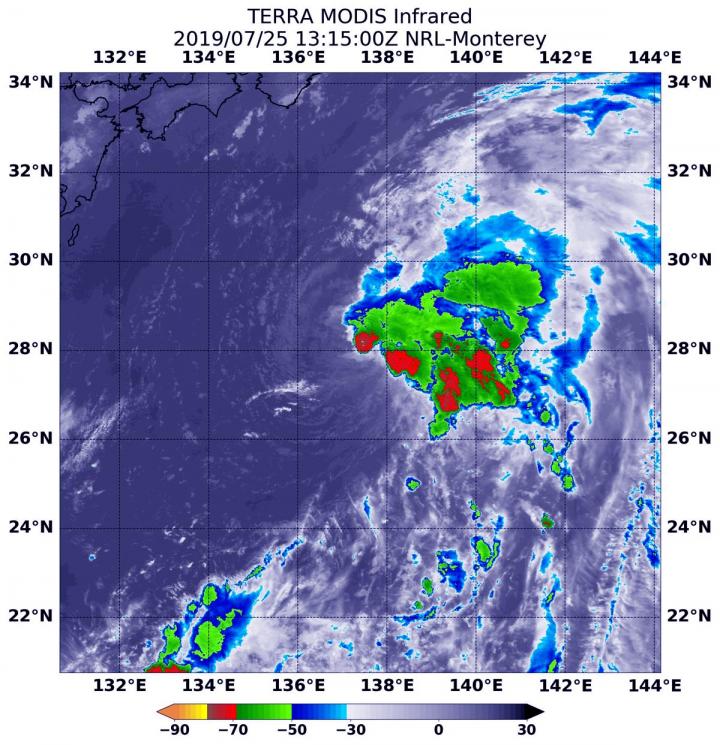
NASA’s terra satellite finds tropical storm 07W’s strength on the side

July 25, 2019

NASA finds one burst of energy in weakening Depression Dalila

July 25, 2019

Researcher’s innovative flood mapping helps water and emergency management officials

July 25, 2019
Please login to join discussion

POPULAR NEWS

  • Robotic Ureteral Reconstruction: A Novel Approach

    Robotic Ureteral Reconstruction: A Novel Approach

    82 shares
    Share 33 Tweet 21
  • Digital Privacy: Health Data Control in Incarceration

    63 shares
    Share 25 Tweet 16
  • Breakthrough in RNA Research Accelerates Medical Innovations Timeline

    53 shares
    Share 21 Tweet 13
  • Mapping Tertiary Lymphoid Structures for Kidney Cancer Biomarkers

    50 shares
    Share 20 Tweet 13

About

We bring you the latest biotechnology news from best research centers and universities around the world. Check our website.

Follow us

Recent News

Evaluating a Self-Care App for Chest Trauma Patients

Anesthesia Method’s Impact on Elderly Hip Fracture Recovery

Menopause Care: Insights from Workforce Review and Consultation

Subscribe to Blog via Email

Enter your email address to subscribe to this blog and receive notifications of new posts by email.

Join 73 other subscribers
  • Contact Us

Bioengineer.org © Copyright 2023 All Rights Reserved.

Welcome Back!

Login to your account below

Forgotten Password?

Retrieve your password

Please enter your username or email address to reset your password.

Log In
No Result
View All Result
  • Homepages
    • Home Page 1
    • Home Page 2
  • News
  • National
  • Business
  • Health
  • Lifestyle
  • Science

Bioengineer.org © Copyright 2023 All Rights Reserved.