• HOME
  • NEWS
  • EXPLORE
    • CAREER
      • Companies
      • Jobs
    • EVENTS
    • iGEM
      • News
      • Team
    • PHOTOS
    • VIDEO
    • WIKI
  • BLOG
  • COMMUNITY
    • FACEBOOK
    • INSTAGRAM
    • TWITTER
Sunday, May 10, 2026
BIOENGINEER.ORG
No Result
View All Result
  • Login
  • HOME
  • NEWS
  • EXPLORE
    • CAREER
      • Companies
      • Jobs
        • Lecturer
        • PhD Studentship
        • Postdoc
        • Research Assistant
    • EVENTS
    • iGEM
      • News
      • Team
    • PHOTOS
    • VIDEO
    • WIKI
  • BLOG
  • COMMUNITY
    • FACEBOOK
    • INSTAGRAM
    • TWITTER
  • HOME
  • NEWS
  • EXPLORE
    • CAREER
      • Companies
      • Jobs
        • Lecturer
        • PhD Studentship
        • Postdoc
        • Research Assistant
    • EVENTS
    • iGEM
      • News
      • Team
    • PHOTOS
    • VIDEO
    • WIKI
  • BLOG
  • COMMUNITY
    • FACEBOOK
    • INSTAGRAM
    • TWITTER
No Result
View All Result
Bioengineer.org
No Result
View All Result
Home NEWS Science News Biology

How to keep stink bugs out this winter

Bioengineer by Bioengineer
February 21, 2019
in Biology
Reading Time: 2 mins read
0
IMAGE
Share on FacebookShare on TwitterShare on LinkedinShare on RedditShare on Telegram

IMAGE

Credit: Benjamin Chambers


Every winter stink bugs infiltrate homes across the United States and two new studies published in the Journal of Economic Entomology by Virginia Tech researchers may shed some light on ways to keep the pests away.

In short, seal holes and gaps larger than 3 to 7 millimeters and remove any long-dead stink bugs, which may further attract other stink bugs.

The first study found that slits less than 3 millimeters wide and holes less than 7 millimeters will keep out the majority of brown marmorated stink bugs, or Halyomorpha halys.

“The way people talk about H. halys, you’d think they could get into just about anything,” said Benjamin Chambers, an instructor at Virginia Tech. “We now know once you’re below a rigid 3-by-7 millimeter opening, you won’t see many getting through.”

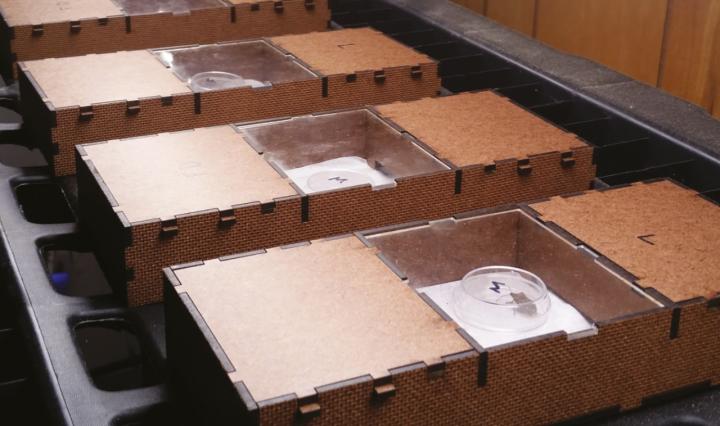
For this project Chambers put 30 brown marmorated stink bugs inside different sealed boxes with various size holes or slits and watched how many were able to escape. A single millimeter change would make all the difference.

In another study Chambers found that recently killed stink bugs will deter other stink bugs, but if killed long ago, the opposite will happen and the bugs would aggregate around them.

“I expected an aversion to dead stink bugs left from previous years. I’d have thought their presence would indicate the refuge was not safe,” said Chambers.

“The results suggest that removing dead stink bugs from a space may eliminate a signal for H. halys to settle after entering. Or, alternatively, ‘seeding’ traps with stink bug corpses could improve trap performance, but further testing is needed.”

Chambers research was spurred by a stink bug invasion in his own home. “I knew I wanted to study how building structures and characteristics influenced animal behavior, and vice versa,” said Chambers. “It just so happened when I joined the program that I lived in a house full of brown marmorated stink bugs. They were an obvious choice.”

Co-authors on these papers include: Tom Kuhar, professor of entomology, Tracy Leskey, Annie Pearce and Georg Reichard.

###

About Chambers

Chambers is an instructor in the Department of Engineering Education in the College of Engineering and graduate of Virginia Tech’s BioBuild and Entomology programs. For both of these projects he collaborated with the Department of Entomology in the College of Agriculture and Life Sciences. His research focuses on the effects of building characteristics on home invasion and the overwintering behavior of the brown marmorated stink bug.

Media Contact
Ceci Leonard
[email protected]
540-357-2500

Original Source

https://vtnews.vt.edu/articles/2019/02/how-to-keep-the-stink-bugs-out-this-winter—-new-research.html

Tags: BiologyEntomology
Share12Tweet8Share2ShareShareShare2

Related Posts

Ancient Plant Populations Reveal Fresh Insights into Climate Resilience — Biology

Ancient Plant Populations Reveal Fresh Insights into Climate Resilience

May 8, 2026
Rare Brain Disorders in Children Linked to Mutations in Lesser-Known Protein Complex — Biology

Rare Brain Disorders in Children Linked to Mutations in Lesser-Known Protein Complex

May 8, 2026

From Odd Insect to Underwater Predator: The Remarkable Evolution of a Bloodthirsty Fruit Fly

May 8, 2026

SNU Professor Sangwoo Seo’s Team Develops Next-Generation CRISPR Biocontainment Technology to Control Microbial Survival Without DNA Cleavage

May 8, 2026
Please login to join discussion

POPULAR NEWS

  • Research Indicates Potential Connection Between Prenatal Medication Exposure and Elevated Autism Risk

    840 shares
    Share 336 Tweet 210
  • New Study Reveals Plants Can Detect the Sound of Rain

    727 shares
    Share 290 Tweet 181
  • Scientists Investigate Possible Connection Between COVID-19 and Increased Lung Cancer Risk

    68 shares
    Share 27 Tweet 17
  • Salmonella Haem Blocks Macrophages, Boosts Infection

    61 shares
    Share 24 Tweet 15

About

We bring you the latest biotechnology news from best research centers and universities around the world. Check our website.

Follow us

Recent News

Evaluating Digoxin Use in Patients with Symptomatic Rheumatic Heart Disease

Evaluating the Effectiveness and Safety of Digitalis Glycosides in Treating Heart Failure

Urdu Fall Risk Questionnaire Adapted for Elderly

Subscribe to Blog via Email

Enter your email address to subscribe to this blog and receive notifications of new posts by email.

Join 82 other subscribers
  • Contact Us

Bioengineer.org © Copyright 2023 All Rights Reserved.

Welcome Back!

Login to your account below

Forgotten Password?

Retrieve your password

Please enter your username or email address to reset your password.

Log In
No Result
View All Result
  • Homepages
    • Home Page 1
    • Home Page 2
  • News
  • National
  • Business
  • Health
  • Lifestyle
  • Science

Bioengineer.org © Copyright 2023 All Rights Reserved.