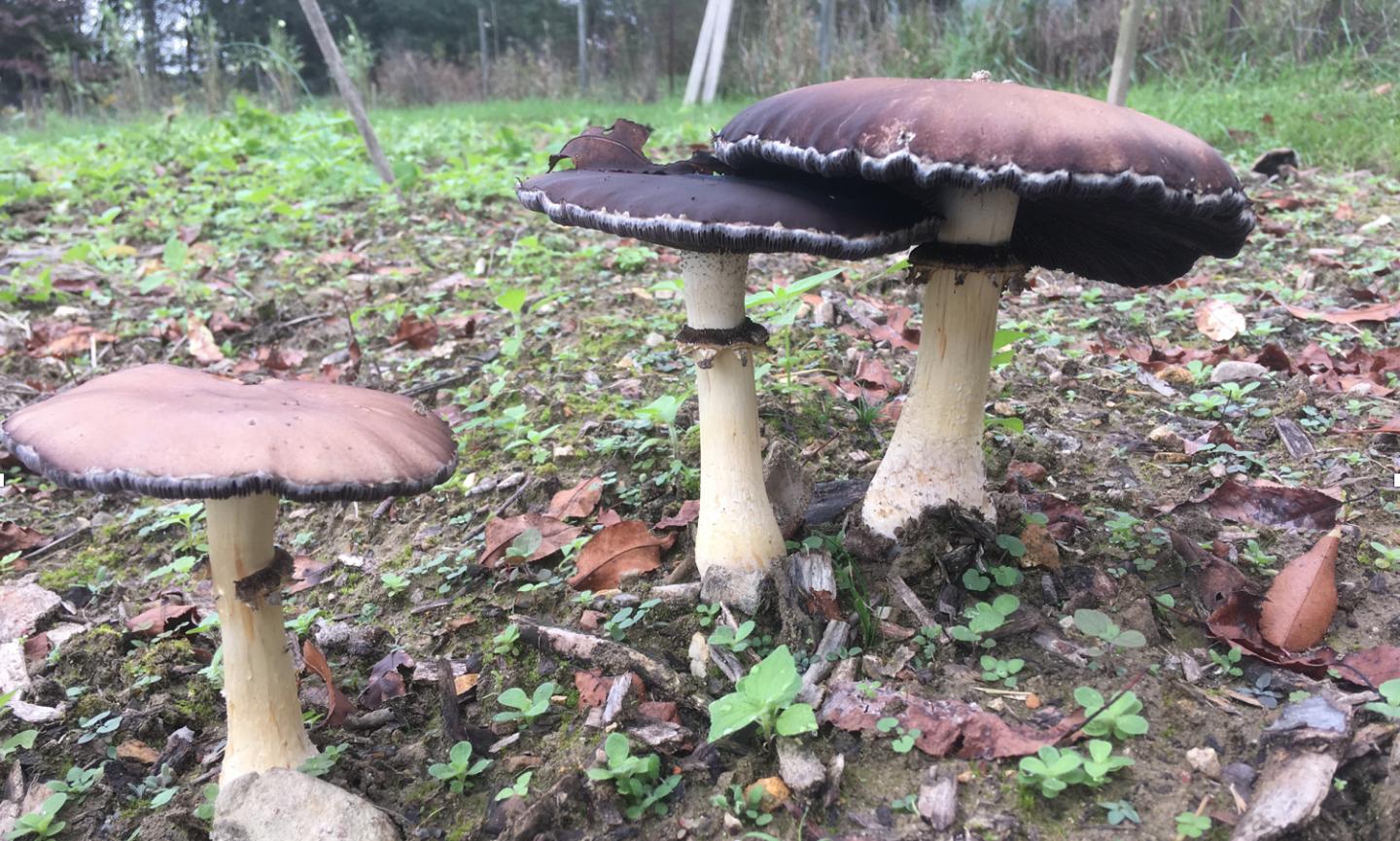
Credit: Tom Wieboldt
What can a billion years of coexistence tell us about the evolution of plants and fungi?
Neither plants nor fungi existed on land prior to 800 million years ago, an astonishing phenomenon considering their current immense biodiversity, ecosystem dominance, and impact on the environment.
Virginia Tech professor emeritus Khidir Hilu, along with a team of 13 researchers with complementary expertise in botany, mycology, paleontology, and bioinformatics, joined forces to address this question in a large-scale study published in Nature Communications.
“The movements of plant and fungi to land have irreversibly modified our planet physically and shaped their own biodiversity as well as that of the animal kingdom,” said Hilu, professor emeritus of the Department of Biological Sciences in the College of Science. “Our research shows that the successful plant and fungi invasion of land was an outcome of co-evolutionary interaction between the two that enhanced their biodiversities. These findings are timely considering current issues in climate change and notable extinctions experienced by plants and animals and the impact on our planet.”
The authors noted that although interactions between fungi and plants, including parasitism, mutualism (beneficial to both organisms), and saprotrophy (obtaining nutrients from dead plant parts), have been invoked as key mechanisms to their success, no one has explored contemporaneous evolutionary events throughout their history.
In this article, the authors methodologically explored the evolution of plants and fungi in a multiprong approach using molecular and bioinformatic techniques. They first established robust phylogenies, or evolutionary histories, for plants and fungi independently using gene sequence data generated in their labs or obtained from repositories of genome sequences.
Next, they estimated evolutionary divergence dates of plant and fungal lineages using both gene mutations and reliable fossil records. They then computed major shifts in diversification rates of major lineages in the two kingdoms independently. Once these studies were accomplished, the resulting phylogenetic relationships for plants and fungi were aligned on the same geological time scale, which allowed the researchers to pinpoint the origins of various key plant-fungal co-evolutionary events, particularly symbiotic relationships and the decomposition of plants by fungi. They noticed drastic shifts in diversification rates in the two kingdoms that convincingly showed plant-fungal co-evolution and interdependence across their long history.
The authors reported that fungal colonization of land was associated with and helped by at least two originations of terrestrial green algae, which preceded the origin of land plants. This coincided with the loss, ca. 720 million years ago, of fungal flagellum, a lash-like appendage that helps fungi swim in water.
Conversely, many million years later, during the Paleozoic Era, successful colonization of land by the lineage that eventually gave rise to all terrestrial plants living today was likely facilitated by fungi, specifically through fungal occupation of cells of the earliest land plants, promoting mutualism, which was key to plant and fungi success on land.
One of the significant biological, ecological, and environmental events on Earth is the origin and initial diversification of a lineage containing all plants that bear seeds. Seed plants, which include conifers and flowering plants, emerged during the Silurian Period about 436 million years ago. Significantly, one of the distinguishing traits of this plant lineage was the presence of a distinctive type of cell division that gave rise to wood. This led to the evolution of large woody trees, which in turn, resulted in the establishment of the first inland forests based on lignin-rich wood as their backbone.
Such a move could not have been successful without the linked evolution with fungi and their capacity to digest the structural polymer lignin and cellulose of plant cell walls. This evolutionary novelty was instrumental in organic matter recycling, which led to the forest system being sustained. The origin and early diversification of the seed plant lineage was in turn followed by the evolution of the largest classes of fungi, the Agaricomycetes.
The origin of ectomycorrhizal fungi (fungi associated externally with plant roots) seems to have resulted from a series of evolutionary innovations in plants including the origins of wood, seeds, and roots. These consequential evolutionary events were crucial in promoting the diversification leading to existing seed plants, including cone-bearing plants such as pines, spruces, maidenhairs, and cycads, as well as flowering plants, and their expansion to drier environments.
The latter group, in addition to including most living plant species and major ecosystems, such as forests and grasslands, also encompasses an astounding diversity in form and function and provides almost all of our food plants. Ectomycorrhizal fungi form a symbiotic relationship with plants and can produce networks around the plant roots to aid in water and nutrient uptake, often assisting the host plant to survive adverse weather conditions.
The macroevolution of plants and fungi has been studied mostly separately; however, this study clearly demonstrates that their respective evolutionary histories are deeply interconnected and can be understood only through a simultaneous study of their phylogenies within a robust timeframe.
It is expected that the same will hold true for the evolution of the animal kingdom, a group highly dependent on photoautotrophic plants, as well as microorganisms in general.
###
Media Contact
Kristin Rose
[email protected]
540-231-6614
Original Source
https:/
Related Journal Article
http://dx.