• HOME
  • NEWS
  • EXPLORE
    • CAREER
      • Companies
      • Jobs
    • EVENTS
    • iGEM
      • News
      • Team
    • PHOTOS
    • VIDEO
    • WIKI
  • BLOG
  • COMMUNITY
    • FACEBOOK
    • INSTAGRAM
    • TWITTER
Saturday, February 7, 2026
BIOENGINEER.ORG
No Result
View All Result
  • Login
  • HOME
  • NEWS
  • EXPLORE
    • CAREER
      • Companies
      • Jobs
        • Lecturer
        • PhD Studentship
        • Postdoc
        • Research Assistant
    • EVENTS
    • iGEM
      • News
      • Team
    • PHOTOS
    • VIDEO
    • WIKI
  • BLOG
  • COMMUNITY
    • FACEBOOK
    • INSTAGRAM
    • TWITTER
  • HOME
  • NEWS
  • EXPLORE
    • CAREER
      • Companies
      • Jobs
        • Lecturer
        • PhD Studentship
        • Postdoc
        • Research Assistant
    • EVENTS
    • iGEM
      • News
      • Team
    • PHOTOS
    • VIDEO
    • WIKI
  • BLOG
  • COMMUNITY
    • FACEBOOK
    • INSTAGRAM
    • TWITTER
No Result
View All Result
Bioengineer.org
No Result
View All Result
Home NEWS Science News Biology

Where do the best strawberries grow?

Bioengineer by Bioengineer
February 4, 2019
in Biology
Reading Time: 3 mins read
0
IMAGE
Share on FacebookShare on TwitterShare on LinkedinShare on RedditShare on Telegram

Scientists investigate positive effects of hedgerows on pollination
IMAGE

Credit: Denise Castle

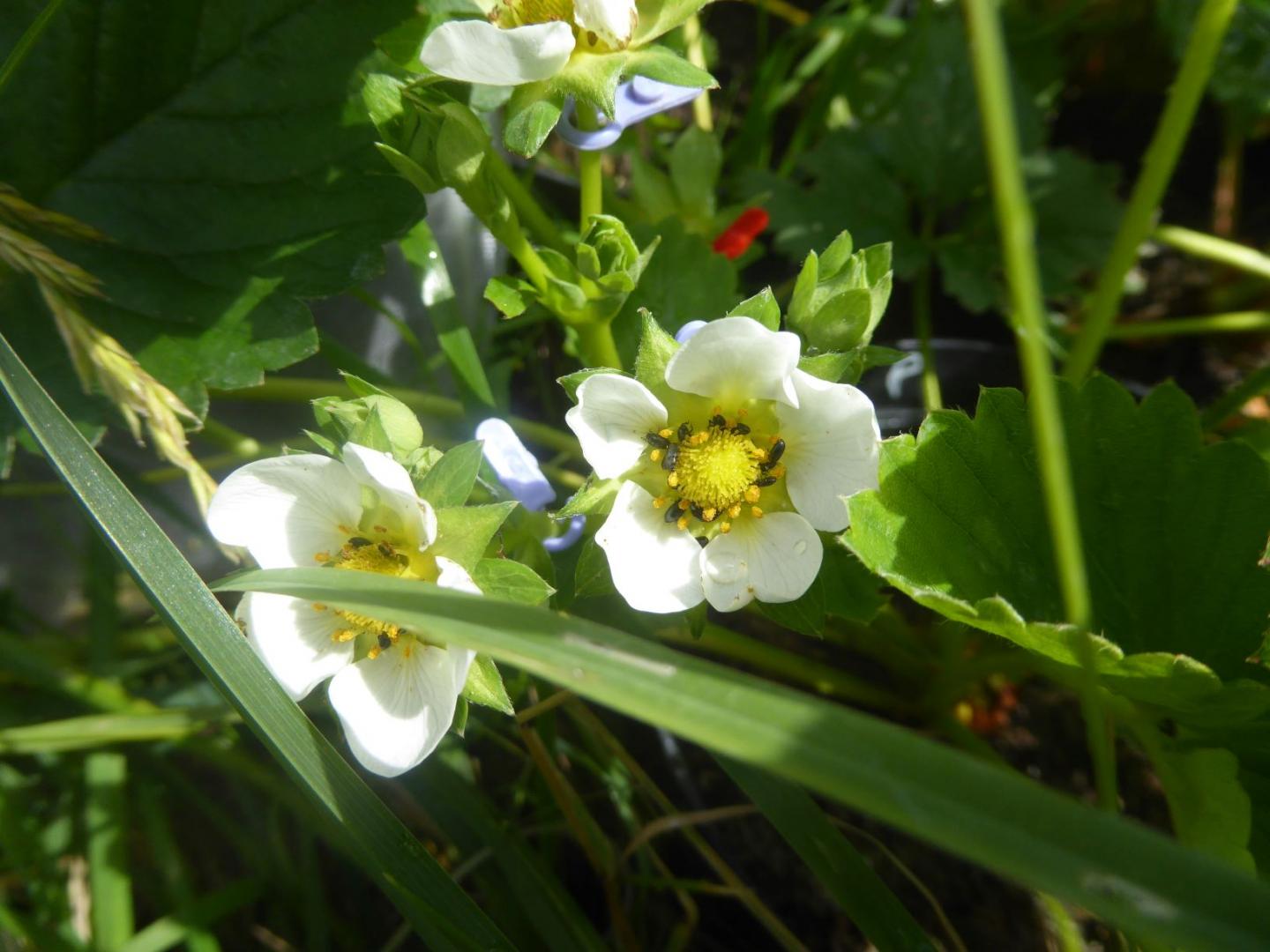
Agricultural production benefits enormously from flower-visiting bees and other flower-visiting insects. Because of their supply of flowering plants and opportunities for nesting, hedgerows and the edges of forests represent important habitats for pollinators. A team from the departments of Functional Agrobiodiversity and Agroecology at the University of Göttingen has investigated whether hedgerows and their proximity to forests might have a positive effect on the pollination of strawberries. It was found that both the weight and the quality of strawberries increased when strawberry plants were placed at hedgerows or at hedgerows next to forests. The results of the study were published in the journal Agriculture, Ecosystems & Environment.

For the study, strawberry plants were placed in three different locations: hedgerows bordering forest; freestanding hedgerows; and grass strips isolated from hedgerows. “We wanted to investigate not only the positive effects of pollinators, but also possible negative effects from harmful insects,” says Denise Castle, first author of the study, who is now working at the Julius Kühn Institute for Bee Protection. “That’s why we included not only flies and bees visiting the blossoms, but also the common pollen beetle, which eats blossoms, in the study.” The isolation had a negative effect on the number of pollinators, but not on the densities of the common pollen beetles. The scientists were thus able to show that the connection to forest edges and hedgerows clearly has a positive effect on the pollination of strawberries. “The market value of the strawberries was highest at just under 15 euros per 1000 fruits on the hedgerows connected to forest edges and decreased significantly with increasing isolation”, explains the Agroecologist Dr. Ingo Grass. “1000 fruits harvested in the grass strips achieved a market value of only 9.27 euros.”

“With our study, we were able to demonstrate that hedgerows are important habitats in the agricultural landscape. They can enhance the connectivity between habitats and adjacent crops and thus also contribute to increasing fruit quantity and quality,” concludes Professor Catrin Westphal, Head of the department of Functional Agrobiodiversity.

###

Original publication: Castle, D., Grass, I. & Westphal, C. Fruit quantity and quality of strawberries benefit from enhanced pollinator abundance at hedgerows in agricultural landscapes. Agriculture, Ecosystems & Environment (2019). https://doi.org/10.1016/j.agee.2019.01.003

Contact:

Professor Catrin Westphal

University of Göttingen

Functional Agrobiodiversity

Faculty of Agricultural Sciences

Grisebachstraße 6, 37077 Göttingen

Telephone: +49 (0)551 39 22257

Email: [email protected]

http://www.uni-goettingen.de/de/596513.html

Denise Castle

Institute for Bee Protection

Julius Kühn-Institut – Federal Research Centre for Cultivated Plants

Messeweg 11/12

38104 Braunschweig

Telephone: +49 (0)531 299 4208

Email: [email protected]

Media Contact
Melissa Sollich
[email protected]
49-055-139-26228

Original Source

https://www.uni-goettingen.de/en/3240.html?id=5327

Related Journal Article

http://dx.doi.org/10.1016/j.agee.2019.01.003

Tags: Agricultural Production/EconomicsAgricultureBiodiversityBiologyEcology/EnvironmentFertilizers/Pest ManagementFood/Food ScienceForestryPlant Sciences
Share12Tweet8Share2ShareShareShare2

Related Posts

Florida Cane Toad: Complex Spread and Selective Evolution

Florida Cane Toad: Complex Spread and Selective Evolution

February 7, 2026
New Study Uncovers Mechanism Behind Burn Pit Particulate Matter–Induced Lung Inflammation

New Study Uncovers Mechanism Behind Burn Pit Particulate Matter–Induced Lung Inflammation

February 6, 2026

DeepBlastoid: Advancing Automated and Efficient Evaluation of Human Blastoids with Deep Learning

February 6, 2026

Navigating the Gut: The Role of Formic Acid in the Microbiome

February 6, 2026
Please login to join discussion

POPULAR NEWS

  • Robotic Ureteral Reconstruction: A Novel Approach

    Robotic Ureteral Reconstruction: A Novel Approach

    82 shares
    Share 33 Tweet 21
  • Digital Privacy: Health Data Control in Incarceration

    63 shares
    Share 25 Tweet 16
  • Study Reveals Lipid Accumulation in ME/CFS Cells

    57 shares
    Share 23 Tweet 14
  • Breakthrough in RNA Research Accelerates Medical Innovations Timeline

    53 shares
    Share 21 Tweet 13

About

We bring you the latest biotechnology news from best research centers and universities around the world. Check our website.

Follow us

Recent News

Personalized Guide to Understanding and Reducing Chemicals

Inflammasome Protein ASC Drives Pancreatic Cancer Metabolism

Phage-Antibiotic Combo Beats Resistant Peritoneal Infection

Subscribe to Blog via Email

Enter your email address to subscribe to this blog and receive notifications of new posts by email.

Join 73 other subscribers
  • Contact Us

Bioengineer.org © Copyright 2023 All Rights Reserved.

Welcome Back!

Login to your account below

Forgotten Password?

Retrieve your password

Please enter your username or email address to reset your password.

Log In
No Result
View All Result
  • Homepages
    • Home Page 1
    • Home Page 2
  • News
  • National
  • Business
  • Health
  • Lifestyle
  • Science

Bioengineer.org © Copyright 2023 All Rights Reserved.