• HOME
  • NEWS
  • EXPLORE
    • CAREER
      • Companies
      • Jobs
    • EVENTS
    • iGEM
      • News
      • Team
    • PHOTOS
    • VIDEO
    • WIKI
  • BLOG
  • COMMUNITY
    • FACEBOOK
    • INSTAGRAM
    • TWITTER
Thursday, March 26, 2026
BIOENGINEER.ORG
No Result
View All Result
  • Login
  • HOME
  • NEWS
  • EXPLORE
    • CAREER
      • Companies
      • Jobs
        • Lecturer
        • PhD Studentship
        • Postdoc
        • Research Assistant
    • EVENTS
    • iGEM
      • News
      • Team
    • PHOTOS
    • VIDEO
    • WIKI
  • BLOG
  • COMMUNITY
    • FACEBOOK
    • INSTAGRAM
    • TWITTER
  • HOME
  • NEWS
  • EXPLORE
    • CAREER
      • Companies
      • Jobs
        • Lecturer
        • PhD Studentship
        • Postdoc
        • Research Assistant
    • EVENTS
    • iGEM
      • News
      • Team
    • PHOTOS
    • VIDEO
    • WIKI
  • BLOG
  • COMMUNITY
    • FACEBOOK
    • INSTAGRAM
    • TWITTER
No Result
View All Result
Bioengineer.org
No Result
View All Result
Home NEWS Science News Health

Engineering a cancer-fighting virus

Bioengineer by Bioengineer
January 29, 2019
in Health
Reading Time: 3 mins read
0
IMAGE
Share on FacebookShare on TwitterShare on LinkedinShare on RedditShare on Telegram

IMAGE

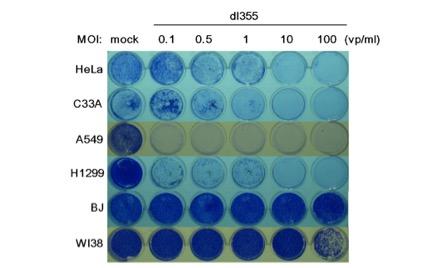
Credit: Yanagawa-Matsuda, et. al, Oncology Reports, November 12, 2018


An engineered virus kills cancer cells more effectively than another virus currently used in treatments, according to Hokkaido University researchers.

Hokkaido University researchers have engineered a virus that selectively targets and kills cancer cells. The virus, called dl355, has an even stronger anticancer effect than another engineered virus currently used in clinical practice, according to a study published in the journal Oncology Reports.

Molecular oncologist Fumihiro Higashino and colleagues deleted a gene involved in viral replication, called E4orf6, from a type of adenovirus. The team previously discovered that E4orf6 stabilizes a type of mRNA called ARE-mRNAs in the infected cells enabling viral replication. ARE-mRNAs are known to be stable in stressed cells and cancer cells, but rapidly degrade in normal cells.

In laboratory tests, they found that their modified adenovirus, called dl355, replicated and increased its number significantly more in cancer cells than it did in normal cells. Higashino explains “The E4orf6-lacking virus relies on the stable ARE-mRNAs in cancer cells for its replication.”

Some viruses can be used to treat cancers, as they replicate within the cells until they burst and die. The researchers infected several types of cultured cancer cells with 100 dl355 virus particles per cell and found that nearly all the cancer cells died within seven days. In contrast, most normal cells infected with the virus did not die, even after seven days. Several cancer cell lines managed to survive low doses of dl355, but all cancer cells were killed by the virus as the dose was increased. Tumour growth was also significantly suppressed when dl355 was administered to human tumour cells grown in mice.

Finally, the team compared the anticancer effects of dl355 with another anticancer adenovirus currently used in clinical practice, called dl1520. dl355 replication was higher in all cancer cell lines tested, including cervical and lung cancer cells, and was better at killing all but one type of cancer cell, compared to dl1520. Both viruses only killed very few normal cells.

The findings suggest that dl355 has potential to be an effective anticancer treatment, the team concludes. They suggest enhancing the stabilization of ARE-mRNAs in cancer cells could even further strengthen its effect, but Professor Higashino notes that further research is required. “While we think dl355 has the potential to be an effective treatment method in dealing with many types of cancers, much more research needs to be done. When we think of a timeline, at least five more years of further research may be required, possible more, on top of clinical trials,” Professor Higashino noted.

###

Media Contact
Tyler Tannert
 @hokkaidouni

011-706-2186

Original Source

https://www.global.hokudai.ac.jp/blog/engineering-a-cancer-fighting-virus/

Related Journal Article

http://dx.doi.org/10.3892/or.2018.6865

Tags: BiologycancerCell BiologyMedicine/HealthVirology
Share12Tweet8Share2ShareShareShare2

Related Posts

Aversive Learning Hijacks Brain Sugar Sensor

March 25, 2026

Can Psychosocial Factors Influence Cancer Risk?

March 23, 2026

Depression Factors in Elderly: Pre vs. Post-COVID Analysis

March 23, 2026

Hidden Health Crises Among US and UK Volunteers in Ukraine Uncovered in New Study

March 23, 2026
Please login to join discussion

POPULAR NEWS

  • blank

    Revolutionary AI Model Enhances Precision in Detecting Food Contamination

    96 shares
    Share 38 Tweet 24
  • Imagine a Social Media Feed That Challenges Your Views Instead of Reinforcing Them

    1003 shares
    Share 397 Tweet 248
  • Uncovering Functions of Cavernous Malformation Proteins in Organoids

    54 shares
    Share 22 Tweet 14
  • Promising Outcomes from First Clinical Trials of Gene Regulation in Epilepsy

    51 shares
    Share 20 Tweet 13

About

We bring you the latest biotechnology news from best research centers and universities around the world. Check our website.

Follow us

Recent News

In-Sensor Cryptography Links Physical Process to Digital Identity

Can Psychosocial Factors Influence Cancer Risk?

Depression Factors in Elderly: Pre vs. Post-COVID Analysis

Subscribe to Blog via Email

Success! An email was just sent to confirm your subscription. Please find the email now and click 'Confirm' to start subscribing.

Join 78 other subscribers
  • Contact Us

Bioengineer.org © Copyright 2023 All Rights Reserved.

Welcome Back!

Login to your account below

Forgotten Password?

Retrieve your password

Please enter your username or email address to reset your password.

Log In
No Result
View All Result
  • Homepages
    • Home Page 1
    • Home Page 2
  • News
  • National
  • Business
  • Health
  • Lifestyle
  • Science

Bioengineer.org © Copyright 2023 All Rights Reserved.