

• HOME
  • NEWS
  • EXPLORE
    • CAREER
      • Companies
      • Jobs
    • EVENTS
    • iGEM
      • News
      • Team
    • PHOTOS
    • VIDEO
    • WIKI
  • BLOG
  • COMMUNITY
    • FACEBOOK
    • INSTAGRAM
    • TWITTER
Monday, July 13, 2026
BIOENGINEER.ORG
No Result
View All Result
  • Login
  • HOME
  • NEWS
  • EXPLORE
    • CAREER
      • Companies
      • Jobs
        • Lecturer
        • PhD Studentship
        • Postdoc
        • Research Assistant
    • EVENTS
    • iGEM
      • News
      • Team
    • PHOTOS
    • VIDEO
    • WIKI
  • BLOG
  • COMMUNITY
    • FACEBOOK
    • INSTAGRAM
    • TWITTER
  • HOME
  • NEWS
  • EXPLORE
    • CAREER
      • Companies
      • Jobs
        • Lecturer
        • PhD Studentship
        • Postdoc
        • Research Assistant
    • EVENTS
    • iGEM
      • News
      • Team
    • PHOTOS
    • VIDEO
    • WIKI
  • BLOG
  • COMMUNITY
    • FACEBOOK
    • INSTAGRAM
    • TWITTER
No Result
View All Result
Bioengineer.org
No Result
View All Result
Home NEWS Science News Science

Expectations may not match reality among cancer patients in some early phase clinical trials

Bioengineer by Bioengineer
October 28, 2016
in Science
Reading Time: 2 mins read
0
Share on FacebookShare on TwitterShare on LinkedinShare on RedditShare on Telegram

In a study of cancer patients considering whether they should participate in phase I clinical trials, a high percentage were willing to participate after discussions with clinical staff, but nearly half thought that their tumors would shrink, which is much higher than what is realistically achieved. Published early online in CANCER, a peer-reviewed journal of the American Cancer Society, the findings demonstrate the challenges facing patients and healthcare professionals during their interactions in phase I studies.

Phase I trials are designed to assess the potential of investigational treatments that have never before been tested in humans. The trials, which are often restricted to patients with advanced disease that has not responded to standard therapy, start with conservatively low doses of a drug or other therapy and escalate until a recommended dose for a phase II trial is established. Typical response rates of phase I cancer trials range from four percent to 20 percent, and enrolled patients survive for a median of six months.

Ethically, healthcare professionals must ensure that patients are well informed about the likelihood of risks and benefits of phase I trials, and it is important to determine how effectively they're relaying such information. Led by Udai Banerji, MD, PhD, a UK team at The Royal Marsden NHS Foundation Trust and The Institute of Cancer Research explored patients' motivations for considering phase I trials and assessed their expectations both before and after they consulted with clinicians.

For the study, 396 patients who were considering participation in a phase I clinical trial completed questionnaires prior to being seen, and 301 completed an abbreviated follow-up questionnaire after consultation with clinicians.

When asked about the potential personal benefit of participating, 43 percent predicted tumor shrinkage in the initial questionnaire. After consultation, this increased to 47 percent. Thus current methods of communication did not lessen patients' pre-consultation expectations of benefit. Overall, patients were keen to consider trials, with 72 percent of pre- and 84 percent of post-clinic patients willing to enroll.

"There is a positive message in this, which is that 84 percent of patients are willing to participate in phase I oncology studies after a discussion with clinical and nursing staff who lay out the conservative estimates of benefit and requirements of hospital visits. This is good for current and future patients and cancer medicine in general," said Dr. Banerji. He added, "the high percentage of patients expecting their tumors to shrink was a sobering finding. This creates a challenge for healthcare professionals to manage expectations but to do so without being patronizing or dismissing human hope." The results also point to the need to improve patient information and consent forms.

###

Media Contact

Dawn Peters
[email protected]

http://www.wiley.com/wiley-blackwell
Share12Tweet8Share2ShareShareShare2

Related Posts

Five or more hours of smartphone usage per day may increase obesity

July 25, 2019
IMAGE

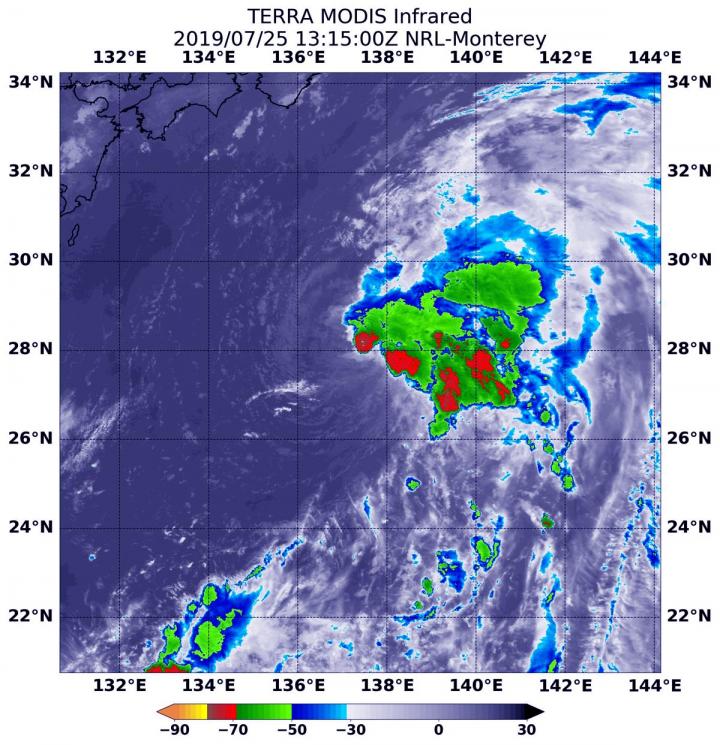
NASA’s terra satellite finds tropical storm 07W’s strength on the side

July 25, 2019

NASA finds one burst of energy in weakening Depression Dalila

July 25, 2019

Researcher’s innovative flood mapping helps water and emergency management officials

July 25, 2019
Please login to join discussion

POPULAR NEWS

  • Detection of EDCs in Breast Milk and Infant Urine Up to Six Months Highlights Early Exposure Risks

    77 shares
    Share 31 Tweet 19
  • New Drug Candidate Developed at McMaster Shows Potential for Treating Brain Cancer

    58 shares
    Share 23 Tweet 15
  • KTU Researchers Explore Ultrasound’s Role in Enhancing Blood Flow Beyond Diagnostics

    53 shares
    Share 21 Tweet 13
  • Experimental Therapy Simultaneously Destroys Prostate Tumor Cells and Reactivates Antitumor Immunity

    46 shares
    Share 18 Tweet 12

About

We bring you the latest biotechnology news from best research centers and universities around the world. Check our website.

Follow us

Recent News

Esophagectomy shows feasible short-term outcomes in octogenarian esophageal cancer patients

Scalable Nested-Block Framework Boosts Urban Infrastructure Efficiency and Equity

Computer-Controlled Electricity Quickly Shapes Flat Nanofilms into 3D Structures

Subscribe to Blog via Email

Enter your email address to subscribe to this blog and receive notifications of new posts by email.

Join 85 other subscribers
  • Contact Us

Bioengineer.org © Copyright 2023 All Rights Reserved.

Welcome Back!

Login to your account below

Forgotten Password?

Retrieve your password

Please enter your username or email address to reset your password.

Log In
No Result
View All Result
  • Homepages
    • Home Page 1
    • Home Page 2
  • News
  • National
  • Business
  • Health
  • Lifestyle
  • Science

Bioengineer.org © Copyright 2023 All Rights Reserved.
