Almost a third of people unaware of plastic hidden in menstrual products — study
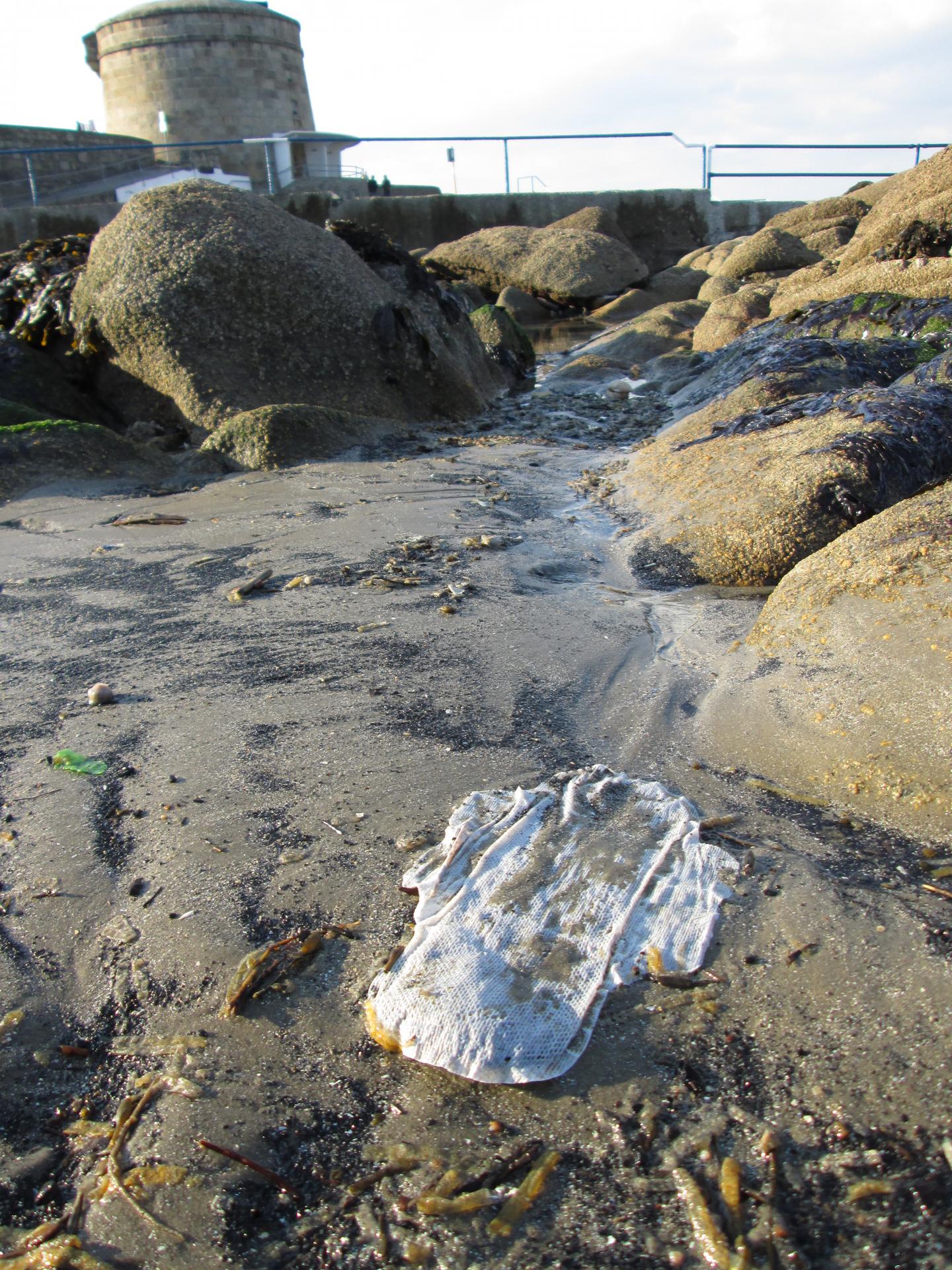
Credit: Dr Dannielle Green, Anglia Ruskin University
New research indicates that more needs to be done to raise awareness of the amount of plastic contained in commonly-used menstrual products.
The study, published in the journal Sustainability, was led by Elizabeth Peberdy of Anglia Ruskin University, who examined levels of awareness and people’s attitudes towards the environmental impact of these products.
The study, which used face-to-face focus groups and an online survey of 300 people, found that many participants were shocked at the amount of plastic in commonly-used disposable menstrual products. Almost a third of those surveyed were not aware that tampons contained plastic and 20% of people believed that it is okay to flush tampons.
Tampons are the most commonly used menstrual product in Western Europe and the US, with women using an average of 11,000 during their lifetime. Many disposable products are flushed after use, which can lead to plastics contaminating ocean ecosystems.
Plastic tampon applicators are commonly found on beaches and even inside the stomachs of dead seabirds. They can also play a part in another set of problems. Slowly, with the presence of light, they can break down into smaller fragments. Microplastics, small pieces of plastic less than 5mm in size, are now found in even the most remote marine environments.
The study also found that people who expressed greater awareness of plastic pollution were also far more likely to use organic pads and tampons, menstrual cups and reusable cloth pads, rather than disposable non-organic products.
Lead author Elizabeth Peberdy, who carried out the work as part of her Masters Degree in Sustainability at Anglia Ruskin University, said: “Plastic pollution has become a hot topic and whilst there has been a strong focus on plastic bags and other single use items, I felt the hidden plastic in disposable menstrual products was going under the radar and I wanted to know whether other people were aware of the issue.
“My research showed that many are unaware that tampons often contain plastic, and therefore it is perhaps not surprising that some people think that it is okay to flush these products down the toilet.
“Our study also found a clear link between people’s awareness of environmental impacts and their choice of menstrual product. This indicates that it should be possible to create a change in behaviour through education, whether through the school curriculum, public awareness campaigns or better labelling on products.
“It’s a complex issue and one that some people feel awkward talking about, but it shouldn’t be that way. I hope that this research will go a little way towards raising awareness, even if it’s just by sparking a conversation between friends that may not otherwise have happened.”
Professor Aled Jones, Director of the Global Sustainability Institute at Anglia Ruskin University and a co-author on the paper, said: “We are delighted to see yet again the quality of output from our Masters students recognised through the publication of a peer-reviewed journal article.
“This is no small achievement and it is particularly important that taboo subjects such as periods can be tackled through this type of work as plastic waste will not be solved simply by focussing on iconic objects like straws.”
###
Media Contact
Jon Green
[email protected]
44-012-456-84717
Original Source
https:/
Related Journal Article
http://dx.