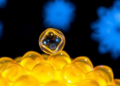
Washington, DC – January 8, 2019 – Clostridium difficile causes the most common and most dangerous hospital-born infections in the United States and around the world. People treated with antibiotics are at heightened risk because those drugs disturb the microbial balance of the gut, but observational studies have also identified a link between severe C. difficile infections and use of NSAIDs, or non-steroidal anti-inflammatory drugs. The study is published in the journal, mBio.
Findings published this week provide new evidence for that connection, as well as an explanation of the underlying biological mechanism. A better understanding of how NSAIDs affect the severity of C. difficile infection could inform the development of future treatments.
“We are always trying to think of modifiable risk factors for the disease,” says study leader David Aronoff, a microbiologist and infectious diseases expert at Vanderbilt University in Nashville, Tennessee. Aronoff worked on the study with researchers from the University of Michigan and the University of Arizona.
The researchers followed two groups of antibiotic-treated mice for one week after infection with C. difficile. One group had been treated with an NSAID called indomethacin prior to infection, and the other hadn’t. Only about 20 percent of the mice treated with the NSAID survived to the end of the observation period, compared to about 80 percent of the mice that hadn’t been exposed to the NSAID.
Aronoff and his collaborators determined that even brief exposure to the NSAID prior to C. difficile inoculation increased the severity of infections and shortened survival. Further cellular and genetic analyses revealed that the NSAID exposure altered the gut microbiota and depleted the production of prostaglandins, hormone-like substances known to play an important role in gastrointestinal health. Those observations align with previous studies reporting that NSAIDs can cause or exacerbate an inflammatory disease called colitis, also by inhibiting the body’s production of prostaglandins.
In the new study, the researchers conclude that NSAID-driven changes worsened C. difficile infections by impairing epithelial cells – the main defense system in the intestine against infectious taxa – and by disturbing the normal immune response. They studied at the impact of only one NSAID, indomethacin, but Aronoff says he thinks the findings might extend to other common NSAIDs, including ibuprofen and aspirin, since they all have roughly the same biological mechanism.
“Ultimately, these new results might guide how we treat people with C. diff, particularly with pain management,” says Aronoff. “Right now, it’s too early for our results to guide clinical care, but they should be a stimulus for future studies.”
###
The American Society for Microbiology is the largest single life science society, composed of more than 32,000 scientists and health professionals. ASM’s mission is to promote and advance the microbial sciences.
ASM advances the microbial sciences through conferences, publications, certifications and educational opportunities. It enhances laboratory capacity around the globe through training and resources. It provides a network for scientists in academia, industry and clinical settings. Additionally, ASM promotes a deeper understanding of the microbial sciences to diverse audiences.
Media Contact
Aleea Khan
[email protected]
202-942-9365