


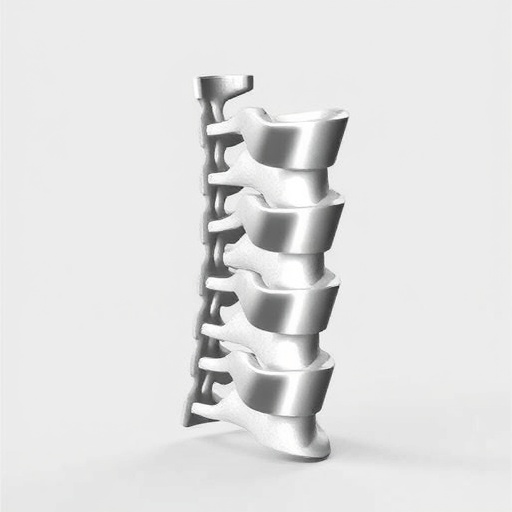
In the realm of biomedical engineering, recent innovations are paving the way for transformative approaches to spinal surgery. A pioneering study conducted by Shen et al. introduces a groundbreaking cervical spine corpectomy cage, meticulously designed with 3D-printed patient-specific endplate-conformed contact surfaces. This device promises to revolutionize how we look at spinal implants, offering enhanced compatibility with the human anatomy while maintaining structural integrity through traditional manufacturing processes for its expandable mechanism.
At the heart of this technological advance lies the fusion of traditional manufacturing and cutting-edge 3D printing. Traditional fabrication methods have long been the cornerstone of medical device production, yet they often introduce limitations in customization and biocompatibility. In contrast, 3D printing allows for the creation of personalized implants that conform closely to the unique anatomical features of individual patients. This study explores the implications of such technology in the design and effectiveness of cervical spine corpectomy cages, specifically in enhancing surgical outcomes and postoperative recovery.
The construction of this innovative cage integrates titanium, a material renowned for its biocompatibility and mechanical strength. Titanium’s properties make it an ideal choice for spinal implants, as it can withstand the stresses imposed on spinal structures without compromising its integrity. The research conducted by Shen and colleagues not only highlights the material’s benefits but also examines the mechanical performance of the cage against traditional counterparts. This dual approach not only validates the findings but offers a comparative analysis that positions the new design as a front-runner in spinal surgical solutions.
Understanding the complexities of spinal biomechanics was crucial in the mechanical assessment of the corpectomy cage. Researchers conducted comprehensive tests to measure load distribution, resilience under stress, and overall stability within a simulated spinal environment. These tests are fundamental in affirming the operational capabilities of the implant, ensuring it can endure real-life physiological stresses. The results demonstrated a significant improvement in load-bearing capacity compared to conventional designs, thus providing substantial backing to the proposed benefits of this new system.
Patient-specific customization stands out as a key advantage of the newly designed cervical spine cage. By leveraging advanced imaging technologies such as MRI and CT scans, surgeons can create implants tailored to the precise anatomical structures of their patients. This not only enhances the fit but also facilitates better integration with the surrounding bone. Such precision can potentially reduce the likelihood of complications, such as implant dislodgement, which is a common concern in spinal surgeries.
The expandable mechanism incorporated into the design further enhances its versatility. Traditionally, expandable cages have had their limitations, particularly in terms of complex manufacturing processes and material fatigue. However, this hybrid approach, which combines traditional manufacturing techniques with innovative design, signals a new era in the production of expandable spinal technologies. The cage not only provides immediate support post-surgery but can also adapt to the patient’s changing anatomy over time through expansion.
As the medical community embraces these advancements, the implications of this research reach far beyond mere functionality. By offering better-fitting solutions and improved surgical outcomes, patient satisfaction and recovery times are likely to improve significantly. Patients who undergo spinal surgeries often face long recovery periods and challenges associated with postoperative care. A well-designed implant can play a pivotal role in streamlining these processes and improving the overall quality of life for patients.
Moreover, the collaboration between technologists and medical professionals in this research elucidates the importance of interdisciplinary work in healthcare innovation. The integration of engineering principles within medical applications is not just revolutionary; it holds the potential to address some of the most pressing challenges in modern medicine. By working together, these fields can cultivate solutions that capitalize on strengths unique to each discipline, ultimately enhancing patient care and outcomes.
The clinical implications of this study extend into future research as well. With a foundation laid by Shen et al., additional studies could explore long-term outcomes and further refine design parameters based on patient feedback. The adaptability of the cage also raises questions about its application across various spinal conditions, encouraging ongoing inquiry into its use for different demographic groups and health scenarios.
Despite the promising data, the journey for this innovative cervical spine corpectomy cage does not end with mechanical assessment. Regulatory approvals, clinical trials, and long-term data collection will play essential roles in determining its eventual integration into standard surgical practices. Each step taken towards proving its efficacy in broader populations will bolster confidence in its adoption within surgical settings.
In summary, the research by Shen and colleagues marks a significant milestone in spinal surgery technology. By marrying the benefits of 3D printing with traditional manufacturing processes, they offer a bespoke solution that has the potential to drastically improve surgical outcomes and patient experiences. The future of spinal implants appears bright, as further advancements may continue to nurture innovation, driving systemic improvements in healthcare delivery and patient satisfaction.
With the progress witnessed in this study, it is easier to envision a future where every surgical case treatment can be tailored specifically to individual patients, ensuring optimal matches between implant designs and anatomical peculiarities. This movement towards personalized medicine, particularly in orthopedics, showcases an exciting shift in how we approach surgery, blending the latest technology with foundational medical practices for superior results.
Lastly, the ongoing dialogue surrounding these advancements is essential. Engaging stakeholders, including clinicians, patients, and researchers, will ensure that such innovations not only reach clinical practice but are implemented effectively to achieve the intended outcomes. This approach might not only reduce costs associated with complications but ultimately promote a more effective healthcare system accessible to all who need it.
Subject of Research: Mechanical assessment of a titanium cervical spine corpectomy cage.
Article Title: Mechanical assessment of a titanium cervical spine corpectomy cage assembled with 3D-printed patient-specific endplate-conformed contact surfaces and a traditionally manufactured expandable mechanism.
Article References: Shen, SC., Huang, SF., Sun, WH. et al. Mechanical assessment of a titanium cervical spine corpectomy cage assembled with 3D-printed patient-specific endplate-conformed contact surfaces and a traditionally manufactured expandable mechanism. 3D Print Med 11, 50 (2025). https://doi.org/10.1186/s41205-025-00299-2
Image Credits: AI Generated
DOI: https://doi.org/10.1186/s41205-025-00299-2
Keywords: spinal surgery, 3D printing, titanium implants, personalized medicine, cervical spine corpectomy, biomechanical assessment, patient outcomes, expandable mechanism.
Tags: 3D-printed titanium spine cageadvancements in spinal implant technologybiocompatibility of titanium implantsbiomedical engineering innovationscervical spine corpectomy cagecustomizable spinal surgery solutionsmechanical evaluation of spinal devicespatient-specific spinal implantspostoperative recovery in spinal proceduressurgical outcomes in spinal surgerytitanium in biomedical applicationstraditional manufacturing vs 3D printing



