


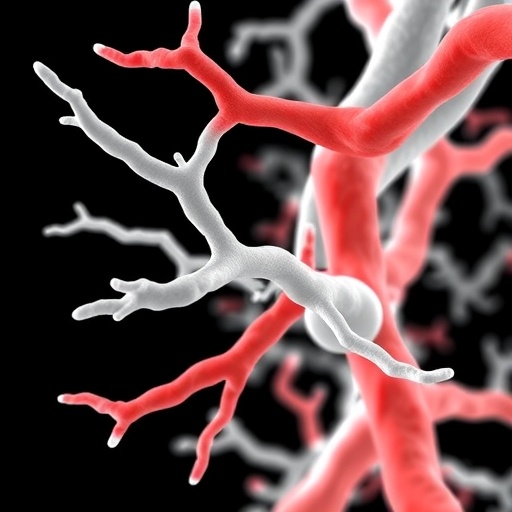
Researchers have continually pushed the boundaries of medical technology, particularly when it comes to simulating human tissues for training and surgical practice. The age-old challenge has been the need for materials that accurately represent the biomechanical properties of human tissues, especially when it comes to the intricate structures found in the vascular system. A recent study led by Henriques et al. dives into this critical area, exploring the use of 3D printed polymers designed to mimic the mechanical characteristics of atherosclerotic blood vessels.
Atherosclerosis, a condition characterized by the buildup of plaques in the arterial walls, poses significant risks to cardiovascular health. It is crucial for medical professionals to have effective training models that reflect the complexities and variabilities found in human vascular tissues. By utilizing 3D printing technology, the researchers have developed innovative polymers that not only replicate the mechanical properties of atherosclerotic vessels but also introduce novel degradation mechanisms through UV radiation and hydrolysis.
The study emphasizes the importance of mechanical fidelity in training models. Traditional materials often fall short, either being too rigid or not offering the necessary tactile feedback that surgeons crave during practice. In the biomedical domain, customizability is paramount; hence, the research focuses on creating polymers that can be tailored to simulate the diverse mechanical properties found in diseased vessels. 3D printing allows for this customization, providing an avenue to produce specific shapes and internal structures that reflect real-world vascular conditions.
UV radiation and hydrolysis play pivotal roles in the degradation of these polymers, which not only serves to mimic the aging of biological tissues but also provides a dynamic aspect to the training models. The ability to alter the material properties over time allows for a more nuanced understanding of how atherosclerotic plaques behave and change throughout the disease process. By integrating these environmental factors into the training models, medical professionals can gain insights into the progressive nature of atherosclerosis, deepening their knowledge and preparedness for real-life scenarios.
One of the major benefits of using 3D printed models lies in their accessibility and cost-effectiveness. Traditional anatomical models often come with significant price tags and are predominantly manufactured in fixed configurations. In contrast, 3D printing democratizes access to customized training models, empowering institutions, and practitioners with the ability to produce exact replicas tailored to their training requirements, while optimizing costs.
Furthermore, the study immerses itself in the potential that these advanced polymers hold for future medical training. Equipped with haptic feedback, which simulates the movement, texture, and resistance of human tissues, these models can act as excellent tools for surgical rehearsals. The incorporation of variable mechanical properties through degradation methods means that surgeons can practice on models that replicate the complexity of evolving atherosclerotic conditions and hone their skills in navigating these challenging scenarios.
Collaborative efforts among multidisciplinary teams have been instrumental in realizing the full potential of these innovations. The intersection of material science, biomedical engineering, and surgical training has paved the way for the development of these next-generation training resources. By fostering such collaborations, researchers can continue to create and refine materials that deeply resonate with real-life clinical experiences.
As medical education increasingly leans towards simulation-based training, including virtual and augmented realities, the role of tangible 3D printed models will become all the more significant. These physical learning tools bridge the gap between theory and practice, allowing medical professionals to transition seamlessly from simulations to actual surgical theaters. With the insights gained from these innovative polymers, the medical community can expect to see an enhancement in competency and an improvement in patient outcomes.
The findings presented by Henriques et al. have the potential to spark a paradigm shift in how surgical training is approached, particularly for high-stakes fields such as cardiovascular surgery. This research showcases not just a novel material but a step towards shrinking the gap between education and execution, ultimately benefiting patient care.
Moreover, the scope of the study extends beyond just cardiovascular surgery. The technologies explored within the paper may find applications across various surgical fields where understanding the mechanical intricacies of tissues is fundamental. For instance, replication of the characteristics of other vascular diseases, or even broader applications in soft tissue simulations, could see advancements derived from this foundational work.
In conclusion, the work undertaken by Henriques and his co-authors sheds light on an innovative approach to medical training through the development of 3D printed polymers designed to mimic the mechanical properties of atherosclerotic blood vessels. By harnessing UV radiation and hydrolysis-induced degradation, these materials can reflect the evolving nature of arterial diseases. As the importance of realistic training models becomes clear, the potential for improved surgical outcomes looms ever larger—ultimately shaping a future where healthcare professionals are better equipped to combat the intricate challenges of human health.
As this research continues to make waves in the scientific community, one can only speculate on the broader implications it holds for training, medical technologies, and ultimately patient care. The innovative trajectory set forth by this study suggests a promising future where medical training and surgical proficiency harmoniously align with advanced material science.
Subject of Research: Development of 3D printed polymers mimicking the mechanical properties of atherosclerotic blood vessels.
Article Title: 3D printed polymers that mimic the mechanical properties of atherosclerotic blood vessels for training models: the advantageous degradation induced by UV radiation and hydrolysis.
Article References: Henriques, J.F., Gonçalves, L., Amaro, A.M. et al. 3D printed polymers that mimic the mechanical properties of atherosclerotic blood vessels for training models: the advantageous degradation induced by UV radiation and hydrolysis.
3D Print Med 11, 34 (2025). https://doi.org/10.1186/s41205-025-00288-5
Image Credits: AI Generated
DOI: https://doi.org/10.1186/s41205-025-00288-5
Keywords: 3D printing, polymers, mechanical properties, atherosclerosis, surgical training, degradation, UV radiation, hydrolysis.
Tags: 3D printed polymers for medical trainingadvanced biomaterials for surgeryatherosclerotic blood vessel simulationcardiovascular health training technologieschallenges in medical technology developmentcustomizability in medical simulationsdegradation mechanisms in 3D printinginnovative materials in biomedical applicationsmechanical fidelity in tissue modelsmechanical properties of vascular tissuesreplicating human tissue characteristicssurgical practice training models



