


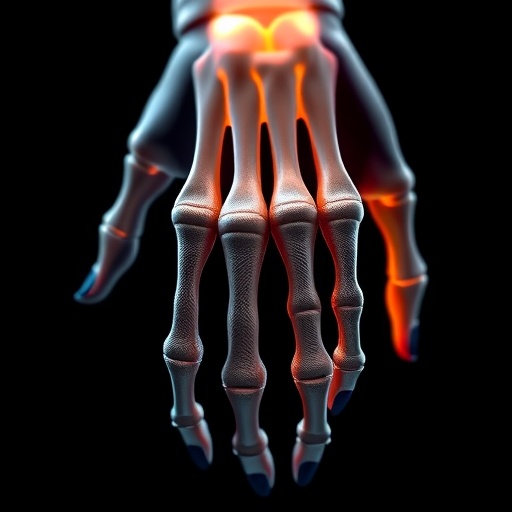
In a groundbreaking approach to orthopedic oncology, researchers have unveiled a revolutionary treatment for distal radius giant cell tumors, leveraging cutting-edge 3D printing technology. The study emphasizes how a unique combination of a 3D-printed metal prosthesis and a mesh patch can significantly enhance surgical outcomes and improve patient recovery times. This innovative method highlights the potential of biomimetic design in the field of regenerative medicine, showcasing a fusion of engineering, biology, and advanced material science.
The distal radius giant cell tumor poses a significant challenge in orthopedic surgery. Traditionally, the management of such tumors often resulted in complications, including local recurrence and functional impairment. However, the research team, led by Zhang and colleagues, sought to offer a solution that not only addressed the tumor but also restored functionality to the limb. The study embarks on an exploration of 3D printing’s potential in creating patient-specific prosthetics tailored to meet the unique requirements of each case.
At the core of this innovative treatment is the use of a 3D-printed metal prosthesis. It is crafted from advanced bio-compatible metals that provide excellent mechanical strength, allowing it to withstand the stresses endured during daily activities. The precision of 3D printing enables the creation of a prosthesis that closely mimics the original anatomy of the distal radius, ensuring a seamless fit for the patient. Such anatomical fidelity is crucial for restoring functional mobility and preserving the surrounding soft tissues.
In addition to the prosthesis, the researchers incorporated a mesh patch, which serves as a scaffold for new tissue formation. This feature enhances the healing process by facilitating cellular migration and encouraging the body’s natural regenerative capabilities. The mesh patch not only supports the newly formed tissue but also integrates well with the surrounding biological structures, minimizing the risk of complications and enhancing long-term survival of the graft.
Preclinical studies conducted as part of this research demonstrated promising results. The treatment was shown to reduce recurrence rates of giant cell tumors significantly, a common issue that plagues traditional surgical methods. Additionally, patients who received the 3D-printed prosthesis combined with the mesh patch exhibited improved functional outcomes, demonstrating a higher range of motion and reduced pain levels compared to those who underwent conventional treatments.
Another significant aspect of this research is the biocompatibility of the materials used in the prosthesis and patch. By utilizing materials that closely align with the biological properties of bone and soft tissue, the study’s developers ensured that there is minimal rejection and inflammation. The seamless integration between the prosthetic device and the human body thereby creates a conducive environment for healing and recovery.
As the researchers moved from laboratory evaluations to clinical trials, their excitement about the prospects of this innovative treatment grew. Patient response was overwhelmingly positive; the individualized treatment model allowed for tailored interventions that met the specific anatomical and functional needs of the patient. Each surgical procedure not only aimed for tumor removal but also for the restoration of limb functionality, paving the way for a new standard in orthopedic oncology care.
The success of this research lies not only in its technical accomplishments but also in the interdisciplinary collaboration that drove its development. The fusion of engineering, materials science, and clinical expertise has fostered an environment where innovative ideas can flourish. The team’s dedication to pushing the boundaries of what is possible in prosthetic design illustrates the promising future of personalized medicine.
As the medical community begins to embrace the potential of 3D printing in surgical applications, this pioneering work will likely set the standard for future research and clinical applications in orthopedics and beyond. The results of this study could serve as a catalyst for further exploration into the enhanced design of prosthetic devices, which could eventually lead to improvements in treatment protocols for a variety of orthopedic conditions.
In summary, the treatment of distal radius giant cell tumors using 3D-printed metal prostheses combined with mesh patches represents a revolutionary milestone in orthopedic surgery. This study not only demonstrates the feasibility of advanced technologies in clinical practice but also highlights the importance of patient-centered approaches in healthcare. As academia and industry converge, there is a strong likelihood that future innovations in this field will continue to yield groundbreaking solutions for complex medical challenges.
The implications of this research are vast, with the potential to inspire similar advancements in other areas of surgical medicine. The demonstrated advantages—ranging from reduced complication rates to improved functional recovery—ensure that the integration of 3D printing technology within the surgical arena will be a pivotal focus in the ongoing evolution of medical science. As interest mounts and additional studies emerge, the future looks exceptionally bright for innovative therapies in treating bone tumors and other complex orthopedic issues.
Overall, this new technique illustrates the strides being made in the convergence of medicine and engineering. With continued research and development, it is conceivable that practices adopting such transformative technologies could become commonplace, enhancing patient outcomes and paving the way for a new era of surgical excellence. As practitioners and researchers alike embrace this modern approach, it’s clear that we stand on the brink of a new frontier in orthopedic treatment.
The intricate dance between technology and healing has never been more visible than in this milestone study. As 3D printing continues to evolve, the future of medical prosthetics could be not only about replacing lost functionality but also about restoring hope and enhancing lives. With every advancement, the persistent challenges of medical treatment adapt, yielding to a brighter vision fueled by innovation and a commitment to patient care.
As research continues to unfold, the excitement and anticipation for what lies ahead in this domain cannot be overstated. The trajectory set forth by this pioneering work hints at revolutionary treatments that may soon become available to patients across the globe, igniting hope and fostering lives reclaimed from the grasp of disease.
Subject of Research: Treatment of distal radius giant cell tumor with 3D-printed metal prosthesis combined with mesh patch.
Article Title: Treatment of distal radius giant cell tumor with 3D-printed metal prosthesis combined with mesh patch.
Article References: Zhang, T., Tan, X., Yuan, Z. et al. Treatment of distal radius giant cell tumor with 3D-printed metal prosthesis combined with mesh patch. 3D Print Med 11, 15 (2025). https://doi.org/10.1186/s41205-025-00261-2
Image Credits: AI Generated
DOI: https://doi.org/10.1186/s41205-025-00261-2
Keywords: 3D printing, giant cell tumor, orthopedic surgery, metal prosthesis, mesh patch, regenerative medicine.
Tags: 3D-printed metal prosthesisadvanced material science in surgerybio-compatible materials in prostheticsbiomimetic design in medicinedistal radius giant cell tumorsorthopedic oncology innovationsorthopedic surgery advancementspatient recovery enhancementpatient-specific prostheticsregenerative medicine breakthroughssurgical outcomes improvementtumor management strategies



