The hepatitis B virus (HBV) is responsible for one of the most serious and common infectious diseases. Transmitted through biological fluids, it attacks the liver cells. The chronic form of the disease can lead to serious complications, including cirrhosis and liver cancer. There is no effective treatment for the chronic form of the disease, which can only be prevented by vaccination. After identifying a key protein complex that is active when our body is infected by the virus, a team from the University of Geneva (UNIGE) has deciphered the precise functioning of this protective mechanism, opening the way to new therapeutic targets. These results can be read in the journal Nature Structural and Molecular Biology.
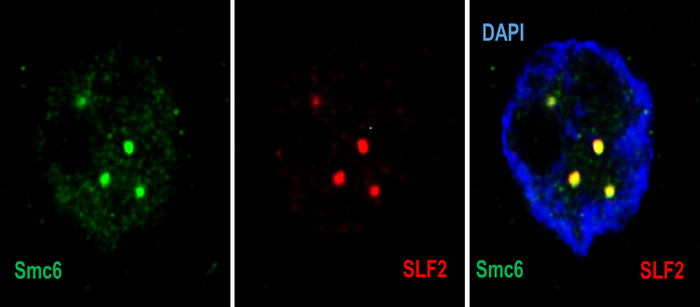
Credit: © UNIGE – Laboratory of Professor Michel Strubin – Regulation of hepatitis B virus gene expression – Department of Microbiology and Molecular Medicine.
The hepatitis B virus (HBV) is responsible for one of the most serious and common infectious diseases. Transmitted through biological fluids, it attacks the liver cells. The chronic form of the disease can lead to serious complications, including cirrhosis and liver cancer. There is no effective treatment for the chronic form of the disease, which can only be prevented by vaccination. After identifying a key protein complex that is active when our body is infected by the virus, a team from the University of Geneva (UNIGE) has deciphered the precise functioning of this protective mechanism, opening the way to new therapeutic targets. These results can be read in the journal Nature Structural and Molecular Biology.
Hepatitis B is the most common form of hepatitis. It is a viral disease caused by the hepatitis B virus. It is mainly blood or sexually transmitted. It is up to 100 times more contagious than HIV. By infecting the liver cells, this virus causes a transitory inflammation of this organ that can also evolve towards a chronic infection. This can then lead to serious pathologies, such as cirrhosis or liver cancer. It is estimated that nearly one million people die each year from this disease worldwide. There is no definitive treatment for chronic hepatitis B. The only way to prevent it is to be vaccinated before the disease appears.
In 2016, a UNIGE team led by Michel Strubin, an associate professor in the Department of Microbiology and Molecular Medicine and in the Geneva Centre for Inflammation Research at the UNIGE Faculty of Medicine, revealed a mechanism that is crucial for understanding this disease: when our immune system defends itself against it, a complex – i.e. an interdependent set – of six proteins called SMC5/6, present in our cells, detects the viral DNA and blocks it. The virus then strikes back and produces a specific protein, the X protein. This protein enters the cell and degrades SMC5/6, which is no longer able to play its sentinel role.
A three-step mechanism
Before this discovery, the antiviral function of SMC5/6 was unknown. It was only identified as a key complex for the structural maintenance of our chromosomes. Today, Michel Strubin’s team has made a new breakthrough. In a recent study, conducted in collaboration with the American pharmaceutical company Gilead Sciences, the UNIGE researchers identified the three steps and the specific proteins required for SMC5/6 to play its antiviral role.
‘‘In the first step, a protein of the SMC5/6 complex detects the virus’ DNA and traps it’’, explains Fabien Abdul, a senior research and teaching assistant in the Department of Microbiology and Molecular Medicine at the UNIGE Faculty of Medicine and first author of the study. ‘‘Then, a second protein of the complex – SLF2 – takes the trapped DNA of the virus into a sub-compartment of the nucleus of the attacked cell, called the PML body. A third protein – Nse2 – then comes into play and inhibits the virus’ chromosome.’’
As SMC is a large family of protein complexes, the researchers also wanted to know whether other ‘members’ of this family were able to bind to hepatitis B viral DNA. ‘‘We discovered that this competence was unique to SMC5/6’’, says Fabien Abdul.
Towards new therapeutic targets
To achieve these results, the research team worked on in vitro cell cultures. ‘‘We used molecular biology techniques and more specifically genetic scissors called CRISPR-Cas9. This tool allowed us to cut the DNA strands within the cells and thus delete or modify the gene coding for each protein constituting the SMC5/6 complex. Thanks to this technique, we were able to make one or other of the proteins disappear and thus understand their respective functions within the complex’’, explains Michel Strubin, the study’s last author. Based on these observations, the three steps of the antiviral mechanism could be established.
This discovery provides a better understanding of how the complex functions during its antiviral action. It could thus pave the way for the identification of new therapeutic targets to combat the hepatitis B virus. ‘‘The next stage of research will consist of better deciphering the mechanism of inhibition of the virus in the sub-compartment of the cell nucleus’’, indicates Aurélie Diman, a postdoctoral researcher in Michel Strubin’s laboratory. Work will also have to be carried out on the X protein, whose role was identified by the UNIGE researchers in 2016, in order to better understand the counter-attack mechanism of hepatitis B against the antiviral activity of the cellular SMC5/6.
Journal
Nature Structural & Molecular Biology
DOI
10.1038/s41594-022-00829-0
Method of Research
News article
Subject of Research
Cells
Article Title
Smc5/6 silences episomal transcription by a three-step function
Article Publication Date
12-Sep-2022