• HOME
  • NEWS
  • EXPLORE
    • CAREER
      • Companies
      • Jobs
    • EVENTS
    • iGEM
      • News
      • Team
    • PHOTOS
    • VIDEO
    • WIKI
  • BLOG
  • COMMUNITY
    • FACEBOOK
    • INSTAGRAM
    • TWITTER
Monday, December 22, 2025
BIOENGINEER.ORG
No Result
View All Result
  • Login
  • HOME
  • NEWS
  • EXPLORE
    • CAREER
      • Companies
      • Jobs
        • Lecturer
        • PhD Studentship
        • Postdoc
        • Research Assistant
    • EVENTS
    • iGEM
      • News
      • Team
    • PHOTOS
    • VIDEO
    • WIKI
  • BLOG
  • COMMUNITY
    • FACEBOOK
    • INSTAGRAM
    • TWITTER
  • HOME
  • NEWS
  • EXPLORE
    • CAREER
      • Companies
      • Jobs
        • Lecturer
        • PhD Studentship
        • Postdoc
        • Research Assistant
    • EVENTS
    • iGEM
      • News
      • Team
    • PHOTOS
    • VIDEO
    • WIKI
  • BLOG
  • COMMUNITY
    • FACEBOOK
    • INSTAGRAM
    • TWITTER
No Result
View All Result
Bioengineer.org
No Result
View All Result
Home NEWS Science News Artificial Intelligence

IBM creates liquid-based transistors that can process data like the human brain

Bioengineer by Bioengineer
April 18, 2014
in Artificial Intelligence
Reading Time: 2 mins read
0
Share on FacebookShare on TwitterShare on LinkedinShare on RedditShare on Telegram

Researchers at IBM has given the transistor a major makeover, and it may enable the company to build computers that function more like the way the human brain works.
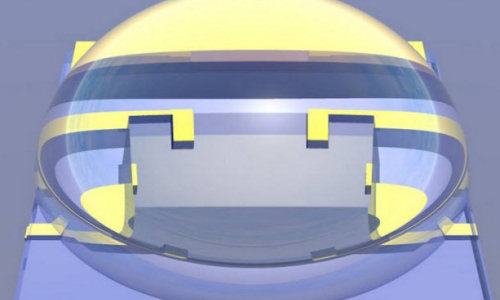
IBM creates liquid-based transistors that can process data like the human brain

Photo Credits: New York Times

If it pans out, IBM could use the technology to build chips that are highly efficient and use much less electrical power. That could lead to a revolution in mobile devices, which today are bound by short battery lives and electrical inefficiency. The whole process is not unlike the charged electrical fluids sloshing around in our brains. If the brain can do it, an artificially crafted material might be able to do it too.

The new technology is based on materials called “correlated electron oxides,” which can be combined with an ionic liquid, or a mixture where half of the molecules carry a positive charge and half are negative. When you apply a tiny ionic voltage to the liquid, the charged particles move to opposite sides of the surface of the oxide material. The charge leaves the oxide and goes into the liquid, changing its conductive state from an insulator to a metal, or from something that does not conduct electricity to something that does.

And it maintains its electrical state until another charge is applied. That part of the research is new and is particularly encouraging. IBM believes it can create non-volatile memory, or chips that save data whether electricity is on or off. It can also make logic chips that would use less power than today’s silicon-based semiconductor chips, which are the brains of everything electronic.

Story Source:

The above story is based on materials provided by New York Times.

Share14Tweet9Share2ShareShareShare2

Related Posts

Artificial intelligence could help farmers diagnose crop diseases

October 5, 2016

Rats have greater episodic memory than previously thought

October 3, 2016

An algorithm for taxi sharing

September 26, 2016

Artificial intelligence reveals mechanism behind brain tumor

September 20, 2016
Please login to join discussion

POPULAR NEWS

  • Nurses’ Views on Online Learning: Effects on Performance

    Nurses’ Views on Online Learning: Effects on Performance

    70 shares
    Share 28 Tweet 18
  • NSF funds machine-learning research at UNO and UNL to study energy requirements of walking in older adults

    71 shares
    Share 28 Tweet 18
  • Unraveling Levofloxacin’s Impact on Brain Function

    54 shares
    Share 22 Tweet 14
  • Exploring Audiology Accessibility in Johannesburg, South Africa

    51 shares
    Share 20 Tweet 13

About

We bring you the latest biotechnology news from best research centers and universities around the world. Check our website.

Follow us

Recent News

Transforming Lab Reports: AI Takes the Lead

Core Competencies of OR Nurses in Maritime Emergencies

Factors Behind Pediatric IV Cannula Complications in Ethiopia

Subscribe to Blog via Email

Enter your email address to subscribe to this blog and receive notifications of new posts by email.

Join 70 other subscribers
  • Contact Us

Bioengineer.org © Copyright 2023 All Rights Reserved.

Welcome Back!

Login to your account below

Forgotten Password?

Retrieve your password

Please enter your username or email address to reset your password.

Log In
No Result
View All Result
  • Homepages
    • Home Page 1
    • Home Page 2
  • News
  • National
  • Business
  • Health
  • Lifestyle
  • Science

Bioengineer.org © Copyright 2023 All Rights Reserved.