
New Linear-Time Algorithm Doubles Computation Speed for Left-Bounded Shortest Unique Substrings
A novel linear-time algorithm computes left-bounded shortest unique substrings twice as fast as existing methods while maintaining a compact memory ...
A novel linear-time algorithm computes left-bounded shortest unique substrings twice as fast as existing methods while maintaining a compact memory ...
Researchers have introduced GeneSPOT, a computational framework that maps spatial relationships among molecular features across biological conditions, developmental stages, and ...

Researchers have developed SRLIDP, a dual-granularity computational framework that extracts protein disorder signals across intermediate language model layers while filtering ...
Researchers demonstrate that multimodal cell foundation models require synergy-aware integration rather than standard alignment objectives to capture complementary biological signals ...

Researchers have developed a deep learning architecture combining transformers and convolutional neural networks to predict drug-target affinities and accelerate virtual ...
Researchers developed Sama, an algorithm that establishes per-position structural correctness guarantees and misassembly probability bounds for de Bruijn graph genome ...

Researchers have developed a polynomial-sized integer linear programming method that reconstructs ancestral natural genomes across phylogenetic trees without combinatorial explosion.
Researchers have introduced RankMap, a fast R package that uses rank-based features and regularized multinomial regression to accelerate reference-based cell ...
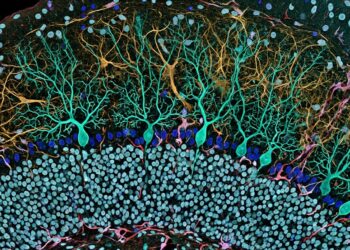
A comprehensive review evaluates twenty computational algorithms designed to deconvolve mixed cellular signals from low-resolution spatial transcriptomics data into distinct ...

Researchers developed kinGEMs, an integrated deep learning framework that incorporates uncertainty-aware kinetic parameters into enzyme-constrained models across diverse organisms.

Researchers developed a physics-informed neural network framework to infer demographic functions and unobserved dynamics in juvenile fish oogenesis.
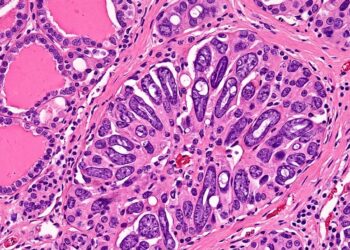
A computational study in Clinical Epigenetics evaluates tazemetostat's predicted binding to five hub targets in ARID1A-deficient anaplastic thyroid cancer, highlighting ...

A computational twelve-gene zinc finger signature stratifies lung adenocarcinoma survival and correlates with distinct immune microenvironment profiles.

Researchers have developed Anchorage, a specialized sequence assembler that leverages terminal anchor sequences and dynamic programming to reconstruct full-length single ...
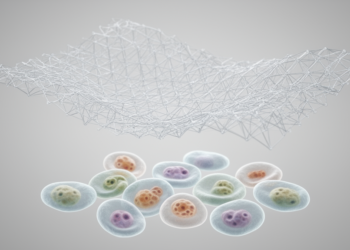
CellPatch combines cross-attention with heuristic gene patching to provide a lightweight, adaptable foundation model for single-cell RNA-sequencing analysis.

A new computational framework identifies a fibroblast-driven epigenetic subtype of gastric cancer associated with therapeutic resistance and an immunosuppressive microenvironment.
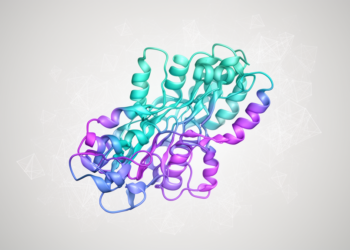
A new review in BMC Artificial Intelligence details how RNA sequence foundation models are enhancing the prediction of non-coding RNA ...
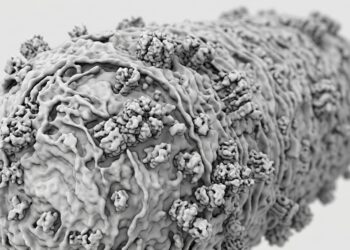
Researchers have introduced ContextMirror 2.0, an unsupervised coevolutionary algorithm that maps species-specific protein interactions and identifies functional bacterial communities without ...
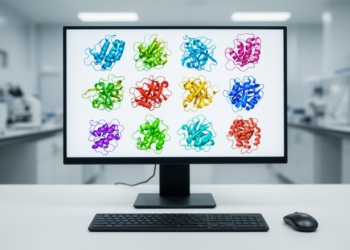
A new study in Genome Biology benchmarks eight antibody language models across five design tasks, finding that AbLang, AntiBERTa2, and ...
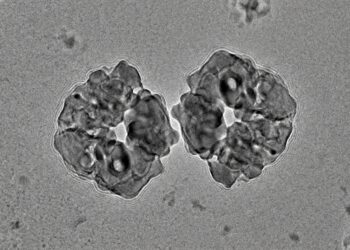
A new model called MIXTAP uses multi-task learning and knowledge distillation to jointly predict intra- and inter-protein PTM crosstalk, outperforming ...