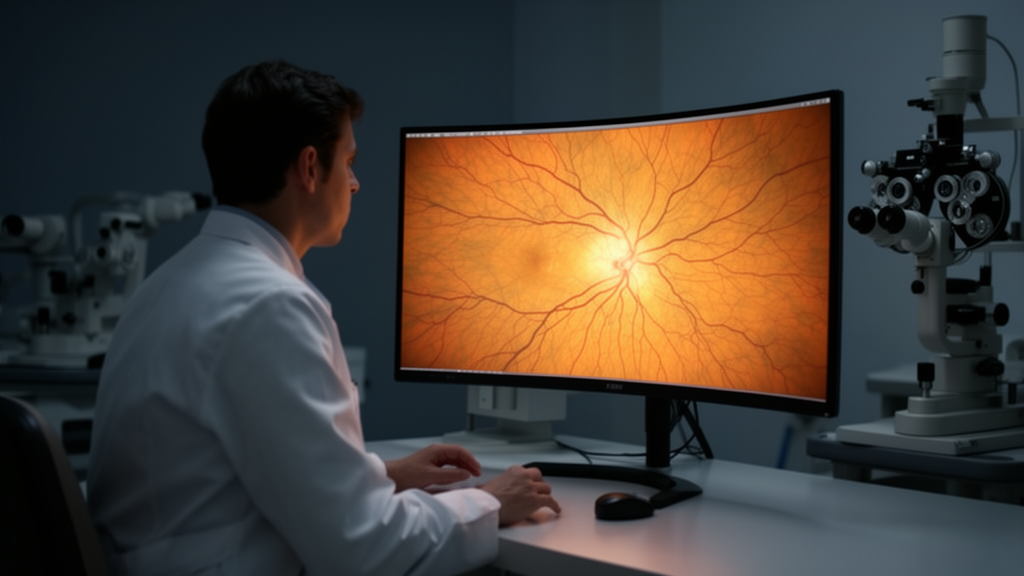
A new hybrid artificial intelligence framework called REFA-DINO improves automated diabetic retinopathy detection by integrating convolutional local-feature learning with transformer-based global contextual modeling. Diabetic retinopathy represents a primary cause of preventable blindness worldwide, making prompt detection essential for preserving patient vision. Conventional computer-aided diagnosis systems often encounter difficulties when attempting to identify early-stage retinal lesions, merge local and global visual details, and maintain consistent diagnostic performance across binary and multiclass screening tasks.
To resolve these operational challenges, the researchers designed a specialized architecture centered on a relative-efficient fusion adapter block built with two distinct branches. Within this fusion adapter, an EfficientNet convolutional module extracts lesion-sensitive retinal characteristics directly from fundus photography, while a parallel attention-enhanced patch-embedding module generates structured token representations. An adaptive relative position-aware cross-attention mechanism facilitates interaction between these heterogeneous local and global feature sets, feeding them into a DINO-based transformer module before linear classification.
Investigators evaluated the REFA-DINO system across two large-scale retinal fundus image collections, the EyePACS and APTOS datasets, under both binary and multiclass classification conditions. In performance evaluations, the framework achieved diagnostic accuracy scores of 98.60 percent for binary detection and 85.52 percent for multiclass categorization on the APTOS dataset. When tested on the EyePACS repository, the model recorded an accuracy of 93.77 percent in binary classification alongside an accuracy of 87.51 percent across multiclass retinal assessments.
Comparative benchmarking against established state-of-the-art diagnostic methods demonstrated noticeable accuracy gains for the proposed architecture across both fundus benchmarks. On the EyePACS dataset, the REFA-DINO framework produced improvements of up to 6.19 percent in binary classification accuracy and 9.39 percent in multiclass accuracy over the strongest baseline models. On the APTOS dataset, the framework secured a 2.64 percent enhancement in binary classification scores alongside competitive multiclass diagnostic performance.
The validation protocol also incorporated cross-corpora evaluations and an ablation study to systematically confirm the specific contributions of the integrated architectural components. These comparative tests showed that pairing convolutional feature extraction with adaptive cross-attention transformers strengthens binary and multiclass retinal image assessment. According to the experimental findings, the demonstrated performance across differing image sources underscores the robustness and generalizability of the REFA-DINO framework for clinical computer-aided diagnosis of diabetic retinopathy.
Subject of Research: Deep learning framework for diabetic retinopathy classification
Article Title: REFA‐DINO: A Relative‐Efficient Fusion Attention Framework for Binary and Multiclass Diabetic Retinopathy Classification
Article References: Dawood, H., Noreen, M., Javed, A., Ilyas, H., Muhammad, U., & Dawood, H. (2026). REFA‐DINO: A Relative‐Efficient Fusion Attention Framework for Binary and Multiclass Diabetic Retinopathy Classification. International Journal of Biomedical Imaging, 2026(1), Article 4374759. https://doi.org/10.1155/ijbi/4374759
Image Credits: AI Generated
DOI: 10.1155/ijbi/4374759
Keywords: Diabetic retinopathy, Computer-aided diagnosis, REFA-DINO, Retinal fundus imaging, EyePACS, APTOS, EfficientNet, Vision transformer, DINO module, Cross-attention mechanism, Binary classification, Multiclass classification, Relative position awareness, Lesion detection, Medical image analysis, Feature fusion, Preventable blindness
News Source: Ophelia Keating. (November 23, 2026). REFA‐DINO Framework Improves Diabetic Retinopathy Classification Across Fundus Datasets. Scienmag.