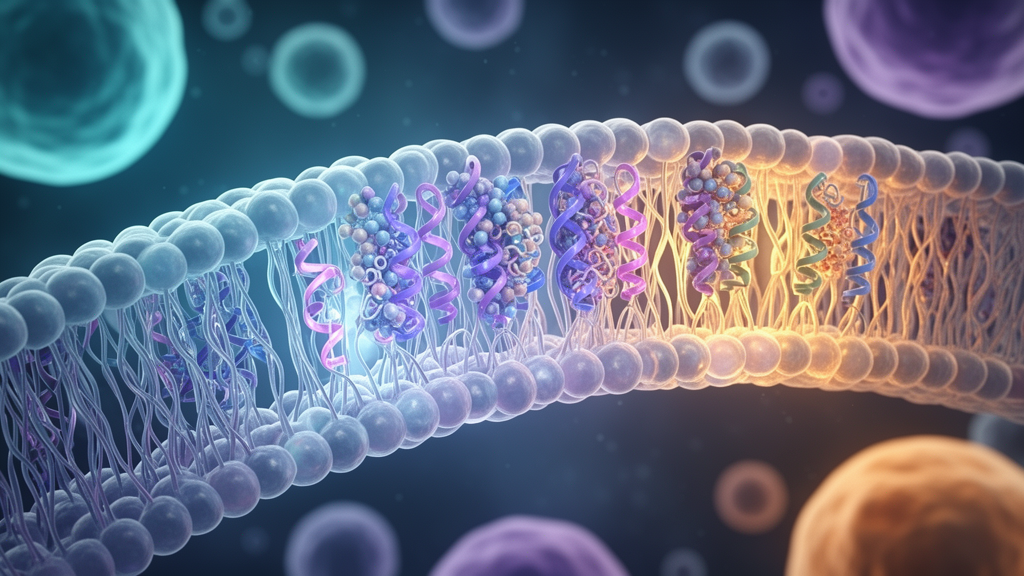
In a review paper published in Cellular and Molecular Neurobiology, researchers synthesize biochemical, structural, and genetic evidence showing that the four assemblies of human γ-secretase are functionally distinct rather than interchangeable. Rather than being functionally equivalent, these four complexes are increasingly recognized to differ in proteolytic output, substrate access, and disease susceptibility with therapeutic implications.
Human γ-secretase functions as an intramembrane protease complex formed through the combinatorial assembly of four core subunits. These four assemblies are defined by the combinatorial association of PSEN1 or PSEN2 with APH1A or APH1B together with nicastrin and PEN-2. These pairing combinations define four distinct human complexes, whose differences are functional and consequential rather than incidental artifacts of assembly.
A primary distinction among the complexes involves their processive trimming efficiency when cleaving amyloid precursor substrates. Each assembly produces a characteristic amyloid-β profile, with PSEN2-containing complexes systematically generating more aggregation-prone species than complexes containing PSEN1.
These enzymatic differences are further compounded by differential subcellular sorting that segregates the complexes into distinct physical microenvironments. Complexes assembled with PSEN1 traffic primarily to the plasma membrane, whereas PSEN2 complexes are directed to the endolysosomal compartment. This spatial separation positions the complexes within distinct substrate repertoires exposed to markedly different local pH conditions.
The structural composition of γ-secretase complexes is not static, exhibiting variations across different cell types within the central nervous system. Furthermore, complex abundance and distribution are dynamically regulated by contextual microenvironmental cues, including local inflammatory signals and lipid concentrations. Consequently, the operational behavior of γ-secretase cannot be inferred solely from baseline subunit presence.
These molecular distinctions translate into distinct clinical and pharmacological phenotypes. Familial Alzheimer’s disease mutations in PSEN1 and PSEN2 present divergent clinical profiles, while APH1B complexes fulfill non-redundant physiological roles, and PSEN1-specific inhibition provides a selective therapeutic window in T-cell acute lymphoblastic leukaemia. The authors conclude that past clinical failures of non-selective γ-secretase inhibitors highlight the cost of treating a diverse system as uniform, arguing that modern tools across structural biology, transcriptomics, proteomics, and isoform-selective pharmacology must establish heterogeneity as a central design principle.
Subject of Research: Functional heterogeneity and therapeutic relevance of human γ-secretase protease complexes
Article Title: Heterogeneity of the γ-Secretases
Article References: de Andres Alvarez, J., Manzoni, C., Lewis, P. A., & Arber, C. (2026). Heterogeneity of the γ-Secretases. Cellular and Molecular Neurobiology. https://doi.org/10.1007/s10571-026-01855-y
Image Credits: AI Generated
DOI: 10.1007/s10571-026-01855-y
Keywords: γ-secretase, PSEN1, PSEN2, APH1A, APH1B, nicastrin, PEN-2, amyloid-β, intramembrane protease, familial Alzheimer's disease, subcellular sorting, endolysosomal compartment, plasma membrane, T-cell acute lymphoblastic leukaemia, isoform-selective pharmacology, proteolytic trimming, CNS cell types, lipid signaling
News Source: Drew Townsend. (November 12, 2026). Distinct Human γ-Secretase Complexes Differ in Amyloid Trimming and Cellular Localization. Scienmag.