• HOME
  • NEWS
  • EXPLORE
    • CAREER
      • Companies
      • Jobs
    • EVENTS
    • iGEM
      • News
      • Team
    • PHOTOS
    • VIDEO
    • WIKI
  • BLOG
  • COMMUNITY
    • FACEBOOK
    • INSTAGRAM
    • TWITTER
Tuesday, November 17, 2026
BIOENGINEER.ORG
No Result
View All Result
  • Login
  • HOME
  • NEWS
  • EXPLORE
    • CAREER
      • Companies
      • Jobs
        • Lecturer
        • PhD Studentship
        • Postdoc
        • Research Assistant
    • EVENTS
    • iGEM
      • News
      • Team
    • PHOTOS
    • VIDEO
    • WIKI
  • BLOG
  • COMMUNITY
    • FACEBOOK
    • INSTAGRAM
    • TWITTER
No Result
View All Result
Bioengineer.org
No Result
View All Result
Home NEWS Science News Health

Distinct Human γ-Secretase Complexes Differ in Amyloid Trimming and Cellular Localization

by
November 12, 2026
in Biology, Health
Reading Time: 2 mins read
0
Distinct Human γ-Secretase Complexes Differ in Amyloid Trimming and Cellular Localization

Distinct Human γ-Secretase Complexes Differ in Amyloid Trimming and Cellular Localization

Share on FacebookShare on TwitterShare on LinkedinShare on RedditShare on Telegram

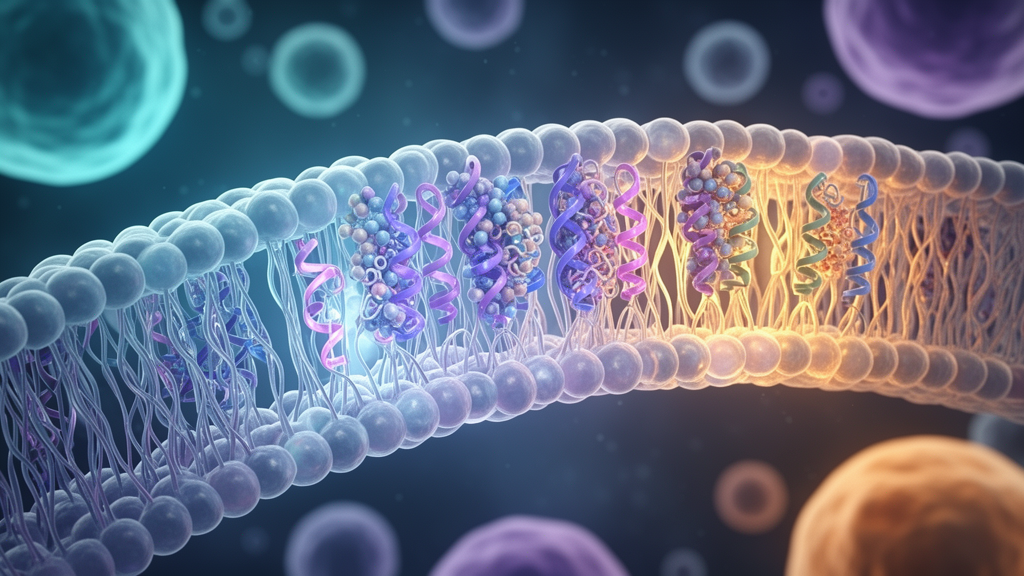
In a review paper published in Cellular and Molecular Neurobiology, researchers synthesize biochemical, structural, and genetic evidence showing that the four assemblies of human γ-secretase are functionally distinct rather than interchangeable. Rather than being functionally equivalent, these four complexes are increasingly recognized to differ in proteolytic output, substrate access, and disease susceptibility with therapeutic implications.

Human γ-secretase functions as an intramembrane protease complex formed through the combinatorial assembly of four core subunits. These four assemblies are defined by the combinatorial association of PSEN1 or PSEN2 with APH1A or APH1B together with nicastrin and PEN-2. These pairing combinations define four distinct human complexes, whose differences are functional and consequential rather than incidental artifacts of assembly.

A primary distinction among the complexes involves their processive trimming efficiency when cleaving amyloid precursor substrates. Each assembly produces a characteristic amyloid-β profile, with PSEN2-containing complexes systematically generating more aggregation-prone species than complexes containing PSEN1.

These enzymatic differences are further compounded by differential subcellular sorting that segregates the complexes into distinct physical microenvironments. Complexes assembled with PSEN1 traffic primarily to the plasma membrane, whereas PSEN2 complexes are directed to the endolysosomal compartment. This spatial separation positions the complexes within distinct substrate repertoires exposed to markedly different local pH conditions.

The structural composition of γ-secretase complexes is not static, exhibiting variations across different cell types within the central nervous system. Furthermore, complex abundance and distribution are dynamically regulated by contextual microenvironmental cues, including local inflammatory signals and lipid concentrations. Consequently, the operational behavior of γ-secretase cannot be inferred solely from baseline subunit presence.

These molecular distinctions translate into distinct clinical and pharmacological phenotypes. Familial Alzheimer’s disease mutations in PSEN1 and PSEN2 present divergent clinical profiles, while APH1B complexes fulfill non-redundant physiological roles, and PSEN1-specific inhibition provides a selective therapeutic window in T-cell acute lymphoblastic leukaemia. The authors conclude that past clinical failures of non-selective γ-secretase inhibitors highlight the cost of treating a diverse system as uniform, arguing that modern tools across structural biology, transcriptomics, proteomics, and isoform-selective pharmacology must establish heterogeneity as a central design principle.

Subject of Research: Functional heterogeneity and therapeutic relevance of human γ-secretase protease complexes

Article Title: Heterogeneity of the γ-Secretases

Article References: de Andres Alvarez, J., Manzoni, C., Lewis, P. A., & Arber, C. (2026). Heterogeneity of the γ-Secretases. Cellular and Molecular Neurobiology. https://doi.org/10.1007/s10571-026-01855-y

Image Credits: AI Generated

DOI: 10.1007/s10571-026-01855-y

Keywords: γ-secretase, PSEN1, PSEN2, APH1A, APH1B, nicastrin, PEN-2, amyloid-β, intramembrane protease, familial Alzheimer's disease, subcellular sorting, endolysosomal compartment, plasma membrane, T-cell acute lymphoblastic leukaemia, isoform-selective pharmacology, proteolytic trimming, CNS cell types, lipid signaling

News Source: Drew Townsend. (November 12, 2026). Distinct Human γ-Secretase Complexes Differ in Amyloid Trimming and Cellular Localization. Scienmag.

Tags: amyloid βAPH1AAPH1BCNS cell typesendolysosomal compartmentfamilial Alzheimer's diseaseintramembrane proteaseisoform-selective pharmacologylipid signalingnicastrinPEN-2plasma membraneproteolytic trimmingPSEN1PSEN2subcellular sortingT-cell acute lymphoblastic leukaemiaγ-secretase
Share12Tweet7Share2ShareShareShare1

Related Posts

Tibial Slope Asymmetry Linked to Medial Meniscus Posterior Root Tears

Tibial Slope Asymmetry Linked to Medial Meniscus Posterior Root Tears

November 17, 2026
Lamprey Study Identifies Conserved TAK1 and TAB Immune Signaling Module

Lamprey Study Identifies Conserved TAK1 and TAB Immune Signaling Module

November 17, 2026

Simulated Cleft Surgery Shows Patient-Specific Airflow Improvements in Pediatric Nasal Models

November 17, 2026

Systematic Review Finds No Significant Cognitive Benefits From VR Soccer Training

November 17, 2026

POPULAR NEWS

  • Mobile Health Units With Community Workers Address Critical Hypertension Care Gaps

    Mobile Health Units With Community Workers Address Critical Hypertension Care Gaps

    29 shares
    Share 12 Tweet 7
  • Brazilian EQ-5D Mapping Algorithm Offers Alternative to European-Based Standards

    29 shares
    Share 12 Tweet 7
  • Self-Assembled Berberine-Gallic Acid Nanorods Ameliorate Ulcerative Colitis in Mice

    29 shares
    Share 12 Tweet 7
  • Tablet Augmented Reality System May Reduce Preoperative Anxiety in Pediatric Surgical Patients

    29 shares
    Share 12 Tweet 7

About

We bring you the latest biotechnology news from best research centers and universities around the world. Check our website.

Follow us

Recent News

Panax notoginseng Glucan Stabilizes Selenium Nanoparticles That Inhibit Lung Cancer Cells

Tibial Slope Asymmetry Linked to Medial Meniscus Posterior Root Tears

Lamprey Study Identifies Conserved TAK1 and TAB Immune Signaling Module

Subscribe to Blog via Email

Enter your email address to subscribe to this blog and receive notifications of new posts by email.

Join 88 other subscribers
  • Contact Us

Bioengineer.org © Copyright 2023 All Rights Reserved.

Welcome Back!

Login to your account below

Forgotten Password?

Retrieve your password

Please enter your username or email address to reset your password.

Log In
No Result
View All Result
  • Homepages
    • Home Page 1
    • Home Page 2
  • News
  • National
  • Business
  • Health
  • Lifestyle
  • Science

Bioengineer.org © Copyright 2023 All Rights Reserved.