

• HOME
  • NEWS
  • EXPLORE
    • CAREER
      • Companies
      • Jobs
    • EVENTS
    • iGEM
      • News
      • Team
    • PHOTOS
    • VIDEO
    • WIKI
  • BLOG
  • COMMUNITY
    • FACEBOOK
    • INSTAGRAM
    • TWITTER
Saturday, February 7, 2026
BIOENGINEER.ORG
No Result
View All Result
  • Login
  • HOME
  • NEWS
  • EXPLORE
    • CAREER
      • Companies
      • Jobs
        • Lecturer
        • PhD Studentship
        • Postdoc
        • Research Assistant
    • EVENTS
    • iGEM
      • News
      • Team
    • PHOTOS
    • VIDEO
    • WIKI
  • BLOG
  • COMMUNITY
    • FACEBOOK
    • INSTAGRAM
    • TWITTER
  • HOME
  • NEWS
  • EXPLORE
    • CAREER
      • Companies
      • Jobs
        • Lecturer
        • PhD Studentship
        • Postdoc
        • Research Assistant
    • EVENTS
    • iGEM
      • News
      • Team
    • PHOTOS
    • VIDEO
    • WIKI
  • BLOG
  • COMMUNITY
    • FACEBOOK
    • INSTAGRAM
    • TWITTER
No Result
View All Result
Bioengineer.org
No Result
View All Result
Home NEWS Science News Health

Researchers develop a new method for turning skin cells into pluripotent stem cells

Bioengineer by Bioengineer
July 6, 2018
in Health
Reading Time: 2 mins read
0
Share on FacebookShare on TwitterShare on LinkedinShare on RedditShare on Telegram
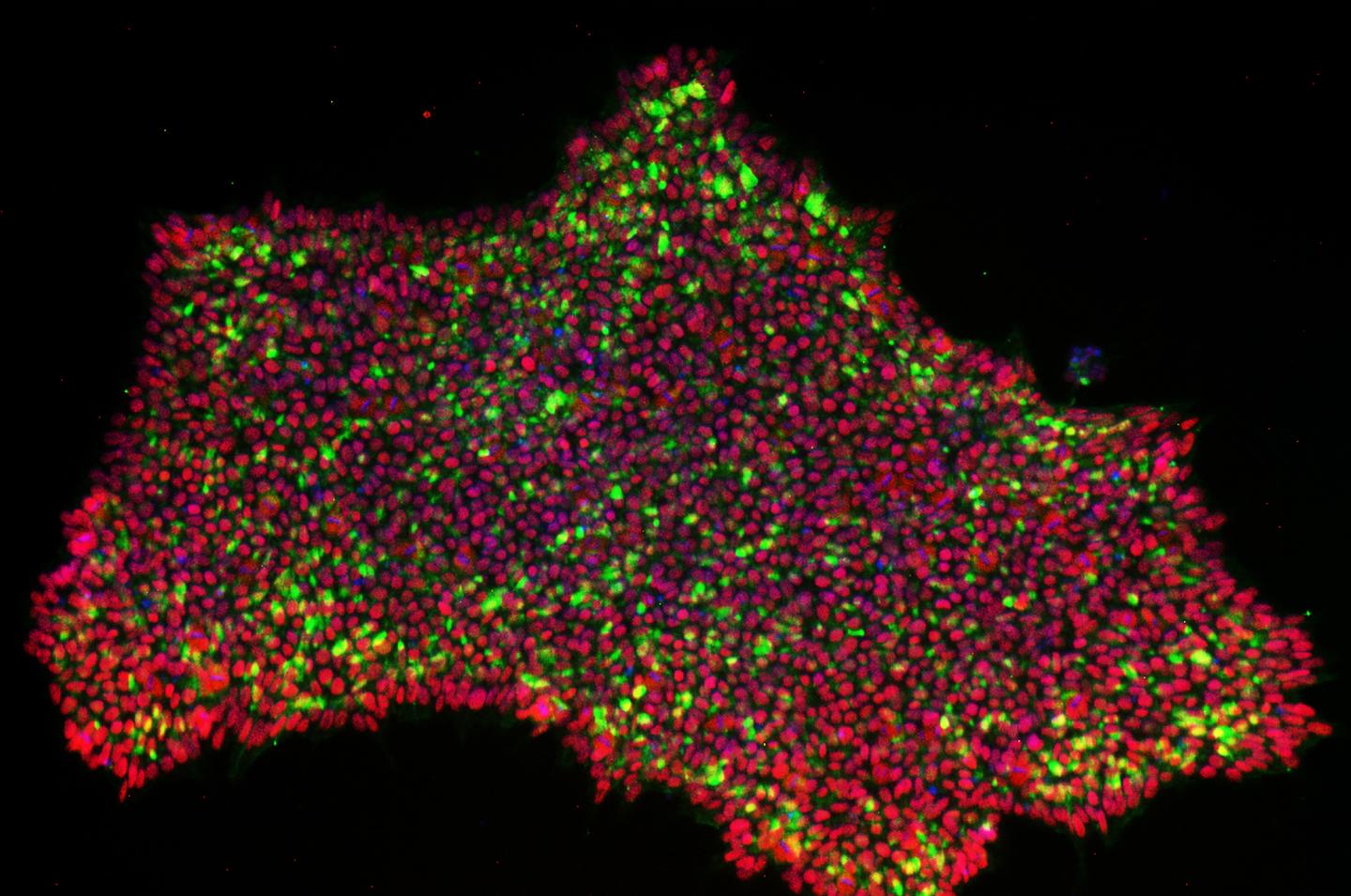
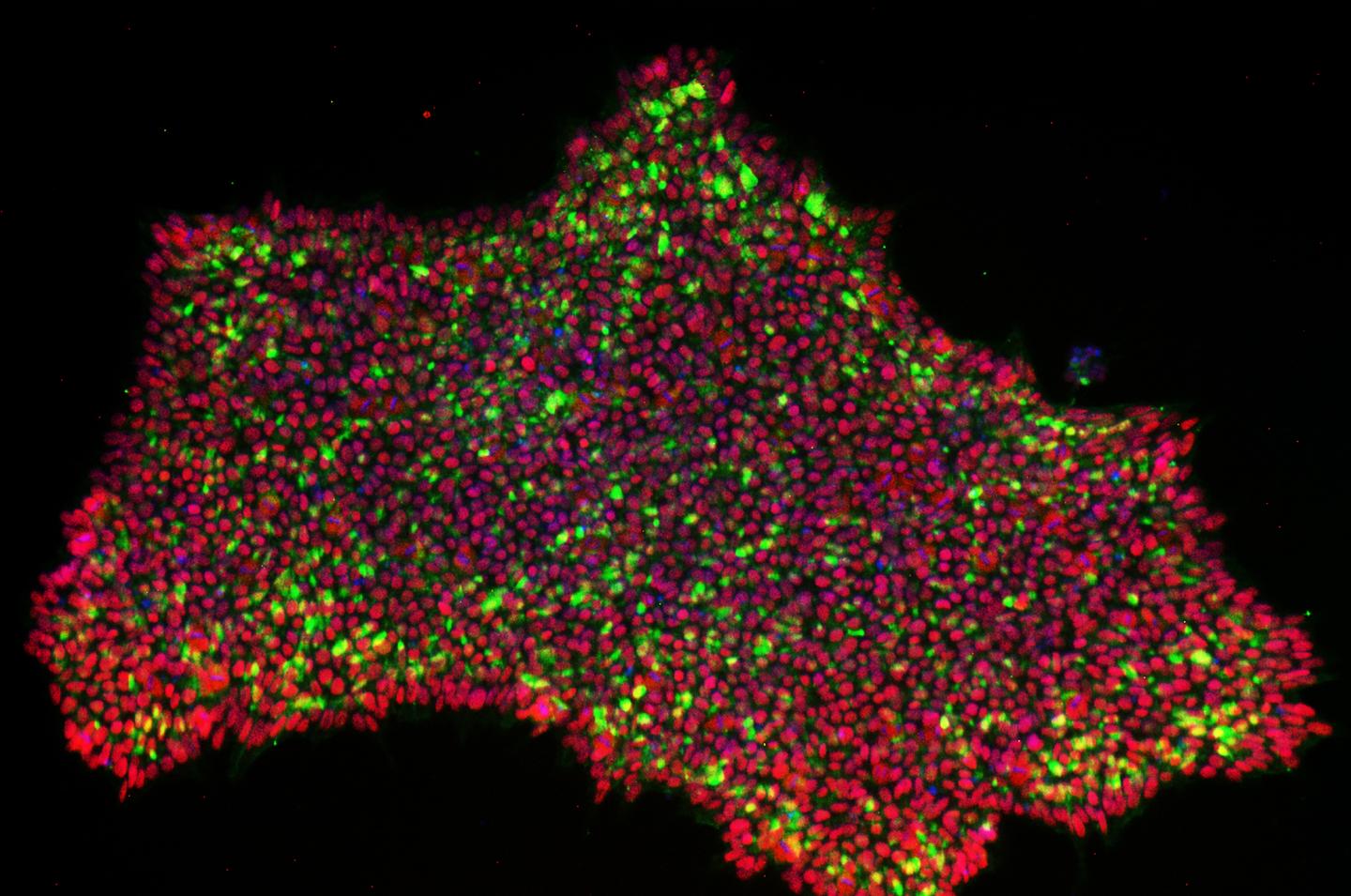
IMAGE

Credit: Otonkoski Lab / University of Helsinki

Our bodies consist of many different kinds of cells, each with their own role. The Japanese scientist Shinya Yamanaka had made earlier the discovery, earning the Nobel Prize in 2012, that cells from adult skin can be converted to cells typical of early embryos, so-called induced pluripotent stem cells (iPSC). This process is called reprogramming.

Up till now, reprogramming has only been possible by introducing the critical genes for the conversion, called Yamanaka factors, artificially into skin cells where they are not normally active at all.

Professor Timo Otonkoski at the University of Helsinki and Professor Juha Kere at Karolinska Institutet and King's College London, with their teams of researchers, have now for the first time succeeded in converting skin cells into pluripotent stem cells by activating the cell's own genes. This was achieved by using gene editing technology – called CRISPRa – that can be directed to activate genes. The method utilizes a blunted version of the Cas9 'gene scissors' that does not cut DNA and can therefore be used to activate gene expression without mutating the genome.

"CRISPR/Cas9 can be used to activate genes. This is an attractive possibility for cellular reprogramming because multiple genes can be targeted at the same time. Reprogramming based on activation of endogenous genes rather than overexpression of transgenes is also theoretically a more physiological way of controlling cell fate and may result in more normal cells. In this study, we show that it is possible to engineer a CRISPR activator system that allows robust reprogramming of iPSC", tells Professor Otonkoski.

An important key for the success was also activating a critical genetic element that was earlier found to regulate the earliest steps of human embryo development after fertilization. "Using this technology, pluripotent stem cells were obtained that resembled very closely typical early embryonal cells", Professor Kere says.

The discovery also suggests that it might be possible to improve many other reprogramming tasks by addressing genetic elements typical of the intended target cell type.

"The technology may find practical use in bio banking and many other tissue technology applications", says PhD student, MSc Jere Weltner, the first author of the article published in Nature Communications. "In addition, the study opens up new insights into the mechanisms controlling early embryonic gene activation."

###

Media Contact

Timo Otonkoski
[email protected]
358-503-708-976
@helsinkiuni

http://www.helsinki.fi/university/

Original Source

https://www.helsinki.fi/en/news/health/researchers-develop-a-new-method-for-turning-skin-cells-into-pluripotent-stem-cells http://dx.doi.org/10.1038/s41467-018-05067-x


Share21Tweet8Share2ShareShareShare2

Related Posts

Personalized Guide to Understanding and Reducing Chemicals

February 7, 2026

Inflammasome Protein ASC Drives Pancreatic Cancer Metabolism

February 7, 2026

Phage-Antibiotic Combo Beats Resistant Peritoneal Infection

February 7, 2026

Boosting Remote Healthcare: Stepped-Wedge Trial Insights

February 7, 2026
Please login to join discussion

POPULAR NEWS

  • Robotic Ureteral Reconstruction: A Novel Approach

    Robotic Ureteral Reconstruction: A Novel Approach

    82 shares
    Share 33 Tweet 21
  • Digital Privacy: Health Data Control in Incarceration

    63 shares
    Share 25 Tweet 16
  • Study Reveals Lipid Accumulation in ME/CFS Cells

    57 shares
    Share 23 Tweet 14
  • Breakthrough in RNA Research Accelerates Medical Innovations Timeline

    53 shares
    Share 21 Tweet 13

About

We bring you the latest biotechnology news from best research centers and universities around the world. Check our website.

Follow us

Recent News

Personalized Guide to Understanding and Reducing Chemicals

Inflammasome Protein ASC Drives Pancreatic Cancer Metabolism

Phage-Antibiotic Combo Beats Resistant Peritoneal Infection

Subscribe to Blog via Email

Enter your email address to subscribe to this blog and receive notifications of new posts by email.

Join 73 other subscribers
  • Contact Us

Bioengineer.org © Copyright 2023 All Rights Reserved.

Welcome Back!

Login to your account below

Forgotten Password?

Retrieve your password

Please enter your username or email address to reset your password.

Log In
No Result
View All Result
  • Homepages
    • Home Page 1
    • Home Page 2
  • News
  • National
  • Business
  • Health
  • Lifestyle
  • Science

Bioengineer.org © Copyright 2023 All Rights Reserved.