In August 2022, the United States Food and Drug Administration approved an orally administered multimodal N-methyl-D-aspartate (NMDA) receptor antagonist for treating major depressive disorder in adult patients, comprising a fixed-dose prolonged-release formulation of 45 milligrams of dextromethorphan hydrobromide and 105 milligrams of bupropion hydrochloride. Severe depressive illness impacts approximately 280 million individuals globally, representing a leading cause of disability where conventional monoaminergic monotherapies frequently prove insufficient and necessitate weeks or months to yield clinical improvement. Dextromethorphan exhibits an elimination half-life of roughly 22 hours, while bupropion displays an elimination half-life of approximately 21 hours, producing rapid antidepressant effects with an earlier onset than traditional antidepressant regimens. A comprehensive review published in Discover Chemistry by V. Preethi, S. Mahirah, N. Harikrishnan, and Viswas Raja Solomon examined multi-technique analytical strategies designed to develop and validate procedures for quantifying both active pharmaceutical ingredients in combined dosage forms. Because combination drug products require separating co-formulated active molecules from excipients and degradation products across disparate concentration ratios, analytical chemists must deploy robust methodologies capable of routine quality control, stability monitoring, and regulatory compliance.
The therapeutic rationale underlying this combination relies on targeted pharmacokinetic and pharmacodynamic interactions between the two pharmaceutical agents. Co-administering bupropion effectively inhibits CYP2D6-mediated clearance, substantially elevating dextromethorphan bioavailability and maintaining adequate circulating concentrations to sustain NMDA receptor antagonism alongside glutamatergic, noradrenergic, dopaminergic, and opioid signaling modulation. Glutamatergic excitotoxicity mediated through NMDA receptors has also been implicated in neurodegenerative conditions including Alzheimer’s disease, where NMDA antagonists such as memantine improve cognitive performance, suggesting potential secondary therapeutic value for this dual formulation. Furthermore, neural circuit disruptions in glutamatergic pathways characterize treatment-resistant depression, where sequential strategies utilizing ketamine induction followed by dextromethorphan-bupropion maintenance therapy have been documented to sustain rapid symptom remission and reduce psychological distress. To ensure such dual-action medicines consistently meet strict pharmacological standards, analytical laboratories require highly selective and sensitive testing protocols capable of accurately resolving both components simultaneously from complex formulations without interference.
Simultaneous estimation of dextromethorphan hydrobromide and bupropion hydrochloride presents significant analytical challenges stemming from disparate physicochemical polarities, formulation ratios, and profound spectral overlap in ultraviolet absorption. Direct ultraviolet-visible spectrophotometry offers operational simplicity, low cost, minimal solvent consumption, and rapid execution, yet the extensive overlap of the drugs’ absorption spectra severely limits selectivity during conventional zero-order photometric measurements. To overcome these spectral interferences without requiring prior chemical separation, analytical chemists have introduced advanced mathematical and chemometric signal-processing techniques. These approaches incorporate derivative spectrophotometry, ratio spectra, ratio-difference calculations, multivariate calibration models, and Fourier self-deconvolution. Fourier self-deconvolution transforms raw spectral data into the Fourier domain, narrowing overlapping absorption bands and enhancing resolved individual signals within binary pharmacological mixtures. Additionally, deconvoluted amplitude factor methods combine Fourier self-deconvolution with amplitude factor computations, resolving congested absorption profiles to permit direct quantitative analysis of both active substances in intact commercial tablet matrices while maintaining environmental sustainability.
Reported spectrophotometric procedures demonstrate that bupropion can be quantified directly at an absorption wavelength of 247 nanometers across a linear working range spanning 1 to 10 micrograms per milliliter. However, measuring dextromethorphan concurrently requires dual-wavelength methods, differential spectrum comparisons, or composite spectrophotometric algorithms due to bupropion’s dominant spectral presence. Validated spectrophotometric evaluations have documented high analytical precision and recovery rates, with experimental drug recoveries ranging from 97.8 percent to 101.3 percent and relative standard deviations remaining consistently below 1.5 percent. These performance parameters confirm that mathematical deconvolution reliably resolves spectral interferences in tablet formulations without demanding toxic organic solvents.
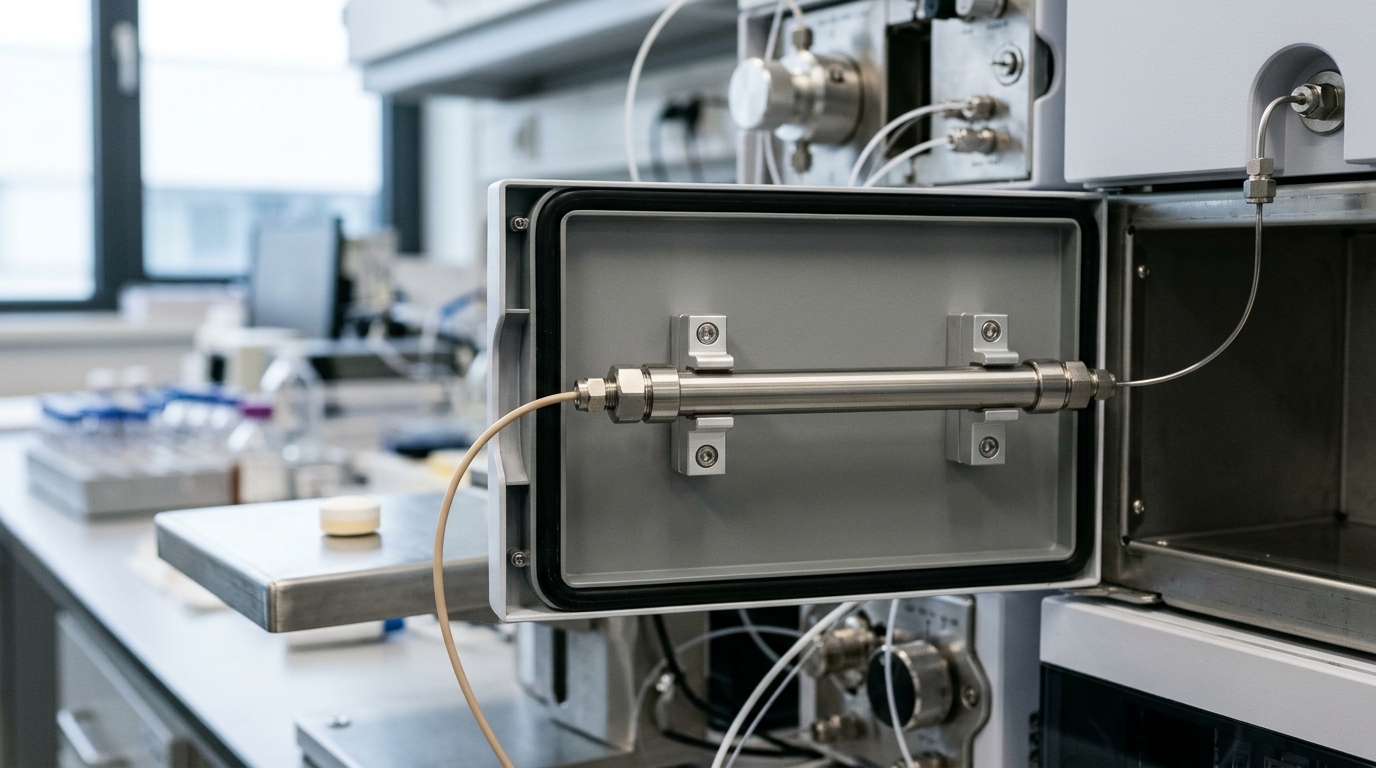
Reversed-phase high-performance liquid chromatography represents the predominant analytical technique applied for the routine quality control and regulatory assay of dextromethorphan and bupropion formulations. Chromatographic separation resolves active molecules from formulation excipients and potential degradation interferences through stepwise optimization of critical parameters, including stationary phase column chemistry, mobile phase composition, flow rate, detection wavelength, and run duration. In one validated reversed-phase procedure utilizing a standard octadecylsilyl C18 column, complete chromatographic resolution of both active ingredients was accomplished within an efficient six-minute total analytical runtime. An optimized assay documented by P. U. Patel and colleagues separated standard mixtures with dextromethorphan eluting at approximately 4.5 minutes and bupropion eluting at approximately 6.4 minutes. Conversely, an alternative chromatographic system reported by R. R. Chavya and colleagues achieved clean baseline separation with bupropion eluting at roughly 2.0 minutes followed by dextromethorphan at approximately 2.8 minutes, producing symmetrical, sharp peaks with minimal peak tailing and stable baselines.
High-performance thin-layer chromatography has gained widespread adoption as an economical, flexible, and environmentally friendly chromatographic alternative for analyzing bupropion in bulk drug substances and multi-component pharmaceutical preparations. Established HPTLC procedures have employed silica gel 60 F254 stationary phase plates alongside optimized solvent systems, such as toluene-methanol-ammonia mixtures with densitometric detection at 254 nanometers, or ethyl acetate-methanol-acetone-acetic acid mobile phases developed for concurrently resolving bupropion and naltrexone. Recent methodological advances have integrated sustainable analytical principles by replacing hazardous organic solvents with benign mobile phases and pairing planar separations with modern smartphone-based digital imaging systems. When evaluated against conventional densitometric scanners, smartphone-assisted image analysis platforms yielded equivalent quantitative performance while improving greenness metrics established by the Analytical Greensness Metric Approach (AGREE) and the Green Analytical Procedure Index (GAPI). Furthermore, validated planar chromatography methods using ethanol, chloroform, and glacial acetic acid or toluene, ethyl acetate, methanol, and triethylamine have successfully met International Council for Harmonisation guidelines for stability testing and routine quality assurance.
While spectrophotometry and liquid chromatography effectively serve finished product manufacturing assays, biological matrices and pharmacokinetic investigations necessitate the heightened sensitivity and structural specificity of hyphenated mass spectrometry. Stereoselective liquid chromatography coupled with tandem mass spectrometry (LC-MS/MS) has been developed to separate and quantify bupropion alongside its fifteen distinct metabolites in human urine using combined chiral and reversed-phase C18 chromatographic columns. Validated assays for human plasma achieve enantioselective separation with intra-day precision ranging from 3 to 15 percent, intra-day accuracy between 81 and 98 percent, inter-day precision between 6 and 20 percent, and inter-day accuracy between 89 and 100 percent. In parallel, sensitive LC-MS/MS protocols determine dextromethorphan and its primary metabolite dextrorphan in human plasma and oral fluid, supporting pharmacokinetic research, forensic investigations, and toxicological screening for suspected drug misuse. Specialized ultra-performance liquid chromatography tandem mass spectrometry assays have likewise quantified dextromethorphan production in rat brain microsomes to measure localized CYP2D enzymatic activity, while liquid chromatography quadrupole time-of-flight mass spectrometry has identified nineteen distinct sunlight-induced photodegradation products.
Rigorous analytical method validation establishes that quantitative procedures are accurate, reliable, reproducible, and fit for their intended regulatory purpose. The International Council for Harmonisation (ICH) Q2(R1) guideline provides standard criteria governing specificity, linearity, accuracy, precision, limit of detection, limit of quantitation, range, and robustness for evaluating active pharmaceutical ingredients in biological matrices and commercial dosage forms. The updated ICH Q2(R2) guideline, together with ICH Q14, introduces an enhanced lifecycle framework integrating analytical Quality-by-Design and Design of Experiments to systematically optimize method robustness. Under this structured framework, analysts deploy multivariate experimental designs to model critical operational parameters—such as mobile phase ratios, buffer salt concentrations, flow rates, development distances, and chamber saturation times—against analytical performance attributes including chromatographic resolution, retention factors, and peak symmetry. Establishing a validated design space minimizes trial-and-error experimentation, ensures complete separation of active drugs from formulation excipients and forced-degradation impurities, and provides verifiable compliance with stringent international quality assurance benchmarks.
Technological evolution in pharmaceutical analysis increasingly merges analytical Quality-by-Design with Green-by-Design paradigms to curb the environmental footprint of quality control laboratories. Computer-aided solvent selection, molecular simulations, and predictive computational modeling allow researchers to forecast optimal chromatographic conditions in silico, drastically reducing laboratory bench time, electrical energy consumption, and hazardous organic waste generation. Hyphenated analytical instruments—including ultra-high-performance liquid chromatography, high-resolution mass spectrometry, and automated micro-extraction systems—facilitate the rapid detection of trace degradation products and synthetic impurities with unprecedented sensitivity. Concurrently, chemometric algorithms and artificial intelligence tools are transforming chromatographic data processing by automating peak integration, identifying complex matrix interferences, and expediting regulatory compliance documentation. Comprehensive multi-criteria evaluation tools, such as the Method Assessment (MA) Tool, now enable analytical chemists to simultaneously grade greenness, economic practicality, analytical performance, and technical innovation, guiding the deliberate selection of sustainable methodologies for industrial manufacturing and clinical monitoring.
Despite substantial technological and methodological advances, establishing robust analytical workflows for co-formulated dextromethorphan and bupropion involves ongoing technical and regulatory challenges. Ensuring consistent method transferability across disparate manufacturing facilities and commercial testing laboratories requires strict adherence to evolving validation frameworks and stability-indicating testing standards. Simultaneously, laboratories must balance high analytical sensitivity, peak resolution, and reproducible system suitability against tightening regulatory mandates restricting hazardous solvent consumption. As fixed-dose multimodal antidepressants continue to expand across clinical psychiatry, the integration of automated high-throughput chromatography, computerized experimental design, and green analytical chemistry will prove essential for sustaining reliable quality assurance, patient safety, and regulatory compliance throughout the commercial pharmaceutical lifecycle.
Subject of Research: Analytical methods for simultaneous estimation of dextromethorphan and bupropion
Article Title: A review of multi-technique approaches for estimating dextromethorphan and bupropion in combined drug formulations
Article References: Preethi, V., Mahirah, S., Harikrishnan, N., & Solomon, V. R. (2026). A review of multi-technique approaches for estimating dextromethorphan and bupropion in combined drug formulations. Discover Chemistry, 3(1), Article 654. https://doi.org/10.1007/s44371-026-01123-4
Image Credits: AI Generated
DOI: 10.1007/s44371-026-01123-4
Keywords: dextromethorphan hydrobromide, bupropion hydrochloride, fixed-dose combination, major depressive disorder, reversed-phase high-performance liquid chromatography, high-performance thin-layer chromatography, liquid chromatography-tandem mass spectrometry, ultraviolet-visible spectrophotometry, fourier self-deconvolution, chiral chromatography, analytical quality by design, green analytical chemistry, ich q2 validation, cyp2d6 inhibition, nmda receptor antagonist, pharmaceutical quality control, forced degradation
News Source: Bethany Barker. (November 29, 2026). Review Evaluates Analytical Separation Techniques for Dextromethorphan and Bupropion Fixed-Dose Formulations. Scienmag.