A cross-sectional investigation conducted in Germany has revealed that long-term vegans display the highest median dietary intake and urinary excretion of the trace element boron when contrasted against lacto-ovo-vegetarians and omnivores. The research, published in the journal Biological Trace Element Research and drawing upon data from the German Load of Acid to Kidney Evaluation study, evaluated eighty-nine healthy adults who had strictly adhered to their respective eating patterns for at least twelve continuous months. While dietary boron has long been recognized as physiologically bioactive and potentially essential for human health, direct nutritional quantification across specialized dietary groups has historically remained sparse. By combining two consecutive prospective twenty-four-hour weighed food records with twenty-four-hour urinary collections, the investigators sought to clarify how habitual food choices influence both absolute daily exposure and subsequent renal elimination of this trace element.
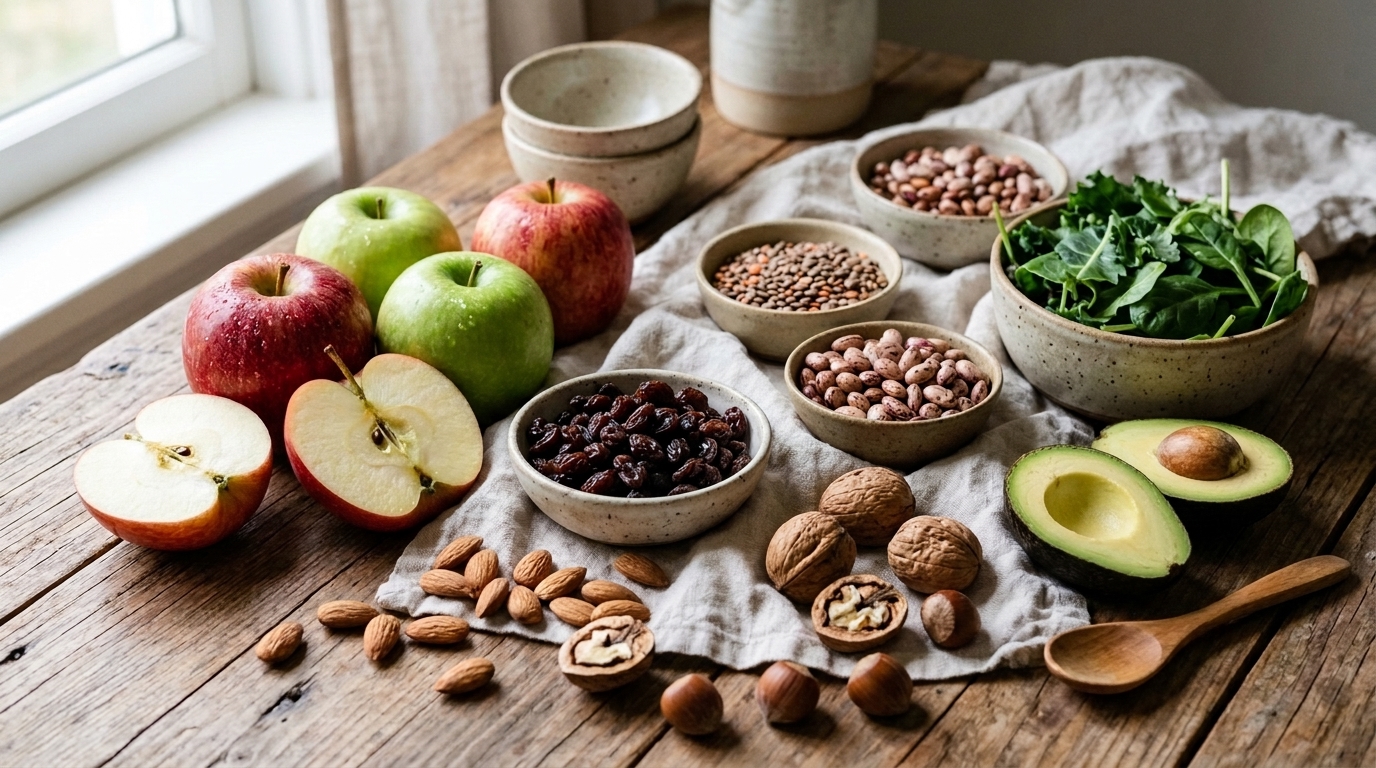
Boron plays a recognized physiological role in cellular metabolism, bone integrity maintenance, central nervous system activity, and the alleviation of inflammatory and oxidative processes, as demonstrated across various clinical and preclinical models. Despite these documented biological interactions, public health bodies have yet to establish formal Recommended Dietary Allowances or Adequate Intakes for boron, primarily because an unambiguous human requirement threshold has not been conclusively defined. Toxicological evaluations indicate that while excessive concentrations induce physiological toxicity, daily dietary quantities spanning from one to thirteen milligrams are generally considered acceptable in adult populations. In typical Western demographics, daily consumption commonly fluctuates between 0.5 and 3.0 milligrams, with higher exposure traditionally linked to plant-derived foodstuffs such as fruits, vegetables, nuts, and seeds, alongside specific beverages like wine and coffee, as well as bovine dairy products.
To investigate the nutritional boundaries of boron in diets that systematically maximize or eliminate these source categories, the research team recruited eighty-nine individuals across three defined cohorts, comprising twenty-nine vegans, twenty-eight lacto-ovo-vegetarians, and thirty-two omnivorous participants. The study cohort was primarily comprised of young adults, exhibiting a median age of twenty-three years and presenting a predominantly student demographic profile. Ethical approval for the trial was granted by the ethical committee at the University Medical Center of Freiburg, with the initial protocol prospectively registered in the German Clinical Trial Register under identifier DRKS00035243. Recruitment adhered to rigorous inclusion parameters that eliminated potential malabsorption confounders, intentionally excluding individuals reporting gastrointestinal diseases, recent usage of proton pump inhibitors, diuretics, or uricosurics, as well as pregnant or breastfeeding women, individuals with a body mass index outside the standard range of 18.5 to 30.0 kilograms per square meter, and those consuming supplemental nutrients.
Dietary intake was documented using two-day weighed food diaries, widely regarded as a methodological benchmark in nutritional research due to their precision in capturing specialized plant-based products such as tempeh and soy derivatives that frequently evade standard food frequency questionnaires. Participants utilized calibrated precision scales to record all consumed solids and liquids to the nearest 0.1 gram or milliliter, following rigorous in-person instructions. Because standard nutritional analysis software does not natively estimate boron values, the investigators compiled a master database containing boron concentrations for 212 distinct food items using NutriGuide plus software. This analytical compilation integrated comprehensive United States nutritional tables from Rainey and colleagues alongside published data by Choi and Jun addressing items common to plant-forward diets. Tap water concentrations specific to the Freiburg region and mean mineral water boron values derived from 381 surveyed German bottled waters were incorporated into individual nutritional calculations.
Concurrently, participants completed a single standardized twenty-four-hour urine collection on the second study day to measure actual systemic boron excretion and establish biological recovery rates. Urine collection commenced immediately following the first morning void using specialized three-liter brown Sarstedt collection vessels, which were maintained under refrigerated conditions or cold outdoor ambient winter temperatures throughout the twenty-four-hour sampling window. All collections concluded with the first void on the following morning, followed by immediate processing. Analytical quantification of urinary boron concentrations was performed at the accredited LGM Laboratory in Hamburg, Germany, utilizing Inductively Coupled Plasma Mass Spectrometry on a PerkinElmer NexION 2000 instrument. The analytical protocol applied a ten-fold dilution, a four-point calibration curve with linear regression forced through zero, internal standardization with yttrium and terbium to adjust for instrumental drift and matrix interference, and routine verification with certified Seronorm Trace Elements Urine quality controls, achieving an analytical detection limit of 0.21 micrograms per liter.
Analysis of the nutritional records demonstrated that vegans consumed the highest median amount of boron at 1913.38 micrograms per day, with an interquartile range extending from 1467.11 to 2615.14 micrograms per day. Lacto-ovo-vegetarians recorded an intermediate median intake of 1654.36 micrograms per day, with an interquartile range spanning from 1249.75 to 2366.01 micrograms per day, whereas omnivores exhibited a median consumption of 1515.35 micrograms per day, with an interquartile range of 944.33 to 2067.52 micrograms per day. Across the collective sample of eighty-nine participants, daily boron exposure exhibited substantial individual variation, ranging from an absolute minimum of 657.09 micrograms per day to a maximum of 5835.74 micrograms per day. Despite observable numeric trends aligning with dietary plant reliance, non-parametric comparisons via the Kruskal-Wallis H test revealed that the differences in dietary intake between the three groups did not reach statistical significance, yielding a p-value of 0.104.
Crucially, all eighty-nine participants maintained dietary boron levels well below the European Food Safety Authority tolerable upper intake level, which is established at 10,000 micrograms per day, or ten milligrams per day. When evaluating minimum adequacy targets, prior scientific literature based on animal extrapolations suggests that a daily intake of at least one milligram, or 1000 micrograms, is necessary to confer reported physiological and nutritional benefits. Within the studied German cohort, 82 percent of the overall sample successfully achieved this one-milligram threshold. However, adherence rates diverged substantially across dietary patterns: while 97 percent of vegan participants attained or exceeded this daily intake baseline, the proportion meeting the target dropped to 78 percent among lacto-ovo-vegetarians and further declined to 71 percent among omnivorous individuals, highlighting the strong contribution of unrefined plant foods toward reaching suggested intake benchmarks.
In contrast to dietary estimates, analytical measurements of urinary elimination demonstrated statistically significant variations among the three dietary categories. Creatinine-corrected twenty-four-hour urinary boron excretion was highest in vegan participants, registering a median of 1559.20 micrograms per gram of creatinine, with an interquartile range of 1150.62 to 2057.23 micrograms per gram. Lacto-ovo-vegetarians demonstrated intermediate excretion rates at 1235.40 micrograms per gram of creatinine, with an interquartile range of 877.96 to 1814.61 micrograms per gram, while omnivores displayed the lowest median excretion at 919.34 micrograms per gram of creatinine, with an interquartile range of 639.18 to 1380.97 micrograms per gram. These creatinine-adjusted group discrepancies achieved statistical significance at p less than 0.001. Parallel significant differences emerged when examining uncorrected twenty-four-hour excretion values, which yielded medians of 1415.40 micrograms per twenty-four hours across the entire cohort (p = 0.018), and direct volumetric concentrations, which yielded a cohort median of 642.96 micrograms per liter (p = 0.034).
Correlation analyses confirmed strong, direct associations between estimated dietary boron consumption and total twenty-four-hour urinary boron elimination across the evaluated cohorts. The strongest linear relationship appeared within the vegan group, where Pearson’s correlation coefficient reached r = 0.79 with a significance level of p less than 0.001. A comparably robust correlation was observed among omnivorous participants, yielding a coefficient of r = 0.74, also at p less than 0.001. Within the lacto-ovo-vegetarian group, the positive association between oral intake and urinary elimination remained evident but was less pronounced, demonstrating a correlation coefficient of r = 0.43 (reported as r = 0.45 in secondary graphical plot annotations) with a p-value of 0.016. These consistent positive associations across all groups affirm that short-term weighed food diaries effectively mirrored biological internal exposure as captured through renal clearance.
The secondary exploratory focus of the investigation examined interactions between urinary boron output and the renal excretion of other vital minerals, including potassium, phosphorus, calcium, and magnesium. The researchers identified significant positive correlations between twenty-four-hour urinary boron and potassium output across all three cohorts, with correlation coefficients ranging from r = 0.64 in omnivores to r = 0.65 in lacto-ovo-vegetarians and reaching r = 0.83 in vegans (p < 0.001 for all comparisons). Magnesium excretion similarly demonstrated significant positive correlations with boron among lacto-ovo-vegetarians (r = 0.49, p = 0.008) and vegans (r = 0.52, p = 0.004). In contrast, no statistically significant associations emerged between urinary boron and calcium excretion within any dietary group. Regarding phosphorus, a statistically significant positive relationship was identified exclusively within the vegan group (r = 0.57, p = 0.001), an observation that contrasts with earlier experimental literature where boron supplementation reportedly diminished phosphorus excretion during magnesium-restricted states.
Several critical methodological considerations and contextual constraints frame the interpretation of these findings. Because the study utilized a cross-sectional secondary analysis design based on eighty-nine participants originally recruited for renal acid load validation, the underlying statistical power was not calculated primarily for boron intake disparities, leaving modest between-group intake differences potentially undetected. Furthermore, the reliance on two days of dietary logs introduces potential reporting and recall biases, while the burden of twenty-four-hour urine sampling may have subtly altered feeding behaviors on collection days. The nutritional composition tables also required foreign nutritional data sources, primarily United States databases, supplemented by Asian food values, due to the absence of dedicated German food boron registries. Finally, because the young, well-educated study population cannot be considered representative of the broader German public and cross-sectional designs preclude causal determinations, the authors emphasized the necessity for prospective trials to further delineate the clinical and systemic implications of habitual boron consumption.
Subject of Research: Dietary boron intake and 24-hour urinary excretion across omnivorous, vegetarian, and vegan diets in healthy German adults
Article Title: Boron Intake and 24-hour Urinary Excretion in Long-term Omnivores, Vegetarians and Vegans: a Cross-sectional Study
Article References: Stübing, F., Kowarschik, S., Koeder, C., Dürrschnabel, J., Huber, R., & Storz, M. A. (2026). Boron Intake and 24-hour Urinary Excretion in Long-term Omnivores, Vegetarians and Vegans: a Cross-sectional Study. Biological Trace Element Research, 204(11), 8758-8767. https://doi.org/10.1007/s12011-026-05297-x
Image Credits: AI Generated
DOI: 10.1007/s12011-026-05297-x
Keywords: boron intake, urinary boron excretion, vegan diet, lacto-ovo-vegetarian diet, omnivorous diet, German LAKE study, weighed food diaries, 24-hour urine collection, inductively coupled plasma mass spectrometry, trace elements, creatinine correction, potassium excretion, phosphorus excretion, tolerable upper intake level, European Food Safety Authority, cross-sectional study
News Source: Daisy Hatcher. (November 29, 2026). Study Compares Boron Intake and Urinary Excretion Across Three Dietary Patterns. Scienmag.