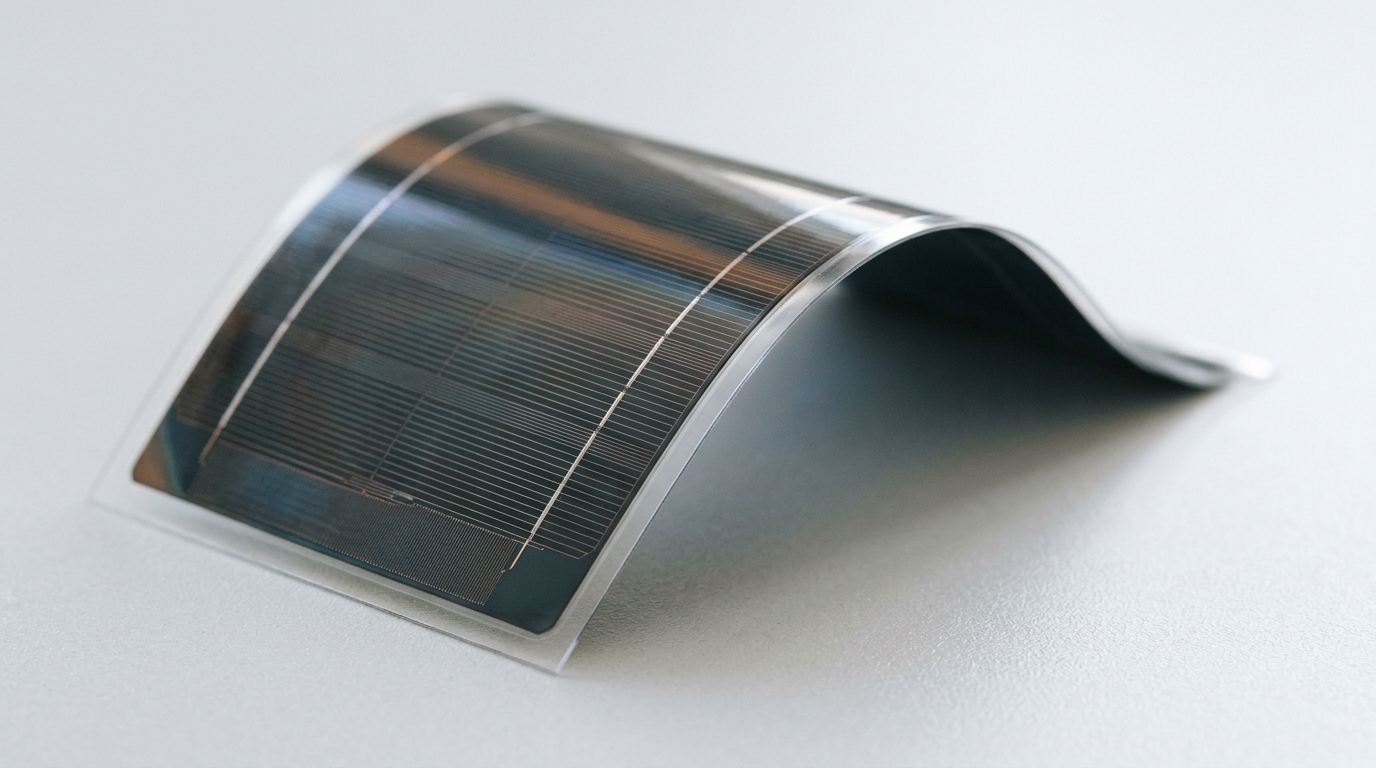
Evaluation of fourteen commercial barrier layer coatings on flexible copper indium gallium selenide (CIGS) photovoltaic prefabricates identified three polyurethane formulations as partially suitable candidates, while all tested acrylate, epoxy, and silicone systems failed encapsulation criteria. Conducted by researchers at the Polymer Competence Center Leoben in Austria within the SOPHOKLES initiative alongside Sunplugged GmbH, the investigation examined whether additive coating techniques can replace conventional vacuum lamination and specialty polymer frontsheets in roll-to-roll manufacturing. The study assessed materials across four chemical classes—acrylate, epoxy, polyurethane, and silicone—applied onto multi-layered prefabricate structures rather than operational cells. Initial screening demonstrated that while rigid encapsulation protects moisture-sensitive absorbers, translating these protective functions into thin flexible polymer films presents severe interfacial, mechanical, and environmental challenges. Across the fourteen evaluated systems, none fully satisfied all benchmarks, though three polyurethane materials demonstrated sufficient adhesion and durability under accelerated hydrothermal stress to warrant targeted formulation adjustments.
Thin-film copper indium gallium (di)selenide photovoltaic modules accounted for less than two percent of the global solar market in 2024, constrained by module efficiencies below nineteen percent compared to crystalline silicon technologies exceeding twenty-four percent. Despite this performance deficit, CIGS maintains commercial relevance through form-factor advantages, including compatibility with flexible substrates such as stainless-steel foils, polymer films, and ultra-thin glass measuring one hundred micrometers. These flexible configurations permit continuous roll-to-roll manufacturing and customization for portable electronics, Internet of Things hardware, building-integrated photovoltaics, and vehicle-integrated installations. However, thin-film absorber layers exhibit pronounced sensitivity to moisture ingress, which historically drove module designs toward rigid glass front encapsulation to limit degradation below twenty percent over twenty-year operational lifetimes. Such rigid configurations constrain mechanical flexibility and remain incompatible with roll-to-roll manufacturing. While commercial flexible CIGS modules exist, they typically rely on costly proprietary polymer frontsheets, whereas ceramic barriers like atomic layer deposited aluminum oxide face adoption barriers due to elevated processing costs and complex deposition procedures.
To investigate direct coating encapsulation, the research team evaluated four substrate configurations supplied by Sunplugged GmbH, examining interfacial behavior across the distinct material layers present in CIGS prefabricates. The investigated substrates comprised complete non-functional mini-module prefabricates, self-standing stainless-steel foils, stainless-steel foils coated with an insulating silicon oxide barrier layer, and stainless-steel foils carrying the CIGS cell stack capped with an indium tin oxide front contact and copper busbars with Kapton tape. Functional criteria established with the industrial partner required optical transmission exceeding ninety percent across visible and near-infrared wavelengths from 400 to 1200 nanometers, accompanied by ultraviolet stability without yellowing, hazing, or microcracking. Chemically, coatings had to be halogen-free, acid-free, and inert toward underlying materials. Processing benchmarks stipulated fluid viscosities between 2000 and 10,000 millipascal-seconds, maximum layer thicknesses under 500 micrometers, thermal curing at or below 150 degrees Celsius, thermal resistance up to 100 degrees Celsius without softening, and retention of mechanical flexibility post-curing to withstand roll-to-roll bending.
The experimental protocol implemented four deposition techniques with increasing relevance to industrial roll-to-roll lines, matching coating viscosities to application methods. Mold casting served as a laboratory reference offering controlled film formation under static conditions, while spray coating was employed for low-viscosity formulations and complex geometries. Doctor blade coating provided precise wet film thickness control through adjustable blade gaps and coating speeds, and gravure coating served as an industrialized roll-to-roll benchmark for high-throughput processing. Curing pathways varied according to chemical composition, with rapid ultraviolet curing preferred for inline processing because of fast kinetics and low thermal loads. Both evaluated acrylate coatings cured via photo-initiated free-radical photopolymerization in under one minute. Thermal curing at temperatures up to 150 degrees Celsius was used for polyurethanes, epoxies, and silicones, preserving substrate functionality. Silicone coatings cured via platinum-catalyzed hydrosilylation or humidity-assisted condensation, while polyurethane formulations cured through addition reactions between isocyanate and polyol groups. Extended room-temperature drying was documented as the least favorable approach due to prolonged processing times.
Visual examination following deposition and curing identified severe defects linked to substrate cleanliness, surface topography, and interfacial energy mismatches. Thorough pre-cleaning using ethanol or isopropanol was essential to prevent dry spots and localized dewetting. Height variations from copper busbars caused localized air entrapment during spray deposition, disrupting coating uniformity, while particulate contamination breached film integrity. Both evaluated UV-curable acrylate coatings failed initial testing and were classified as unfit. Acrylate 1 exhibited pronounced dewetting on the silicon oxide layer due to surface energy mismatches between the inorganic oxide and organic acrylate formulation, producing droplet formation rather than continuous coverage. Although Acrylate 2 achieved uniform initial wetting across all substrate configurations, it exhibited inadequate interfacial adhesion following UV curing. During manual bending tests up to sixty degrees designed to simulate mechanical stresses encountered during flexible module handling, Acrylate 2 delaminated completely across all substrate types, causing both acrylate candidates to be excluded from accelerated aging.
Both two-component epoxy formulations and all three silicone-based materials were likewise disqualified during early assessments. Epoxy 1 and Epoxy 2, applied via mold casting and doctor blading, underwent volumetric shrinkage exceeding ten percent during curing. This shrinkage generated severe internal stresses that permanently distorted the flexible stainless-steel substrates, and filler materials added to adjust viscosity failed to resolve this dimensional instability. Silicone coatings presented insurmountable processing and adhesion barriers: doctor blade deposition proved unfeasible because thin coatings failed to cure properly while thicker films overflowed substrate borders, confining application to mold casting with laborious vacuum degassing. Furthermore, all three silicone formulations exhibited weak initial adhesion, as cured elastomeric layers peeled easily from all substrates. While primers improved adhesion for Silicone 1 and Silicone 2, Silicone 3 lacked a compatible primer. Additionally, complete curing of Silicone 1 and 2 required thicknesses exceeding 500 micrometers, violating dimensional criteria and resulting in the disqualification of all silicone systems.
In contrast to acrylates, epoxies, and silicones, polyurethane systems demonstrated versatile processing behavior, offering low viscosities compatible with spray, doctor blade, and gravure coating. Substrate cleaning was critical for PU 1, PU 4, and PU 6, where residues on silicon oxide caused dry spots. Spray deposition of PU 1 and PU 6 generated voids near copper busbars, but doctor blade or gravure coating eliminated these defects by allowing material to level across surface contours. Water-based PU 2, evaluated despite moisture sensitivities in CIGS absorbers, cured defect-free with sound initial adhesion. PU 3 exhibited an pronounced skin effect during curing, where surface skinning entrapped solvent vapors and formed microbubbles, an issue resolved in reformulated PU 4. PU 5 displayed an orange peel texture on silicon oxide due to surface tension mismatches. Viscous PU 7 had a pot life under thirty minutes, but doctor blade application and vacuum oven curing removed entrapped bubbles, qualifying it for aging tests.
Polyurethane coatings showing uniform coverage and sound initial adhesion advanced to accelerated aging evaluations using the pressure cooker test and damp heat exposure. The pressure cooker test, performed at 120 degrees Celsius and 100 percent relative humidity under steam pressure exceeding 100 kilopascals for one hour, served as a rapid screening tool to identify weakly adhered layers. Under saturated steam, PU 1 and PU 2 delaminated completely from all substrates, with PU 2 developing optical haze from moisture absorption following interface failure. PU 4 detached from silicon oxide and CIGS stacks, while PU 6 delaminated from silicon oxide but maintained excellent adhesion on stainless steel. Surviving combinations, alongside intentionally retained PU 4 and PU 6 specimens, were exposed to damp heat testing at 85 degrees Celsius and 85 percent relative humidity for 1000 hours under the IEC 61215 standard, with visual inspections conducted every 250 hours to track slower environmental aging.
Damp heat exposure revealed progressive interfacial degradation and polymer yellowing over extended test periods. After 250 hours, spider-web-like wrinkling emerged at specimen corners for PU 4 on silicon oxide and CIGS stacks, as well as for PU 6 on silicon oxide, creating tunnel-like pathways that accelerated moisture ingress. By 1000 hours, wrinkling covered the entire surface of PU 4 on these configurations, and PU 6 detached completely from silicon oxide. Meanwhile, PU 5 exhibited severe yellowing due to polymer oxidation without antioxidant stabilizers, and PU 7 displayed yellowing after 500 hours because of low antioxidant content. However, neither PU 5 nor PU 7 delaminated from any substrate, with PU 7 preserving mechanical integrity on complete mini-module prefabricates. Furthermore, PU 6 maintained robust adhesion and optical clarity on stainless steel and indium tin oxide without yellowing, and PU 4 retained adhesion on stainless steel without discoloration, showing that higher densities of reactive functional groups strengthen interface durability.
In the overall ranking, the authors categorized PU 4, PU 6, and PU 7 as partially suitable, while all other eleven candidate coatings were designated as unfit. None of the evaluated materials satisfied all functional criteria, reflecting the stringent encapsulation demands of flexible CIGS devices. Several experimental limitations were documented: water vapor transmission rates could not be measured because available testing equipment required thick self-supporting films rather than thin layers, and standardized cross-cut adhesion tests were omitted to avoid inducing delamination within the multi-layered CIGS stack. Additionally, operational solar cells were not tested due to ongoing cell fabrication development and variations in module efficiency, leaving electrical performance verification to future evaluations by Sunplugged. The authors concluded that standard damp heat conditions may overstress coatings intended for short-term or specific building-integrated applications, recommending that future research investigate adapted aging profiles, thermal cycling, ultraviolet exposure, and antioxidant stabilizer modifications to advance scalable roll-to-roll encapsulation.
Subject of Research: Barrier layer coatings for the encapsulation of flexible CIGS photovoltaic modules
Article Title: Systematic study of barrier layer coatings for encapsulation of flexible CIGS PV modules
Article References: Pervan, N., Feldbacher, S., Harnisch, M., Zimmermann, A., & Oreski, G. (2026). Systematic study of barrier layer coatings for encapsulation of flexible CIGS PV modules. Results in Engineering, 32, Article 114325. https://doi.org/10.1016/j.rineng.2026.114325
Image Credits: AI Generated
DOI: 10.1016/j.rineng.2026.114325
Keywords: CIGS photovoltaics, thin-film solar cells, flexible solar modules, barrier layer coatings, photovoltaic encapsulation, roll-to-roll manufacturing, polyurethane coatings, damp heat testing, pressure cooker test, doctor blade coating, gravure coating, stainless-steel substrate, silicon oxide barrier, indium tin oxide, delamination resistance, accelerated aging, building-integrated photovoltaics, interfacial adhesion
News Source: Denise Maddox. (November 28, 2026). Three Polyurethane Barrier Coatings Prove Partially Suitable for Flexible CIGS Encapsulation. Scienmag.