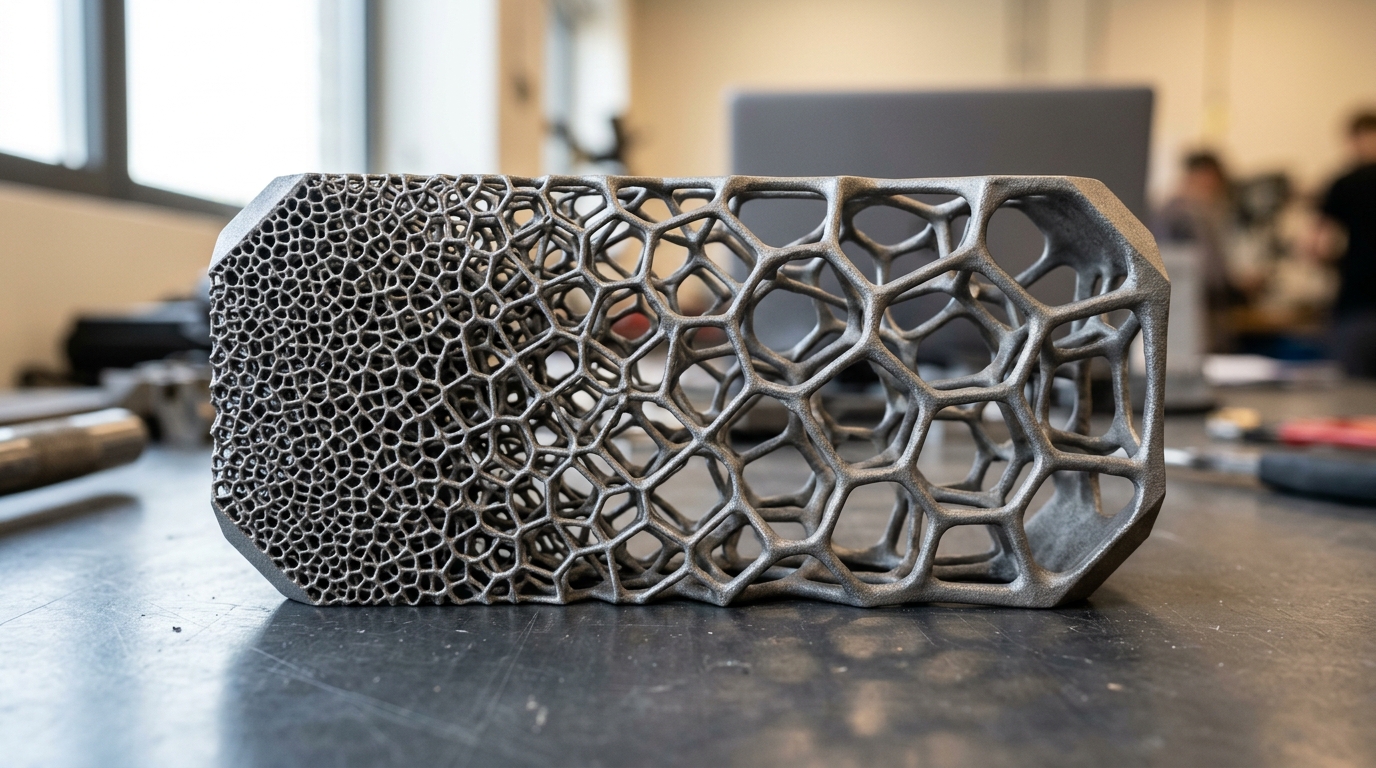
Computational scientists, materials researchers, and subsurface reservoir engineers frequently rely on spatial partition techniques to discretise complex three-dimensional physical domains into discrete cellular assemblies. Among the most mathematically foundational schemes for achieving this space-filling division is the three-dimensional Voronoi tessellation, an operation that partitions continuous coordinate space into adjacent convex polyhedra where every spatial point within an individual cell resides closer to its generating seed point than to any other seed in the system. While two-dimensional counterparts have long been familiar across spatial statistics and geography under designations such as Thiessen polygons, three-dimensional implementations serve indispensable roles in recreating polycrystalline metal microstructures, granular packings, porous foams, and unstructured computational grids for fluid flow solvers. In finite-volume and integral finite-difference numerical models, perpendicular bisection grids offer decisive mathematical advantages because perpendicular bisectors naturally ensure orthogonality between adjoining cell faces and the vectors connecting adjacent cell centroids. Despite the wide mathematical utility of these geometric constructions, generating interactive three-dimensional polyhedral tessellations that are rigorously clipped against defined domain boundaries, dynamically smoothed through iterative centroidal relaxation, and graded according to user-steered spatial density fields has traditionally demanded cumbersome workflows spanning disconnected command-line libraries, customized scripting pipelines, and file conversion filters before results could be visually inspected.
To overcome this fragmented pipeline, researcher Stefano Bonduà at the University of Bologna has developed Voronoi3D, an open-source software plugin that integrates three-dimensional Voronoi partition generation directly into the visual analysis environment of ParaView. Released under the permissive MIT open-source licence and archived permanently through Zenodo, the software bridges computational geometry and interactive visualization by introducing a native execution plugin built on Python 3.9 and compiled C++14 components. The underlying architecture embeds a customized version of the open-source Voro++ numerical library into a high-performance C++ shared library, interfaced with ParaView through standard Python ctypes bindings without forcing geometric coordinate arrays across interpreted runtime boundaries during optimization loops. In standard engineering and materials science practise, investigating how seed populations, clipping boundaries, or local cell grading alter a simulated system has historically necessitated calling external numerical packages such as Qhull, CGAL, pyvoro, or Neper through independent terminal commands, writing bespoke Lloyd iteration scripts, clipping open polyhedra to finite bounding boxes, and converting raw coordinates into compatible visualization formats like VTK. Voronoi3D collapses these disparate stages into standard graphical user interface properties within ParaView, allowing researchers to adjust numerical inputs interactively and immediately evaluate the resulting polyhedral grids on screen.
The structural geometry produced by arbitrary or random seed placements often generates highly irregular Voronoi diagrams characterised by Poisson-Voronoi statistics, where adjacent cell volumes and face counts exhibit substantial spatial variance. To transform these irregular geometries into uniform, isotropic, and physically stable meshes, Voronoi3D incorporates centroidal Voronoi tessellations through iterative Lloyd relaxation. In an idealized centroidal Voronoi tessellation, every generating seed point coincides exactly with the geometric centre of mass, or centroid, of its associated polyhedral cell. Mathematically, these spatial arrangements correspond directly to critical points that minimize a continuous quantization energy functional defined over the volume domain. Under uniform spatial density distributions, repeated iterations of Lloyd’s algorithm—wherein the tessellation is computed, every seed point is translated directly to the volumetric centroid of its cell, and the tessellation is recalculated—progressively regularize cell sizes and shapes until the assembly reaches a local energy minimum. The Voronoi3D engine conducts these successive centroid computations entirely within its compiled native layer, bypassing inter-process Python overhead and tracking displacement shifts, cell volume coefficients of variation, and convergence metrics directly in the dataset metadata.
To achieve this graded spatial control without requiring researchers to specify manual coordinates for thousands of individual seed points, Voronoi3D implements a weighted centroidal Voronoi tessellation framework steered by fixed spatial anchor points. Within this scheme, input points bearing positive user-defined density values serve as immovable geometric anchors that remain pinned to their exact spatial coordinates throughout the optimization process. Each anchor projects an isotropic density field that decays linearly across space as a function of Euclidean distance up to a user-configured influence radius, expressed as a proportional fraction of the domain’s largest bounding box dimension. When multiple anchor influence zones overlap, the composite spatial density function takes the maximum value among competing anchors, thereby guaranteeing that the numerical density remains strictly bounded throughout the entire simulation volume.
During weighted centroidal relaxation iterations, all remaining non-anchor points are treated as free mobile seeds that iteratively shift toward the density-weighted centroids of their respective polyhedral cells. The weighted centroid coordinates are evaluated by weighting each spatial coordinate against the local density raised to a user-defined positive exponent. Because exact analytical integration of arbitrary density functions across complex polyhedral volumes is intractable, Voronoi3D calculates these volumetric integrals numerically by systematically subdividing each polyhedral cell into constituent sub-tetrahedra. Each tetrahedron is formed by connecting the generating seed point at the apex to triangular bases constructed by linking each cell face centre to its bounding edges with a single level of subdivision. Evaluating the weighting field at the tetrahedral centroids ensures that the numerical calculation remains fully invariant to the local ordering of face vertices, preserving mirror symmetry across planar geometries. As predicted by asymptotic spatial quantisation laws, cell volumes scale inversely with local density fields, causing free mobile seeds to naturally migrate toward high-density anchors and establishing smooth transitions between refined and coarse computational zones.
By toggling dedicated graphical check-boxes for coordinate movements along the x, y, and z axes, computational scientists can prevent mobile seeds from drifting out of predefined planes, effectively maintaining strictly planar two-dimensional or layered two-and-a-half-dimensional configurations while permitting unrestricted lateral relaxation. For numerical reliability, the software incorporates defensive validation algorithms that prevent crashes in the underlying computational geometry libraries. Seeds positioned closer to domain boundary walls than a designated safety threshold, set by default to one percent of the box dimensions, or points located within a tolerance of ten to the negative sixth power of the domain scale from existing seeds, are systematically filtered prior to computation. Furthermore, anchor points receive absolute priority over free points during deduplication routines, and the plugin automatically performs post-execution volume-conservation audits by verifying that the cumulative sum of all output polyhedral cell volumes matches the analytical volume of the enclosing bounding box within tight numerical tolerances.
The author validated the performance and numerical stability of Voronoi3D across multiple systematic computational experiments, beginning with the centroidal relaxation of one thousand pseudo-random seeds distributed inside a three-dimensional unit cube. Starting from an initial unrelaxed state exhibiting a cell volume coefficient of variation between 0.44 and 0.47, applying fifty successive Lloyd iterations driven by the native engine reduced the coefficient of variation to 0.066 while the mean face count per polyhedral cell dropped from 13.9 to 12.7. Tracking convergence history across five independent stochastic realisations demonstrated that the mean displacement of mobile seeds, normalised by the characteristic mean cell spacing dimension, dropped below one percent after nineteen to twenty iterations and reached roughly 0.38 to 0.40 percent after fifty iterations. Cell volume conservation checks confirmed that the aggregate volume of all generated VTK polyhedral cells agreed with the unit cube volume to within ten to the negative twelfth power, verifying that the algorithm successfully transformed an initially irregular Poisson-Voronoi assembly into a regular, nearly uniform space-filling grid without introducing topological defects.
The efficacy of the weighted relaxation framework was subsequently demonstrated using a multi-layered benchmark geometry composed of 1,208 points arranged across two horizontal planes situated at vertical coordinates z equals 0.25 and z equals 0.75, containing 604 points on each plane. Four strategic points near the corners of each planar square were assigned non-zero anchor densities of 1, 3, 10, and 30, while vertical seed movement along the perpendicular z-axis was strictly disabled. Following fifty weighted Lloyd relaxation iterations with an influence radius of 0.5 and an exponent of 3, the polyhedral cells contracted dramatically around the higher-density anchors down to a mean cell volume of 2.34 times ten to the negative fourth power, compared to the uniform mesh baseline average of 3.5 times ten to the negative fourth power. Concurrently, cells situated in distal regions beyond an influence distance of 0.5 expanded up to 5.97 times ten to the negative fourth power as free seeds migrated toward the anchor nodes. Because vertical motion was prevented, the horizontal interface separating the two layers remained perfectly planar at z equals 0.5 with planar coordinate discrepancies between mirrored layers staying below ten to the negative fourteenth power, confirming exact geometric symmetry retention.
Computational execution speeds were systematically benchmarked on a desktop workstation powered by an Intel Core i7-12700 processor featuring twenty logical cores and 31.7 gigabytes of memory running 64-bit Windows 11 and ParaView 6.2.0. Evaluating the wall-clock execution time required for the entire pipeline—encompassing seed generation, spatial filtering, polyhedral tessellation, cell volume calculations, and unstructured grid assembly—demonstrated that the serial native Voro++ engine scaled nearly linearly with seed population size. The serial implementation processed 10,000 seeds in 0.218 seconds, 100,000 seeds in 2.39 seconds, and 1,000,000 seeds in 29.6 seconds. In contrast, an alternative internal engine utilizing VTK Delaunay tetrahedralization required 11.7 seconds for 10,000 seeds and 121 seconds for 100,000 seeds, running fifty to fifty-four times slower than the serial native engine across those problem sizes. When multi-threading was enabled using OpenMP across twenty logical threads, execution time for one million random seeds dropped to 7.79 seconds, representing a speed-up factor of 3.8 over the single-threaded native code. The author noted that the multi-threaded scaling remained well below the theoretical thread count primarily because the final topological merging of shared cell vertices and the construction of VTK polyhedral data objects remained strictly serial procedures.
Despite its notable operational strengths and high throughput, the researcher delineated several clear algorithmic boundaries and practical limitations governing the current implementation. Specifically, the numerical integration of the weighted centroids relies on a fixed, low-order tetrahedral quadrature scheme, meaning that in very coarse meshes subjected to steep localized density gradients, calculated cell positions represent a numerical approximation of the continuous weighted centroidal Voronoi tessellation rather than an exact analytical solution. Additionally, the software currently supports only linear spatial decay kernels extending outward from discrete point anchors, omitting alternative mathematical decay functions or arbitrary continuous user-supplied volumetric raster arrays. Furthermore, Voronoi3D produces standard Voronoi cells whose boundaries remain strictly planar perpendicular bisectors; it does not construct advanced power diagrams or multiplicatively weighted tessellations where cell boundaries become curved or offset by per-seed radii. Future developmental milestones outlined by the author include extending OpenMP multithreading to encompass the serial vertex merging routines, integrating higher-order density kernels, and implementing Laguerre power tessellation capabilities to expand utility across broader scientific computing domains.
Subject of Research: Computational geometry and interactive 3D Voronoi mesh generation in ParaView
Article Title: Voronoi3D: a ParaView plugin for 3D Voronoi tessellations with density-weighted centroidal relaxation
Article References: Bonduà, S. (2026). Voronoi3D: a ParaView plugin for 3D Voronoi tessellations with density-weighted centroidal relaxation. SoftwareX, 36, Article 103282. https://doi.org/10.1016/j.softx.2026.103282
Image Credits: AI Generated
DOI: 10.1016/j.softx.2026.103282
Keywords: Voronoi tessellation, ParaView, centroidal Voronoi tessellation, Lloyd relaxation, computational geometry, mesh generation, Voro++, VTK polyhedrons, OpenMP multithreading, finite volume grids, density-weighted relaxation, spatial discretisation, polycrystalline modelling, unstructured grids, scientific visualization, subsurface flow modelling
News Source: Denise Maddox. (November 28, 2026). Voronoi3D Plugin Brings Interactive Density Weighted Centroidal Mesh Relaxation to ParaView. Scienmag.