• HOME
  • NEWS
  • EXPLORE
    • CAREER
      • Companies
      • Jobs
    • EVENTS
    • iGEM
      • News
      • Team
    • PHOTOS
    • VIDEO
    • WIKI
  • BLOG
  • COMMUNITY
    • FACEBOOK
    • INSTAGRAM
    • TWITTER
Sunday, November 29, 2026
BIOENGINEER.ORG
No Result
View All Result
  • Login
  • HOME
  • NEWS
  • EXPLORE
    • CAREER
      • Companies
      • Jobs
        • Lecturer
        • PhD Studentship
        • Postdoc
        • Research Assistant
    • EVENTS
    • iGEM
      • News
      • Team
    • PHOTOS
    • VIDEO
    • WIKI
  • BLOG
  • COMMUNITY
    • FACEBOOK
    • INSTAGRAM
    • TWITTER
No Result
View All Result
Bioengineer.org
No Result
View All Result
Home NEWS Science News Health

Broader R-R Coverage Optimizes Functional Accuracy in Prospective Cardiac CT Angiography

by
November 28, 2026
in Health
Reading Time: 2 mins read
0
Broader R-R Coverage Optimizes Functional Accuracy in Prospective Cardiac CT Angiography

Broader R-R Coverage Optimizes Functional Accuracy in Prospective Cardiac CT Angiography

Share on FacebookShare on TwitterShare on LinkedinShare on RedditShare on Telegram

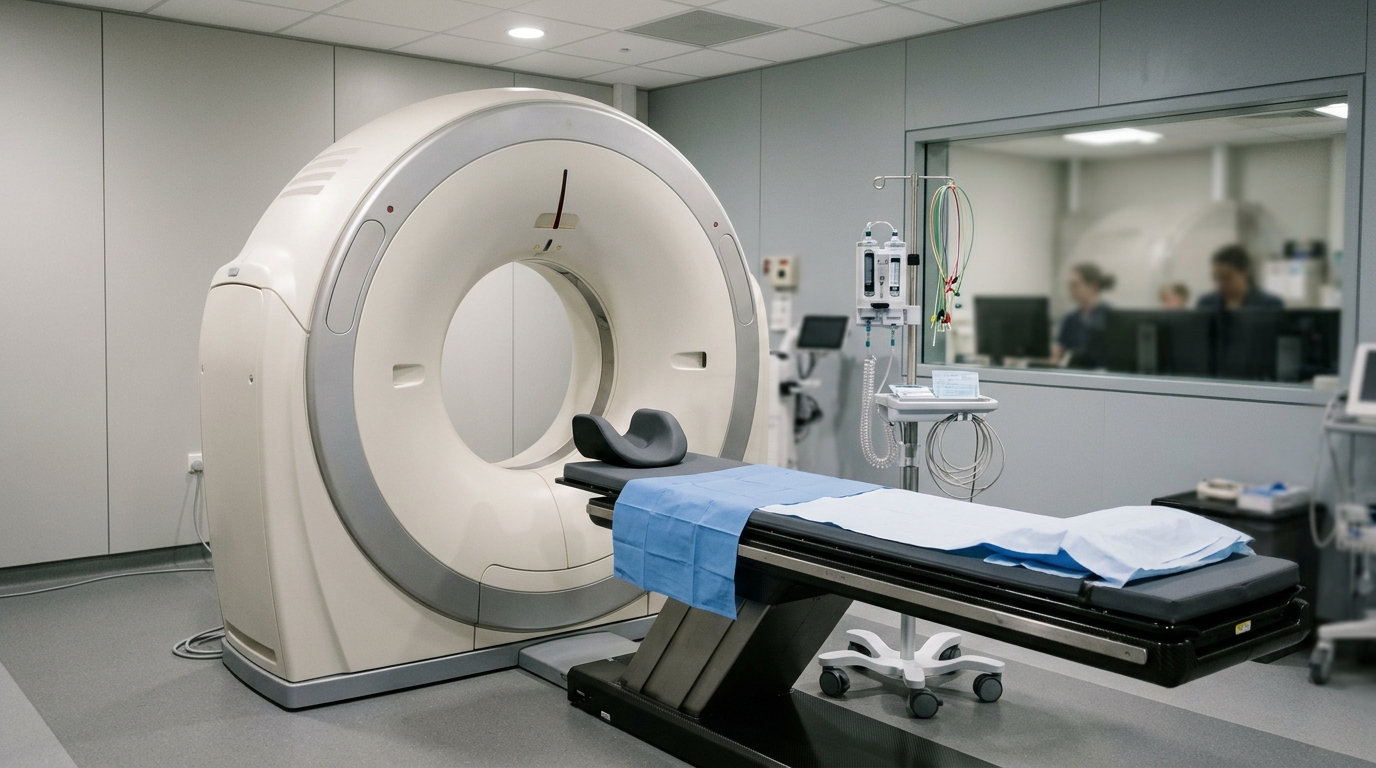
Prospective electrocardiogram-gated cardiac computed tomography angiography achieves highest functional assessment accuracy when scanning covers 30 to 100 percent of the cardiac cycle, according to a retrospective study published in BMC Medical Imaging. While prospective acquisition modes reduce radiation exposure compared with retrospective protocols, restricted data acquisition windows can undermine functional heart evaluations.

A research team led by Korinne Swanson evaluated 199 consecutive clinical cardiac computed tomography angiography examinations that included complete functional data. The retrospective investigation aimed to identify an optimal R-R interval coverage window that preserves accurate functional assessment while maintaining efficient radiation dosing parameters.

Investigators performed cardiac volumetric measurements at standardized increments of 10 percent across the R-R interval. To evaluate physiological variations, patients were stratified across four distinct heart rate categories. Researchers then tested five abbreviated imaging protocols against the institutional standard coverage window spanning 30 to 90 percent of the cycle.

The investigated protocols included windows spanning 30 to 80 percent, 30 to 100 percent, 40 to 90 percent, 40 to 100 percent, and 50 to 100 percent of the R-R interval. Accuracy for each protocol was evaluated by calculating the percentage error in left ventricular ejection fraction relative to baseline volumetric measurements, while proportional coverage was used to estimate relative radiation exposure.

Timing analyses revealed that the optimal phase for measuring end-systolic volume centered at 40 percent of the R-R cycle. Conversely, end-diastolic volume displayed a bimodal temporal distribution across the heartbeat, exhibiting distinct volume peaks near 0 percent and 90 percent of the cardiac cycle.

Across all evaluated heart rates, the 30 to 100 percent window yielded the greatest functional accuracy, maintaining a median ejection fraction error of 0 percent. Protocols using 30 to 90 percent and 40 to 100 percent coverage demonstrated comparable median error ranges of 3.3 to 6.4 percent and 0 to 2.4 percent, respectively.

Performance differed by patient heart rate between intermediate protocols, with 40 to 100 percent coverage demonstrating improved accuracy among individuals with heart rates exceeding 60 beats per minute. Meanwhile, wider 30 to 100 percent coverage demonstrated optimal performance in patients presenting with bradycardia.

Restricting prospective coverage to 50 percent or less of the R-R cycle produced substantial diagnostic error, exceeding 10 percent ejection fraction error particularly in bradycardic patients. Consequently, the authors conclude that protocols covering 50 percent or less of the cardiac cycle should be avoided due to unreliable functional assessment.

Subject of Research: Optimal R-R interval coverage for functional assessment in prospective ECG-gated cardiac CT angiography

Article Title: Optimizing R-R interval coverage for prospective ECG gated cardiac CTA with functional data

Article References: Swanson, K., Chamberlin, J. H., Derrick, S., Hamouda, M., DiBona, S. C., Singh, R., Baruah, D., Burt, J. R., & Kabakus, I. M. (2026). Optimizing R-R interval coverage for prospective ECG gated cardiac CTA with functional data. BMC Medical Imaging. https://doi.org/10.1186/s12880-026-02954-4

Image Credits: AI Generated

DOI: 10.1186/s12880-026-02954-4

Keywords: cardiac CT angiography, ECG gating, prospective gating, R-R interval, functional assessment, ejection fraction, radiation dose, end-systolic volume, end-diastolic volume, volumetric analysis, bradycardia, tachycardia, heart rate stratification, computed tomography, BMC Medical Imaging, cardiac imaging

News Source: Ophelia Keating. (November 28, 2026). Broader R-R Coverage Optimizes Functional Accuracy in Prospective Cardiac CT Angiography. Scienmag.


Tags: BMC Medical Imagingbradycardiacardiac CT angiographycardiac imagingcomputed tomographyECG gatingejection fractionend-diastolic volumeend-systolic volumefunctional assessmentheart rate stratificationprospective gatingR-R intervalRadiation Dosetachycardiavolumetric analysis
Share12Tweet7Share2ShareShareShare1

Related Posts

Neonatal Escape Rooms Boost Trainee Communication Ratings Without Proving Clinical Competence Gains

Neonatal Escape Rooms Boost Trainee Communication Ratings Without Proving Clinical Competence Gains

November 29, 2026
Language Models Show Drug Safety Potential but Lack Autonomous Deployment Readiness

Language Models Show Drug Safety Potential but Lack Autonomous Deployment Readiness

November 29, 2026

Study Identifies Clinical and Dosimetric Predictors of Chemoradiotherapy Myelosuppression in Pelvic Cancers

November 29, 2026

Rural Nepal Adolescents Show High Abortion Support but Low Pregnancy Knowledge

November 29, 2026

POPULAR NEWS

  • Rural Nepal Adolescents Show High Abortion Support but Low Pregnancy Knowledge

    Rural Nepal Adolescents Show High Abortion Support but Low Pregnancy Knowledge

    29 shares
    Share 12 Tweet 7
  • Two Cases Detail Opposing Trajectories of Severe Hepatic Injury in HELLP Syndrome

    29 shares
    Share 12 Tweet 7
  • Treatment Access Pathway Associated with Progression-Free Survival in Metastatic Breast Cancer

    29 shares
    Share 12 Tweet 7
  • Malnutrition Double Burden Among Nigerian Mother–Child Dyads Fell in 2024

    29 shares
    Share 12 Tweet 7

About

We bring you the latest biotechnology news from best research centers and universities around the world. Check our website.

Follow us

Recent News

Delhi Survey Finds Income-Based Water Subsidies Represent Most Feasible Reform Option

Neonatal Escape Rooms Boost Trainee Communication Ratings Without Proving Clinical Competence Gains

Graphene-Supported Cobalt Sulfide Heterostructure Boosts Reaction Kinetics in Lithium-Ion Capacitors

Subscribe to Blog via Email

Enter your email address to subscribe to this blog and receive notifications of new posts by email.

Join 90 other subscribers
  • Contact Us

Bioengineer.org © Copyright 2023 All Rights Reserved.

Welcome Back!

Login to your account below

Forgotten Password?

Retrieve your password

Please enter your username or email address to reset your password.

Log In
No Result
View All Result
  • Homepages
    • Home Page 1
    • Home Page 2
  • News
  • National
  • Business
  • Health
  • Lifestyle
  • Science

Bioengineer.org © Copyright 2023 All Rights Reserved.