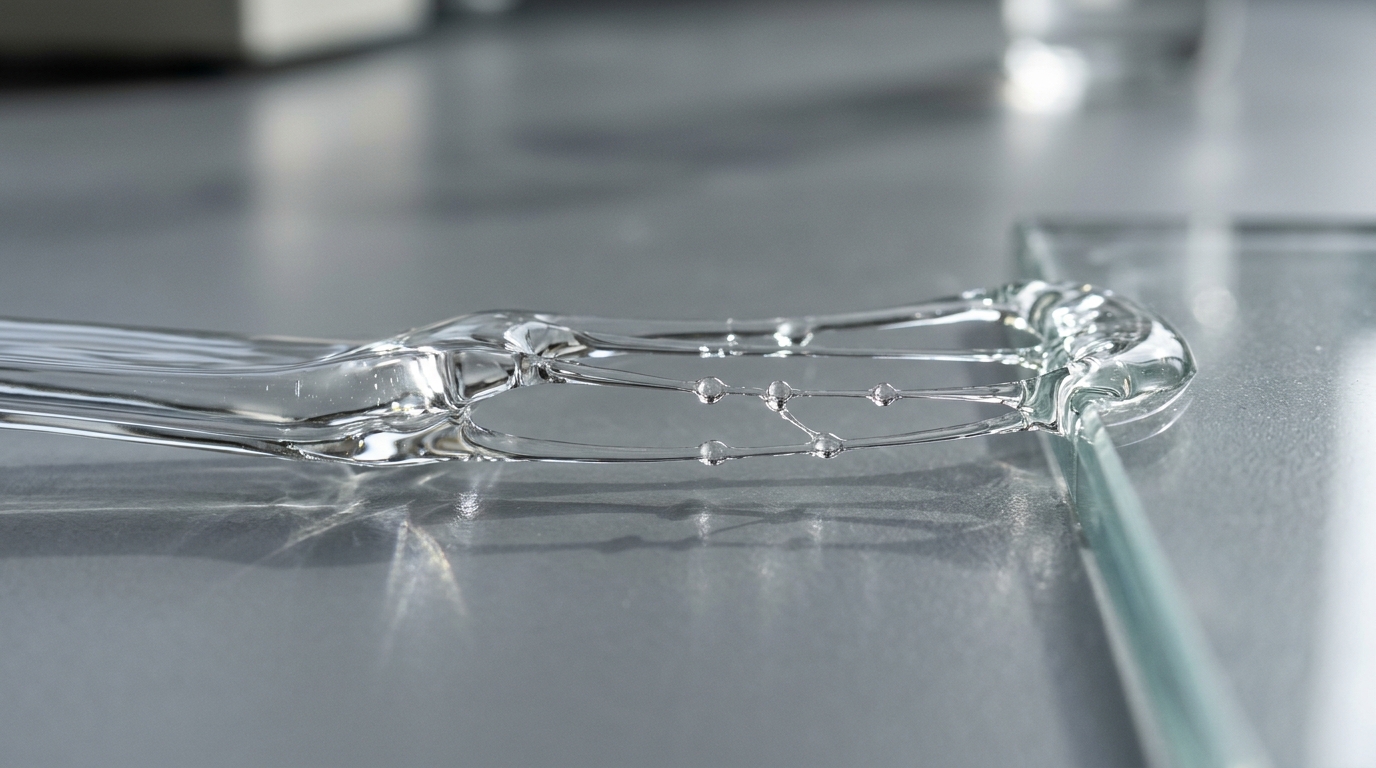
A statistical modeling investigation has demonstrated that temporal variables exert a positive effect on velocity, thermal, and concentration distributions in magnetohydrodynamic viscoelastic fluid flow, whereas spatial variables produce a negative effect. Published in Discover Applied Sciences by researchers Yogesh K and Tamizharasi R, the study introduces a fractional order generalized Oldroyd-B transport model to examine transport processes along an inclined porous surface immersed in a porous medium. The researchers employed the Yang-Abdel-Cattani fractional operator to evaluate how these physical distributions evolve across spatial and temporal dimensions within a single unified framework.
The mathematical transport framework accounts for multiple coupled physical influences operating simultaneously within the fluid system. Specifically, the governing fractional differential equations incorporate the effects of an applied magnetic field, porous medium resistance, buoyancy force, thermal diffusion, concentration, and fractional temporal dynamics. To analyze the influence of the spatial and temporal variables on the transport processes, the governing equations were systematically converted into nondimensional form.
To statistically analyze and validate the transport distributions, the authors coupled Response Surface Methodology with Central Composite Design. This statistical design established quadratic regression equations tailored to the concentration, temperature, and velocity fields. The resulting response surface models accurately incorporate the linear terms, quadratic terms, and interaction terms associated with the controlling factors.
Statistical validation demonstrated the reliability and precision of the response surface formulations. Evaluations using analysis of variance tests, residual analysis, and direct comparisons between reference analytical datasets and RSM-predicted values confirmed high statistical significance, high prediction accuracy, and computational reliability. These statistical procedures verified that the quadratic response surface models closely reproduce the analytical solutions for velocity, thermal distribution, and concentration profiles under the specified flow conditions.
Based on these findings, the authors propose the time-fractional statistical framework as an efficient predictive platform across multiple engineering disciplines. The modeling strategy offers practical applications for polymer processing systems, porous medium heat transfer devices, biomedical transport applications, and magnetohydrodynamic thermal engineering technologies.
Subject of Research: Statistical modeling of fractional transport in magnetohydrodynamic viscoelastic fluid flow
Article Title: Fractional transport prediction through CCD-RSM and ANOVA-based statistical modeling
Article References: K, Y., & R, T. (2026). Fractional transport prediction through CCD-RSM and ANOVA-based statistical modeling. Discover Applied Sciences. https://doi.org/10.1007/s42452-026-09848-8
Image Credits: AI Generated
DOI: 10.1007/s42452-026-09848-8
Keywords: fractional transport, Oldroyd-B fluid, Yang-Abdel-Cattani operator, response surface methodology, central composite design, ANOVA, magnetohydrodynamics, viscoelastic fluid, porous medium, thermal diffusion, buoyancy force, quadratic regression, residual analysis, polymer processing, biomedical transport, heat transfer devices, time-fractional dynamics
News Source: Denise Maddox. (November 28, 2026). Statistical Models Show Temporal Variables Enhance Viscoelastic Fluid Transport Distributions. Scienmag.