A comprehensive evidence map published in Frontiers in Medicine indicates that structured exercise interventions offer substantial therapeutic promise for older adults experiencing cognitive frailty, while simultaneously exposing significant methodological limitations across the global research landscape. Conducted by researchers Wuyang Gu and Yanhua Gong, the systematic investigation synthesises data from sixty-nine clinical studies encompassing sixty-three randomised controlled trials and six systematic reviews or meta-analyses. The synthesis demonstrates that physical activity regimens—most prominently multicomponent training routines, traditional Baduanjin exercises, and integrated cognitive-motor dual-task interventions—are overwhelmingly described by primary investigators as beneficial or possibly beneficial for mitigating functional decline. However, the authors emphasize that these widespread positive conclusions largely reflect author-reported narrative findings rather than uniform clinical proof. With fewer than half of the evaluated randomized trials meeting low risk of bias standards, this visual mapping study demonstrates that healthcare systems must balance therapeutic optimism with rigorous quality appraisal, standardized adverse event monitoring, and patient-tailored delivery across diverse geriatric care environments.
Cognitive frailty represents an increasingly prevalent geriatric syndrome characterized by the simultaneous co-occurrence of physical frailty and mild cognitive impairment in older individuals who do not exhibit dementia. Formally defined in 2013 through a consensus between the International Academy on Nutrition and Aging and the International Association of Gerontology and Geriatrics, the condition is clinically operationalized by a Clinical Dementia Rating score of 0.5 alongside physical vulnerability. When left unmanaged, affected older adults experience heightened risks of falls, physical disability, depression, and diminished quality of life, increasing acute hospitalizations and institutional care requirements. Physical activity enhances executive function, processing speed, and attentional capacity while improving physical resilience, offering an accessible mechanism capable of delaying or reversing functional decline.
To map this fragmented literature, the researchers implemented an evidence mapping methodology based on the framework developed by Campbell and colleagues, reported in accordance with the PRISMA 2020 guidelines and registered on PROSPERO under registration code CRD420261355101. Unlike traditional meta-analyses that generate single pooled effect estimates for specific outcomes, evidence mapping synthesises multidimensional research fields visually to identify clusters and knowledge gaps. Two independent researchers systematically searched eight academic databases from inception through July 3, 2025, without publication year limitations. The search encompassed four major Chinese repositories—CNKI, Wanfang Data, VIP Database, and SinoMed—and four international platforms, including PubMed, Embase, Cochrane Library, and Web of Science. Across these databases, the initial search retrieved 1,835 records. Following deduplication in EndNote, 845 unique citations underwent title and abstract screening, leading to the exclusion of 724 irrelevant papers. Full-text evaluation of 121 eligible candidate reports resulted in 52 further exclusions, establishing the final analytical sample of 69 publications, comprising 12 Chinese and 57 English articles.
The bibliometric trajectory of the 69 included studies demonstrates a steady expansion across two decades, accelerating sharply after 2021 and reaching its highest annual output in 2024. However, the geographic distribution of first authors shows significant concentration, presenting challenges for global applicability. Researchers from China contributed 51 percent of all publications with 35 studies, followed by Spain with 12 percent representing eight studies, and Australia and Canada with six percent each representing four studies.
Analysis of the 63 included randomised controlled trials demonstrates substantial variation in clinical settings, participant numbers, and intervention schedules across 10,457 total enrolled participants. Community settings represented the primary environment, accounting for 52.38 percent of trials with 33 studies, followed by hospitals at 26.98 percent with 17 studies, and nursing institutions at 11.11 percent with seven studies, while home and primary healthcare centers hosted 6.35 percent and 3.17 percent respectively. Sample sizes exhibited wide dispersion, ranging from 10 to 1,298 participants. Crucially, 47.62 percent of trials enrolled 100 or fewer participants, 44.44 percent enrolled between 101 and 300 individuals, and only five studies enrolled more than 300 participants. Intervention durations ranged from 4 weeks to 24 months, with most regimens lasting 11 to 20 weeks in 42.86 percent of trials, or 21 to 30 weeks in 36.51 percent. Only 14.28 percent of trials extended beyond 30 weeks, indicating that long-term maintenance of exercise gains remains largely unmeasured.
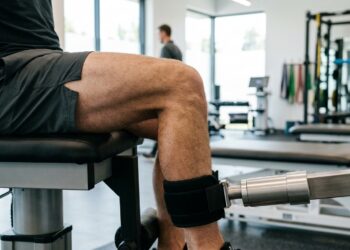
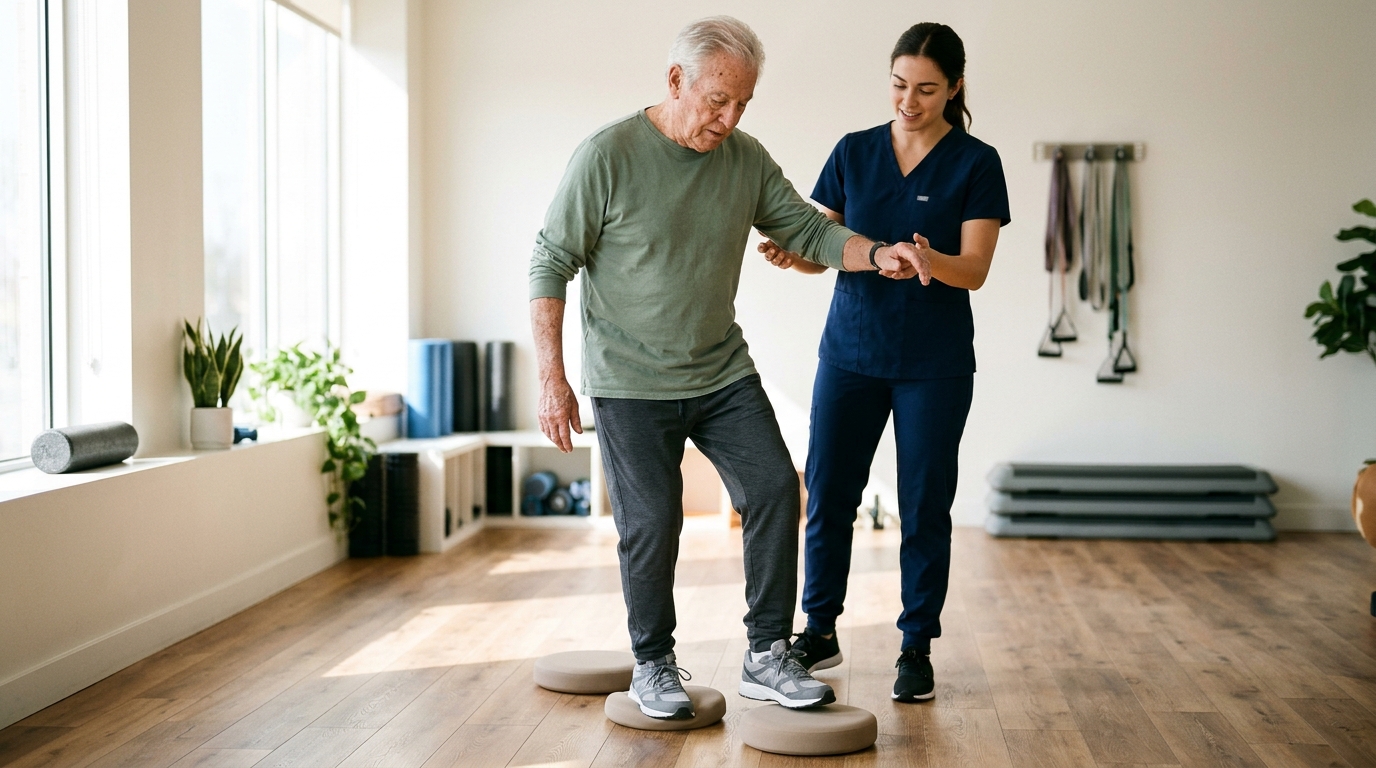
The systematic synthesis identified twenty-three distinct exercise intervention modalities across the primary trials, highlighting a wide spectrum of physical approaches. Multicomponent exercise was the most frequently investigated strategy, assessed in 21 trials representing 33.33 percent of all randomised studies. This was followed by traditional Baduanjin mind-body training in six trials at 9.52 percent, cognitive-motor dual-task training in five trials at 7.94 percent, and Otago exercise in three studies at 4.76 percent. Resistance training alone, multicomponent exercise combined with protein supplementation, and resistance combined with balance training each appeared in three trials. Newer technological adaptations also emerged, including wearable-assisted training, interactive boxing-cycling, and virtual reality motor-cognitive regimens. However, small sample sizes and single-site designs currently constrain wide implementation of digital technologies.
Outcome measures across the included trials were classified using the Nursing Outcomes Classification third edition, encompassing 330 outcomes across seven domains, supplemented by three additional categories: blood biochemical indicators, body composition, and other clinical measures. The five most frequently measured outcome domains were cognitive function, frailty status, physical activity, quality of life, and self-care ability. Conversely, objective physiological biomarkers, such as inflammatory cytokines and neurotrophic factors, along with body composition metrics including muscle mass, were evaluated far less frequently. The authors developed a multidimensional bubble chart synthesising four core dimensions: intervention type, outcome indicator category, author conclusion classification, and trial sample size. In this visualization, bubble sizes denoted participant enrollment, providing clinicians with a clear overview of evidence concentration.
A sharp divergence emerged between author-reported trial conclusions and formal methodological quality ratings. Among the 63 randomised controlled trials, 58 studies (92.1 percent) were reported by their original authors as yielding beneficial or possibly beneficial effects, with only five trials reporting no significant effect. However, appraisal using the Cochrane RoB 2 tool revealed that only 27 trials (42.9 percent) demonstrated a low risk of bias. Thirty-five trials (55.6 percent) raised some concerns, primarily due to the practical impossibility of blinding participants and personnel in physical exercise regimens, and one study (1.6 percent) showed a high risk of bias stemming from missing outcome data. For the six systematic reviews and meta-analyses assessed via AMSTAR-2, five were rated as low quality and one as critically low quality. Common methodological deficiencies included failure to report funding sources of included trials, failure to provide excluded study lists with rationales, and incomplete reporting of author conflicts of interest.
The evidence mapping process revealed several critical research gaps that restrict the clinical translation of exercise interventions for older adults with cognitive frailty. The most striking deficiency was the widespread absence of systematic adverse event reporting across primary studies. Few included trials systematically tracked complications such as dizziness, dyspnoea, excessive fatigue, palpitations, accidental falls, or musculoskeletal pain, preventing clinicians from conducting evidence-based risk-benefit assessments. Furthermore, participant adherence was inconsistently documented, with most publications omitting detailed data on attendance rates, dropouts, or behavioral adherence strategies. Because controlled trials benefit from dedicated research supervision—creating an artificial compliance boost known as white-coat adherence—real-world adherence in routine community settings is substantially lower. Additionally, the existing literature features very few head-to-head comparative effectiveness studies directly comparing different exercise modalities, leaving healthcare providers without empirical evidence to select specific exercise types for distinct clinical profiles. Finally, older adults residing in long-term care facilities remain severely under-represented in published trials.
To bridge these evidence gaps and safely implement exercise programmes, the authors propose a five-step clinical heuristic to guide gerontological nursing practice. The framework outlines five progressive phases: initial assessment of cognitive profile, physical frailty, fall risks, medical comorbidities, and technology literacy; targeted matching of exercise modalities to individualized clinical goals, pairing multicomponent training with overall decline, Baduanjin with mind-body preferences, or Otago exercise with fall vulnerabilities; systematic safety monitoring for adverse signs including dizziness, dyspnoea, fatigue, palpitations, and musculoskeletal pain; proactive adherence support utilizing collaborative goal setting, reminders, and family engagement; and objective reassessment at four to six weeks. The researchers highlight that this heuristic represents an adaptable decision-making framework rather than a rigid prescription. Given that hospital settings offer superior initial supervision while community environments provide ecological validity, developing hybrid delivery models initiated in clinics and maintained at home may optimize long-term clinical outcomes.
Subject of Research: Evidence mapping of exercise interventions for older adults with cognitive frailty
Article Title: Evidence map of exercise interventions for older adults with cognitive frailty
Article References: Gu, W., & Gong, Y. (2026). Evidence map of exercise interventions for older adults with cognitive frailty. Frontiers in Medicine, 13, Article 1967722. https://doi.org/10.3389/fmed.2026.1967722
Image Credits: AI Generated
DOI: 10.3389/fmed.2026.1967722
Keywords: cognitive frailty, exercise interventions, evidence mapping, multicomponent exercise, Baduanjin, cognitive-motor dual-task training, Otago exercise, gerontological nursing, randomised controlled trials, systematic reviews, Nursing Outcomes Classification, physical frailty, mild cognitive impairment, RoB 2, AMSTAR 2, virtual reality exercise, adverse event reporting, community health
News Source: Beatrice Stafford. (November 28, 2026). Exercise Interventions Show Broad Potential for Older Adults With Cognitive Frailty. Scienmag.