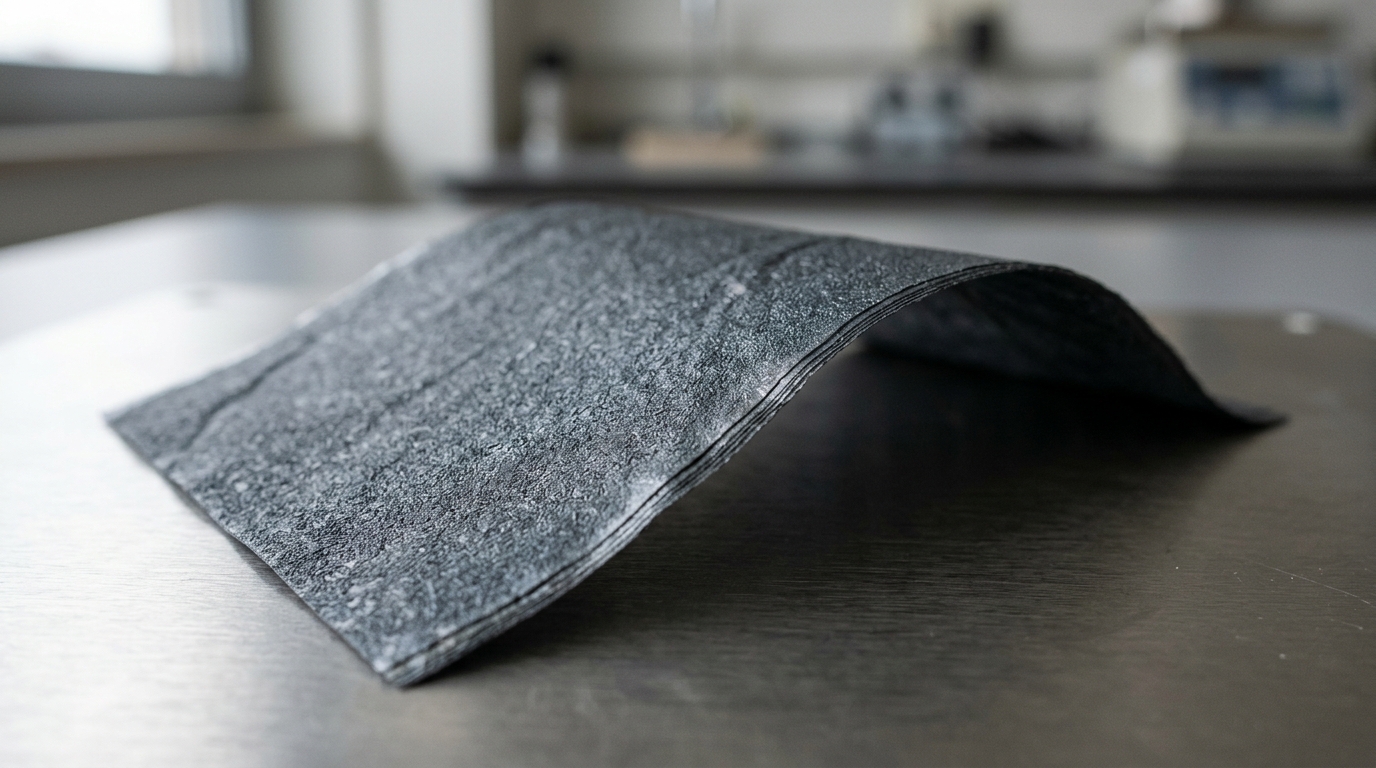
Researchers have developed a two-dimensional hybrid architecture by coupling mesoporous cobalt chromium layered double hydroxide with Ti3C2Tx MXene nanosheets to address longstanding challenges in energy storage technology. In solid-state supercapacitors, conventional layered double hydroxides face severe operational constraints, including limited electrical conductivity, sluggish ion diffusion rates, and an inherent tendency for individual sheets to restack during operation. To resolve these persistent bottlenecks, the research team implemented an exfoliation-restacking strategy designed to fabricate a stable two-dimensional heterostructure capable of supporting rapid ion diffusion and highly efficient charge transport.
The structural design was systematically evaluated to identify an optimal composition, which was designated as CCLMX-2 and features 2 weight percent MXene nanosheets integrated with the cobalt chromium layered double hydroxide. Material characterization revealed that this optimized composite establishes interconnected nanosheet networks characterized by strong interfacial coupling and abundant mesoporosity. Furthermore, the hybrid architecture provides an extensive specific surface area measuring 88.89 square meters per gram. These structural features collectively accelerate the transport of charges and facilitate rapid ion diffusion across the entire electrode matrix.
Electrochemical testing showed that the CCLMX-2 hybrid material delivers a high specific capacity of 1472 Coulombs per gram at an operating current density of 1 Ampere per gram. This measured output substantially outperforms pristine cobalt chromium layered double hydroxide, demonstrating the efficacy of incorporating MXene nanosheets into the layered hydroxide framework. The marked gain in specific capacity highlights how interfacial integration and nanosheet networking counteract conductivity limitations, allowing the active material to exchange charges far more effectively than unmodified layered hydroxide precursors.
To evaluate practical device capabilities, the researchers constructed an all-solid-state hybrid supercapacitor using the CCLMX-2 hybrid as the positive electrode paired with an activated carbon negative electrode. This complete solid-state system delivered a specific capacitance of 180.28 Farads per gram and achieved an energy density of 64.10 Watt-hours per kilogram at a corresponding power density of 3076.92 Watts per kilogram. In addition, the device exhibited a rate capability of approximately 93 percent and retained 95 percent of its original capacitance after completing 15,000 operational cycles.
Complementing the laboratory testing, the team performed density functional theory calculations to clarify the electronic mechanisms taking place across the material interface. The computational simulations revealed that interfacial electronic redistribution promotes substantial charge accumulation at the metal active sites within the heterostructure, yielding a calculated theoretical quantum capacitance of 3955 Farads per gram. According to the investigators, these combined experimental measurements and theoretical insights confirm the viability of engineered MXene and layered double hydroxide heterostructures for high-performance solid-state energy storage applications.
Subject of Research: 2D/2D layered double hydroxide and MXene hybrid electrodes for solid-state supercapacitors
Article Title: Interfacially coupled 2D/2D cobalt chromium layered double hydroxide/MXene hybrid structures for high-performance solid-state supercapacitors: experimental and theoretical insights
Article References: Sadavar, S. V., Nandkumar, G., Park, H., Hong, N., Taunk, M., Kim, M., Yameen, B., Kamran, M., Selvarajan, P., Kumar, S., & Seo, Y. (2026). Interfacially coupled 2D/2D cobalt chromium layered double hydroxide/MXene hybrid structures for high-performance solid-state supercapacitors: experimental and theoretical insights. Advanced Composites and Hybrid Materials. https://doi.org/10.1007/s42114-026-02185-9
Image Credits: AI Generated
DOI: 10.1007/s42114-026-02185-9
Keywords: cobalt chromium layered double hydroxide, Ti3C2Tx MXene, solid-state supercapacitors, 2D/2D hybrid architecture, exfoliation-restacking strategy, interfacial coupling, quantum capacitance, density functional theory, energy storage, capacitance retention, rate capability, specific surface area, mesoporous materials, activated carbon electrode, charge transport, hybrid supercapacitors, nanosheet networks
News Source: Denise Maddox. (November 27, 2026). Cobalt Chromium Hydroxide and MXene Hybrid Boosts Solid-State Supercapacitors. Scienmag.