• HOME
  • NEWS
  • EXPLORE
    • CAREER
      • Companies
      • Jobs
    • EVENTS
    • iGEM
      • News
      • Team
    • PHOTOS
    • VIDEO
    • WIKI
  • BLOG
  • COMMUNITY
    • FACEBOOK
    • INSTAGRAM
    • TWITTER
Friday, November 27, 2026
BIOENGINEER.ORG
No Result
View All Result
  • Login
  • HOME
  • NEWS
  • EXPLORE
    • CAREER
      • Companies
      • Jobs
        • Lecturer
        • PhD Studentship
        • Postdoc
        • Research Assistant
    • EVENTS
    • iGEM
      • News
      • Team
    • PHOTOS
    • VIDEO
    • WIKI
  • BLOG
  • COMMUNITY
    • FACEBOOK
    • INSTAGRAM
    • TWITTER
No Result
View All Result
Bioengineer.org
No Result
View All Result
Home NEWS Science News Health

Clustering Templates Enable Data-Driven Compression of Head Impact Brain Strain

by
November 27, 2026
in Health, Technology
Reading Time: 2 mins read
0
Clustering Templates Enable Data-Driven Compression of Head Impact Brain Strain

Clustering Templates Enable Data-Driven Compression of Head Impact Brain Strain

Share on FacebookShare on TwitterShare on LinkedinShare on RedditShare on Telegram

Biomechanical researchers have introduced a data-driven clustering framework that compresses high-dimensional brain strain data from head impact simulations while preserving spatiotemporal fidelity. The computational approach addresses data volume challenges inherent in traumatic brain injury modeling by establishing standardized clustering templates directly derived from mechanical response histories across thousands of simulated impact scenarios.

Finite element models serve as foundational tools for evaluating the biomechanics of traumatic brain injury across diverse impact conditions. Modern finite element representations of the human head typically incorporate thousands to millions of discrete elements. When researchers subject these complex meshes to dense temporal sampling and run extensive batches of impact cases, the resulting maximum principal strain data yield high-dimensional datasets of substantial cumulative volume.

To investigate the effective dimensionality necessary for accurate brain strain representation, the investigators developed a series of data-driven clustering templates. The methodology relies on applying K-means clustering algorithms to feature vectors generated from the maximum principal strain time-history curves across 118,840 distinct brain elements. These time histories were compiled from a library of 3,693 impact simulations conducted using the THUMS head model.

The evaluation framework analyzed reconstruction performance across clustering templates configured with cluster counts ranging systematically from 8 to 8,192.

The clustering templates demonstrated high-fidelity reconstruction of original finite element simulation data across multiple compression thresholds. Specifically, a template configured with 512 clusters achieved a compression ratio exceeding 200:1 while preserving precision, yielding a mean element-wise peak maximum principal strain root mean square error of 0.027 across the simulated brain elements.

Increasing the template resolution further improved reconstruction fidelity across the modeled impacts.

By mitigating critical data management bottlenecks associated with massive finite element outputs, the templates facilitate subsequent data analysis workflows and support the training of machine learning architectures designed to accelerate traumatic brain injury biomechanics research.

Deriving feature vectors directly from maximum principal strain time history curves allows the clustering templates to preserve high spatiotemporal fidelity while substantially reducing simulation data volume. This automated dimensionality reduction directly resolves computational challenges caused by dense temporal sampling and large numbers of head impact simulations.

Subject of Research: Dimensionality reduction and compression of head impact brain strain simulations

Article Title: Clustering Templates: A Data-Driven Framework for Dimensionality Reduction and Compression of Brain Strain in Head Impact

Article References: Liu, J., Du, X., Wu, J., Wang, Y., Zhang, C., Zhang, Y., Lv, S., Wang, L., Zhan, X., Zhou, Z., & Liu, Y. (2026). Clustering Templates: A Data-Driven Framework for Dimensionality Reduction and Compression of Brain Strain in Head Impact. Annals of Biomedical Engineering. https://doi.org/10.1007/s10439-026-04456-4

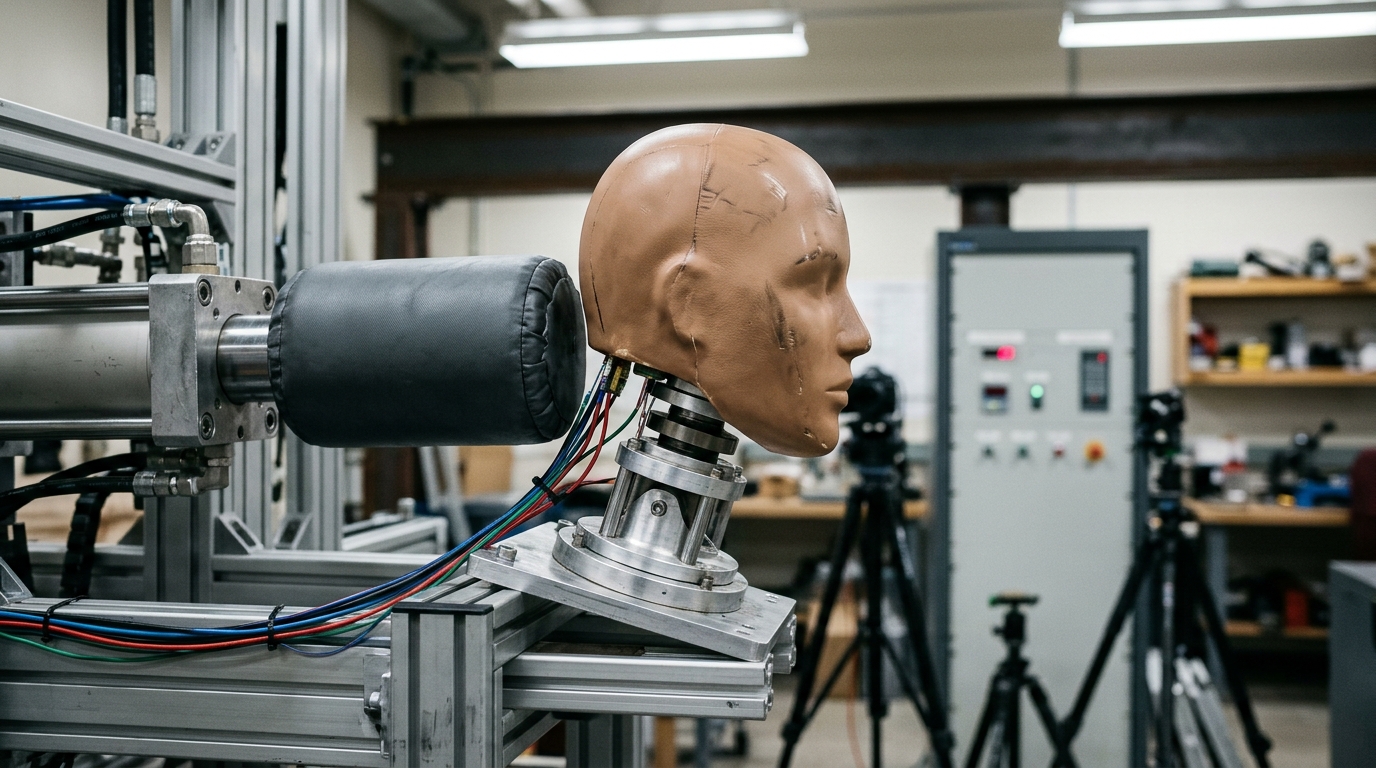
Image Credits: AI Generated

DOI: 10.1007/s10439-026-04456-4

Keywords: traumatic brain injury, brain strain, finite element modeling, clustering templates, K-means clustering, dimensionality reduction, data compression, biomechanics, THUMS head model, head impact simulation, maximum principal strain, root mean square error, computational biomechanics, spatiotemporal fidelity, data-driven modeling, simulation compression

News Source: Cassandra Pierce. (November 27, 2026). Clustering Templates Enable Data-Driven Compression of Head Impact Brain Strain. Scienmag.


Tags: Biomechanicsbrain strainclustering templatescomputational biomechanicsdata compressiondata-driven modelingdimensionality reductionFinite Element Modelinghead impact simulationK-Means clusteringmaximum principal strainroot mean square errorsimulation compressionspatiotemporal fidelityTHUMS head modelTraumatic Brain Injury
Share12Tweet7Share2ShareShareShare1

Related Posts

Nomogram Predicts Advanced Epithelial Ovarian Cancer Survival but Shows External Limitations

Nomogram Predicts Advanced Epithelial Ovarian Cancer Survival but Shows External Limitations

November 27, 2026
Aerogel Cement Composites Cut Thermal Conductivity but Face Durability Trade-Offs

Aerogel Cement Composites Cut Thermal Conductivity but Face Durability Trade-Offs

November 27, 2026

Routine Surveillance Tracks Shifting Infectious Disease Notifications Across Six Somali Reporting Areas

November 27, 2026

Acupuncture Relieves Persistent Fatigue in Breast Cancer Survivors, Pragmatic Trial Finds

November 27, 2026

POPULAR NEWS

  • Researchers Identify Microglial and Cytoskeletal Targets Across Preclinical Neurodegeneration Models

    Researchers Identify Microglial and Cytoskeletal Targets Across Preclinical Neurodegeneration Models

    29 shares
    Share 12 Tweet 7
  • Longitudinal MRI Radiomics Adds Little Value Beyond Glioblastoma Tumor Volumetry

    29 shares
    Share 12 Tweet 7
  • Lake Productivity Shows Minor Influence on Roach Growth Across Polish Waters

    29 shares
    Share 12 Tweet 7
  • EPHA-Related Gene Signature Predicts Patient Survival in Lung Adenocarcinoma Progression

    29 shares
    Share 12 Tweet 7

About

We bring you the latest biotechnology news from best research centers and universities around the world. Check our website.

Follow us

Recent News

Nomogram Predicts Advanced Epithelial Ovarian Cancer Survival but Shows External Limitations

Controlled Bioreactor Fermentation Alters Chemical and Sensory Characteristics of Liberica Coffee

Aerogel Cement Composites Cut Thermal Conductivity but Face Durability Trade-Offs

Subscribe to Blog via Email

Enter your email address to subscribe to this blog and receive notifications of new posts by email.

Join 89 other subscribers
  • Contact Us

Bioengineer.org © Copyright 2023 All Rights Reserved.

Welcome Back!

Login to your account below

Forgotten Password?

Retrieve your password

Please enter your username or email address to reset your password.

Log In
No Result
View All Result
  • Homepages
    • Home Page 1
    • Home Page 2
  • News
  • National
  • Business
  • Health
  • Lifestyle
  • Science

Bioengineer.org © Copyright 2023 All Rights Reserved.