A three-round Delphi study involving a panel of twenty national experts has established a validated framework to assess organizational readiness for knowledge translation across leading Iranian medical universities. Addressing the persistent evidence-practice gap remains a major healthcare challenge globally. Although knowledge translation actively addresses this gap, its practical success relies fundamentally on institutional organizational readiness. Existing organizational readiness frameworks were developed primarily within Western contexts and may not fully capture the unique dynamics operating within healthcare systems in low-to-middle-income countries such as Iran.
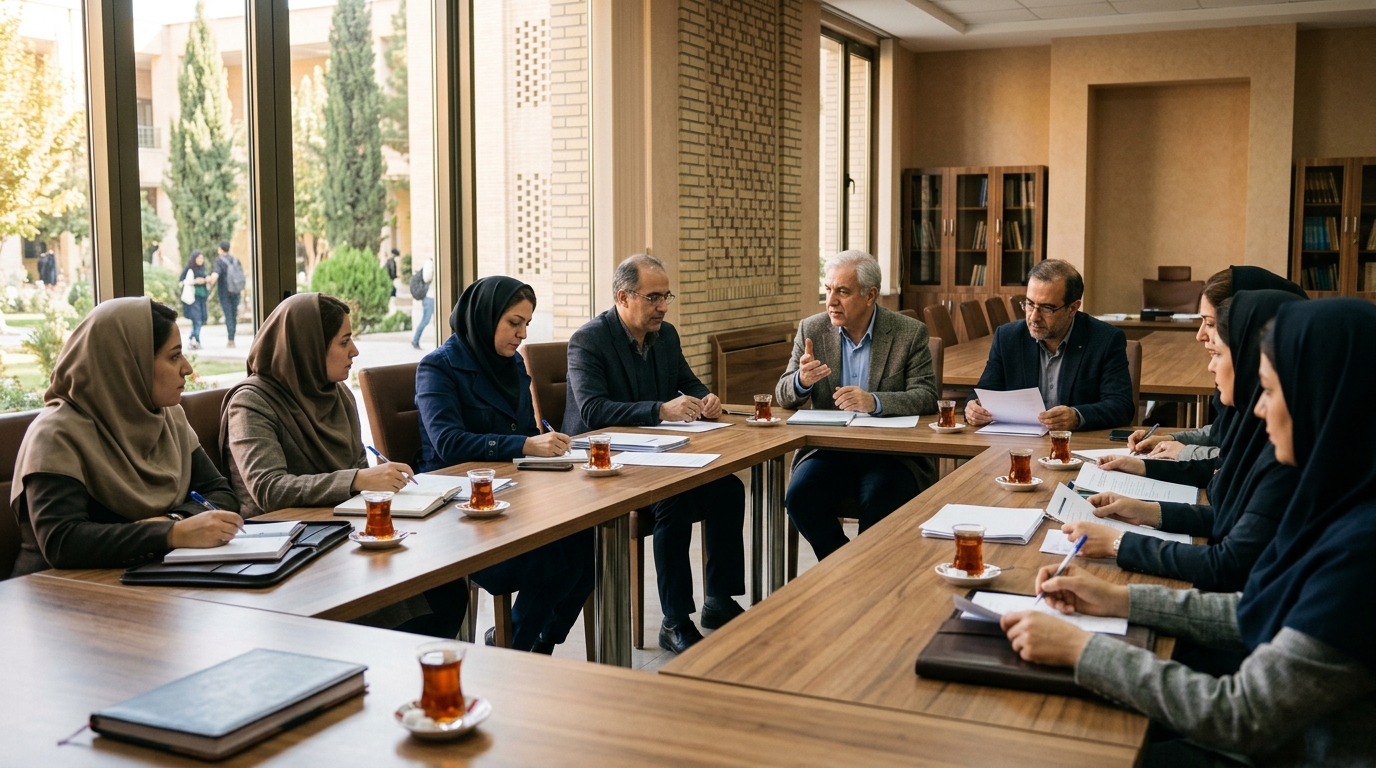
To address this gap, researchers sought to develop a context-specific framework for assessing organizational readiness for knowledge translation implementation within leading Iranian medical universities while evaluating its content validity. The research team convened a dedicated panel of twenty national experts, comprising senior university administrators, faculty members, and knowledge translation specialists. The initial developmental framework consisted of thirty components derived directly from a prior scoping review along with primary qualitative interviews conducted prior to the expert panel review.
The expert consensus process followed systematic methodological guidelines across three iterative Delphi rounds using established statistical benchmarks to evaluate each candidate element. To reach final acceptance, components were required to satisfy strict predefined criteria: a Content Validity Ratio of at least 0.49, a Content Validity Index of at least 0.70, an overall panel agreement percentage of at least 75 percent, and panel mean scores of at least 4.0 measured on a standard five-point scale.
Through the three-round iterative evaluation, the expert panel refined the initial structure into a finalized model comprising twenty-four components organized across five distinct operational dimensions. These dimensions encompassed organizational culture and commitment, infrastructure and capacity-building, human resources and leadership, strategic and motivational support, and change management and flexibility. Within these broader categories, key components identified by the panel included senior management commitment, transformational leadership, and the systematic involvement of knowledge brokers.
The finalized framework demonstrated strong content validity based on formal expert consensus across all five dimensions. Evaluation metrics yielded Content Validity Index values ranging from 0.80 to 0.95 and Content Validity Ratio scores between 0.75 and 0.92. Additionally, the investigators evaluated the temporal stability of the model following the third consensus round. A test-retest reliability analysis conducted with fourteen participants over a two-week interval demonstrated an intraclass correlation coefficient of 0.87, indicating good temporal stability.
The authors concluded that the study successfully established expert consensus on a comprehensive, context-specific framework with confirmed content validity for Iranian medical universities. The authors noted that this framework provides a structured tool to support organizational readiness assessment, strategic planning, and policy development aimed at enhancing knowledge translation capacity. Looking ahead, the researchers highlighted that future research should focus on developing quantitative tools and testing the predictive validity of the framework across diverse healthcare settings.
Subject of Research: Organizational readiness framework for knowledge translation in Iranian medical universities
Article Title: Developing a context-specific model of organizational readiness for implementing knowledge translation in leading Iranian medical universities: a three-round Delphi study
Article References: Sadatmoosavi, A., Hosseinzadeh, H., Tajedini, O., Tavan, A., & Azami, M. (2026). Developing a context-specific model of organizational readiness for implementing knowledge translation in leading Iranian medical universities: a three-round Delphi study. Health Research Policy and Systems. https://doi.org/10.1186/s12961-026-01548-4
Image Credits: AI Generated
DOI: 10.1186/s12961-026-01548-4
Keywords: Knowledge translation, Organizational readiness, Delphi study, Iranian medical universities, Healthcare systems, Evidence-practice gap, Content validity, Content Validity Index, Content Validity Ratio, Test-retest reliability, Transformational leadership, Senior management commitment, Knowledge brokers, Capacity building, Change management, Strategic planning
News Source: Ophelia Keating. (November 27, 2026). Delphi Study Establishes Readiness Framework for Knowledge Translation in Iranian Universities. Scienmag.