A comprehensive systematic review evaluating laboratory and clinical studies has demonstrated that the phenotypic profiles, molecular cargo, and therapeutic functions of platelet-derived extracellular vesicles depend directly on the specific stimulation and processing protocols used to generate them. Platelets release nano-sized, membrane-bound vesicles packed with growth factors, signaling molecules, microRNAs, and lipids following activation. While platelet-rich plasma and platelet concentrates have long served as primary regenerative therapies across wound healing and musculoskeletal medicine, their biological effects are mediated in substantial part by these extracellular particles. Researchers conducting the review established that vesicle yields and functional outcomes vary markedly depending on whether platelets encounter physiological agonists, chemical activators, bioactive microbial components, or physical storage stressors.
The investigation was designed as a structured systematic review adhering strictly to the Preferred Reporting Items for Systematic Reviews and Meta-Analyses guidelines and guided by the PICO framework. Registered in the Open Science Framework under identifier 7g85c, the research team conducted systematic literature queries across PubMed and Scopus through May 15, 2026. The initial electronic search yielded 375 records from PubMed and 376 from Scopus. Following the removal of non-experimental document types, non-English publications, and duplicate records, 384 unique studies remained for eligibility screening. From these, 176 publications focused broadly on platelet-derived extracellular vesicles, and 65 specifically assessed vesicle liberation under deliberate chemical, physical, or biological stimulation conditions.
To safeguard against experimental and reporting bias, the reviewers implemented a stringent quality filter based on the 2023 Minimal Information for Studies of Extracellular Vesicles guidelines. Only studies that rigorously identified and characterized vesicles in full accordance with the MISEV 2023 standards were accepted, narrowing the final corpus to 26 experimental papers. The authors observed a clear chronological surge in publication volume over time, tracking the progressive maturation and standardization of the extracellular vesicle field. Between 2007 and 2012, only a single eligible article was published, rising gradually to four studies between 2012 and 2017. Research accelerated sharply thereafter, yielding 10 eligible publications between 2017 and 2022, and reaching a peak of 11 publications between 2022 and 2026.
Across the 26 analyzed studies, starting biological preparations and experimental models varied. Fourteen investigations derived extracellular vesicles from platelet concentrates, 10 employed washed platelets isolated from platelet-rich plasma, and two analyzed unprocessed platelet-rich plasma. Studies utilizing platelet-poor plasma were deliberately excluded from the review because that fraction lacks a significant cellular platelet population. Although human blood products constituted the primary source across the vast majority of datasets, two studies incorporated murine models and one utilized rat models to investigate specific functional endpoints. Independent reviewers extracted detailed technical data, capturing donor anticoagulants, stimulation reagents, isolation workflows, characterization platforms, and measured downstream biological mechanisms.
Isolation and characterization methodologies exhibited clear technical patterns across the analyzed literature. Ultracentrifugation and size exclusion chromatography emerged as the predominant separation techniques, frequently implemented alone or in sequence with ultrafiltration and density gradient media. To confirm physical parameters, researchers predominantly combined dynamic light scattering or nanoparticle tracking analysis for size distribution, while transmission electron microscopy or scanning electron microscopy verified vesicle morphology. Particle quantification relied primarily on nanoparticle tracking analysis, alongside occasional applications of tunable resistive pulse sensing. Surface marker profiling by Western blot, high-resolution flow cytometry, or single-particle interferometric reflectance imaging sensing validated vesicle identity, with 15 studies tracking platelet-specific transmembrane markers including CD41, CD61, and CD62P alongside universal tetraspanins CD9, CD63, and CD81.
The systematic comparison categorized stimulation procedures into physiological agonists, chemical agents, bioactive factors, and physical processing techniques. Physiological agonists—most notably thrombin, collagen, and adenosine diphosphate—represented the most frequently applied biological activators. Multiple investigations confirmed that the agonist chosen dictates the molecular cargo packaged into budding vesicles independent of de novo protein synthesis. For instance, while adenosine diphosphate stimulation enriched proteins associated with fibrin formation pathways, thrombin activation prompted vesicles that faithfully mirrored classic platelet degranulation and exocytic cascades. Combining thrombin and collagen produced the most potent activation profile, generating high vesicle concentrations with proteomic signatures closely aligned with platelet procoagulant states during active thrombus formation.
Chemical activators such as calcium ionophore and calcium chloride demonstrated powerful vesicle-inducing capacity, with calcium ionophore producing some of the highest particle concentrations measured among tested agonists. Dual activation combining calcium gluconate with thrombin also generated significantly elevated vesicle numbers compared to single-agent stimulation or unstimulated controls. Conversely, exposing platelets to bioactive pathological stimuli reprogrammed vesicle contents toward inflammatory and disease-specific states. Platelets stimulated with bacterial lipopolysaccharide or nitric oxide donors generated vesicles bearing distinct proteomic profiles that exacerbated acute kidney injury in septic models or promoted vascular cell apoptosis. Similarly, exposing platelets to cancer cell lines induced distinct protein expressions, including hundreds of proteins absent in thrombin-induced vesicles, which accelerated cellular migration and tumor progression in experimental cancer assays.
Physical processing methods and storage parameters demonstrated substantial impacts on vesicle concentration and membrane integrity. Several studies assessed physical disruption techniques, including sonication, extrusion, and freeze-thaw cycles. Sonication and extrusion achieved high vesicle recovery and supported drug-loading capacity for chemotherapeutic agents, while freeze-thaw lysates yielded vesicles exhibiting high purity free of albumin and apolipoprotein contamination. However, the review underscored that mechanical disruption methods generate particulate matter through cellular fragmentation rather than biological secretion. Liquid storage conditions also proved to be potent physical triggers; platelets maintained at room temperatures between 20 °C and 25 °C exhibited progressive, time-dependent increases in vesicle concentration over periods ranging from one to eight days, accompanied by upregulated chemokine levels such as CCL5 and platelet factor 4.
Temperature variations during storage produced divergent vesicle phenotypes and concentrations. While room temperature maintenance led to steady vesicle accumulation alongside lipid remodeling and cholesterol enrichment, cold storage at 4 °C induced distinct structural shifts. Investigations tracking refrigerated platelets noted substantially enlarged vesicle sizes from day four onward and significantly higher overall vesicle counts by day 15 compared to room temperature storage. Rather than active exocytosis, this surge in cold-stored vesicle numbers appears linked to low-temperature cellular stress, loss of membrane asymmetry, and accelerated apoptosis-driven membrane blebbing. Crucially, despite higher vesicle counts and demonstrated procoagulant potential in cold storage conditions, functional performance must be carefully differentiated from physiological secretomes.
In evaluating the broader landscape, the authors identified several pre-analytical and biological limitations that currently impede cross-study comparison. The choice of anticoagulant, such as acid citrate dextrose versus EDTA, substantially alters basal platelet activation thresholds before stimulation even begins. Furthermore, delays between blood collection and processing, differing centrifugation speeds, and residual leukocyte contamination introduce confounding variables into vesicle isolates. The team also highlighted a distinct lack of comparative animal studies, noting that only a handful of non-human investigations met inclusion standards despite widespread use of regenerative blood therapies in veterinary settings. The review concluded that establishing rigorous, standardized activation and processing frameworks is imperative to ensure reproducibility and successfully advance platelet vesicle technologies into reliable clinical therapeutics.
Beyond broad activation categories, individual studies detailed precise molecular cascades triggered by specific agonists. Gaspar and colleagues observed that extracellular vesicles carrying NADPH oxidase 1 directly stimulated resting platelets, a pathway selectively blocked by the inhibitor ML171. In vascular injury models, Yan and colleagues found that collagen-induced vesicles shifted vascular smooth muscle cells away from glycolysis toward oxidative phosphorylation, while accelerating cellular migration and proliferation by phosphorylating FoxO1 and the alpha subunit of AMP-activated protein kinase. At the transcriptional level, Tan and colleagues demonstrated that thrombin stimulation enriched vesicles with microRNAs miR-223, miR-339, and miR-21, which suppressed platelet-derived growth factor receptor beta expression in vascular smooth muscle cells. Furthermore, Palviainen and colleagues showed that receptor-stimulated vesicles induced a distinct cytokine response in recipient macrophages, notably promoting interleukin-7 secretion.
Distinctive functional patterns also emerged from microbial exposures and storage formulations. Palm and colleagues established that platelets stimulated with the streptococcal M1 protein released vesicles containing elevated levels of complement proteins, IgG3, and immunomodulatory mediators despite sharing overall proteomic similarities with thrombin-activated counterparts. In septic kidney models, Lu and colleagues identified ADP-ribosylation factor 6 as a key differentially expressed protein in vesicles generated under lipopolysaccharide exposure. In transfusion contexts, De Paoli and colleagues utilized density gradients to separate platelet storage lesion particles into three distinct entities: degranulated platelets and fragments, activation-derived vesicles with necrotic organelles, and vesicle ghosts. Storage media likewise influenced yield; Valkonen and colleagues established that platelet additive solution B supported greater vesicle concentrations than additive solution E across an eight-day window. Lipoproteins also exerted divergent effects; mildly oxidized high-density lipoprotein reduced vesicle output by 36 percent in experiments by Tafelmeier and colleagues, whereas oxidized low-density lipoprotein promoted the release of procoagulant vesicles bearing CD61 and phosphatidylserine.
Finally, the systematic review highlighted the necessity of comprehensive biochemical validation alongside broader translational perspectives. Rigorous adherence to extracellular vesicle guidelines entailed verifying cytosolic markers such as HSP70, TSG101, and annexins while monitoring plasma contaminants like albumin, apolipoprotein A, and the intracellular marker calnexin. Emphasizing a One-Health framework, the authors concluded that expanding rigorous comparative evaluations across both human and veterinary species remains vital to determine whether stimulus-dependent vesicle phenotypes and functional bioactivities are conserved across mammalian biology.
Subject of Research: Systematic review analyzing the impact of platelet activation and processing methods on platelet-derived extracellular vesicle characteristics and bioactivity
Article Title: Influence of platelet activation protocols on platelet-derived extracellular vesicle characteristics and bioactivity: a systematic review
Article References: Parra, A., Cugat, R., Martínez-Díaz, P., García-Batlletbó, M., Carrillo, J. M., Rubio, M., Satué, K., Cerón, J. J., & Franco-Martínez, L. (2026). Influence of platelet activation protocols on platelet-derived extracellular vesicle characteristics and bioactivity: a systematic review. Frontiers in Bioengineering and Biotechnology, 14, Article 1991079. https://doi.org/10.3389/fbioe.2026.1991079
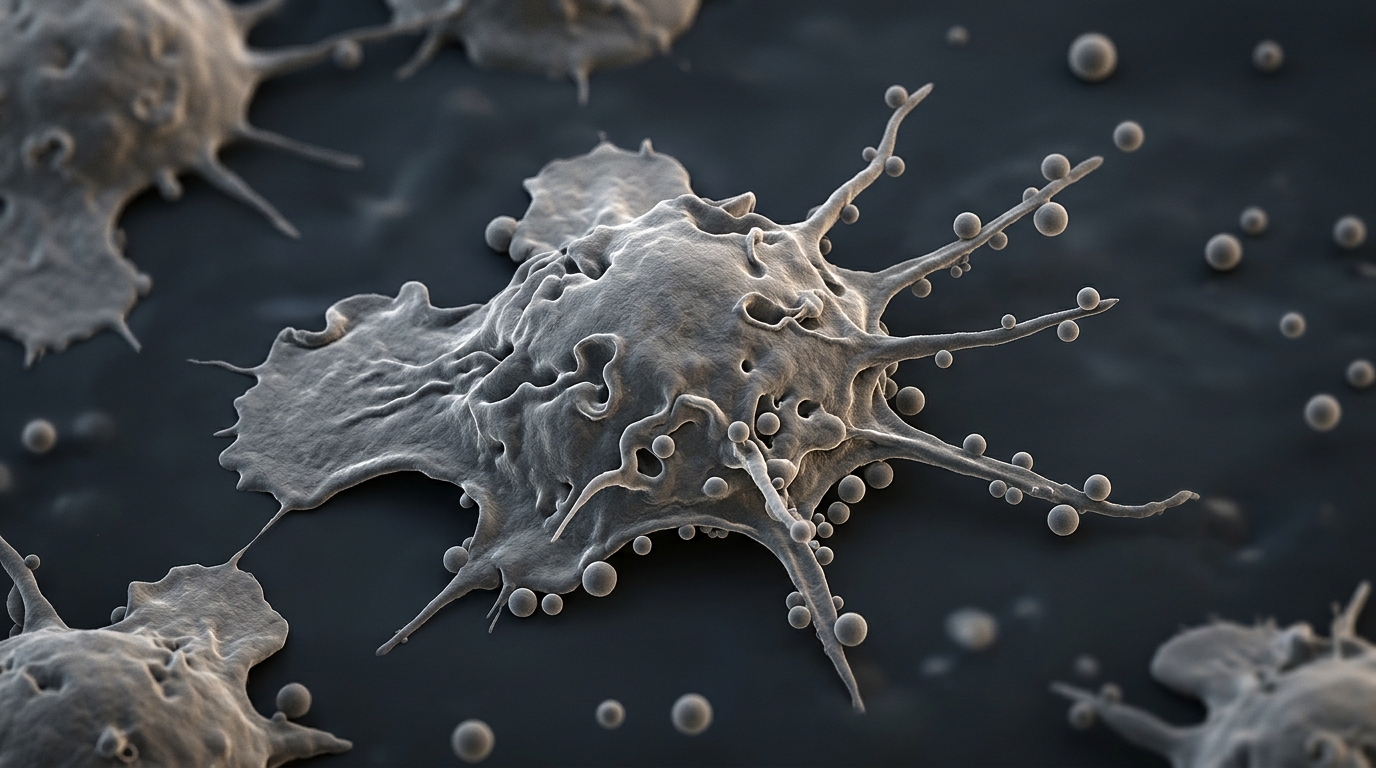
Image Credits: AI Generated
DOI: 10.3389/fbioe.2026.1991079
Keywords: platelet-derived extracellular vesicles, platelet activation, extracellular vesicles, platelet-rich plasma, platelet concentrates, secretome, MISEV 2023, regenerative medicine, thrombin stimulation, calcium activation, cold storage, nanobiotechnology, platelet storage lesion, nanoparticle tracking analysis, biomarkers, cell-to-cell communication
News Source: Drew Townsend. (November 27, 2026). Platelet Activation Methods Shape Extracellular Vesicle Cargo and Clinical Bioactivity. Scienmag.