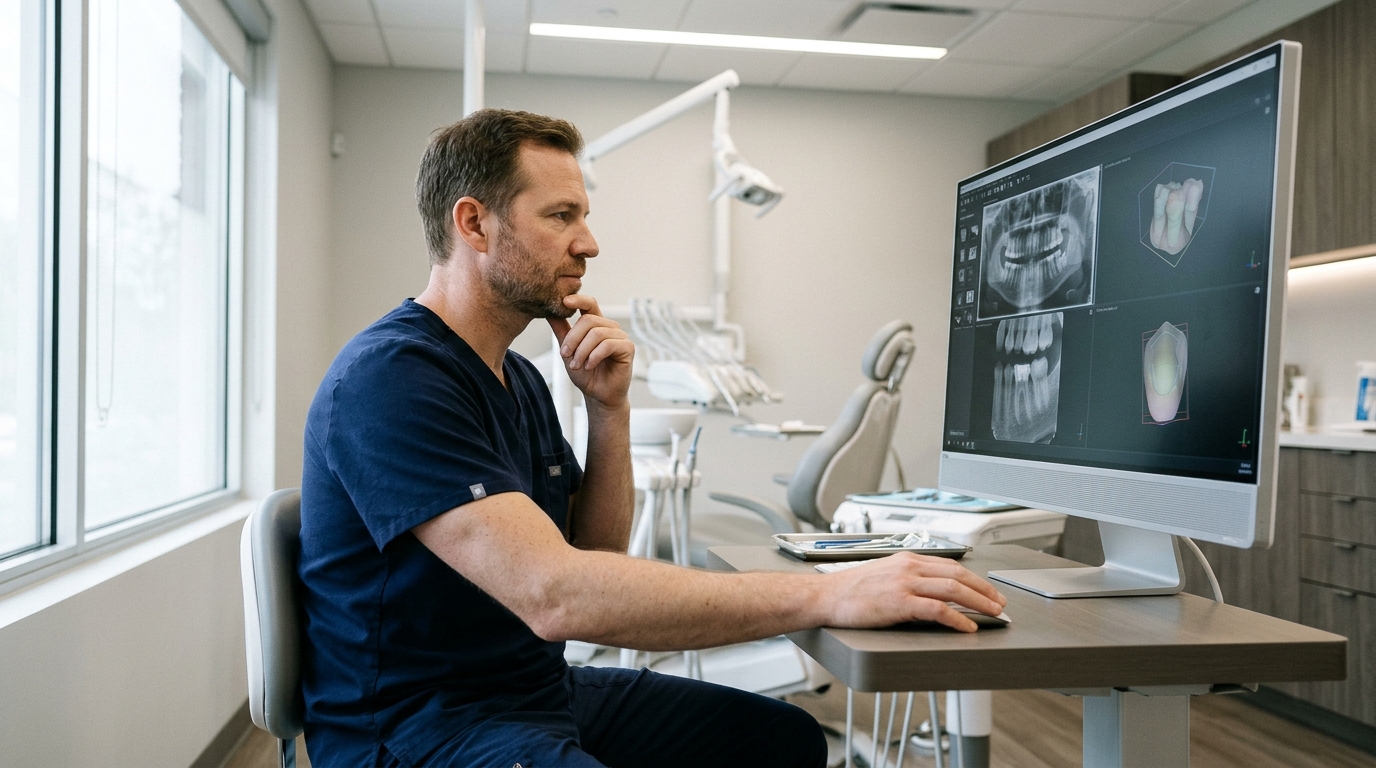
A cross-sectional investigation of dentists practicing in Kuwait has identified personal attitudes as the primary factor associated with willingness to adopt artificial intelligence in clinical workflows. While artificial intelligence continues to exert an expanding influence on broader healthcare delivery, the extent to which dental clinicians are willing to adopt these emerging tools in everyday practice has remained largely unclear.
To clarify these factors, researchers evaluated clinicians’ awareness, attitudes, and specific concerns regarding artificial intelligence, aiming to identify the variables linked to adoption willingness. The study highlighted that artificial intelligence holds diverse potential applications across modern dentistry, notably in clinical diagnosis, treatment planning, and routine patient management procedures.
The research team conducted a structured cross-sectional survey involving 210 practicing dentists located in Kuwait. The investigative questionnaire gathered practitioner demographic and professional characteristics while utilizing separate dedicated measures to quantify artificial intelligence awareness, attitudes toward its professional use, perceived concerns, and overall willingness to adopt the technology in clinical settings.
In their statistical methodology, the investigators evaluated the survey data using correlation techniques and multivariable linear regression models. The research design preserved distinct analytical measures for awareness, attitude, and adoption willingness, while individual concern items were evaluated separately rather than being pooled into a single composite metric.
The participating dentists demonstrated a mean self-rated knowledge score of 3.01 with a standard deviation of 0.82. When assessing familiarity with specific technological capabilities, the cohort achieved a mean recognition score of 4.96 ± 2.41 for artificial intelligence applications, with the lowest recognition observed for oral cancer detection at 36.2 percent.
Overall attitudes toward artificial intelligence among the surveyed cohort were positive, reflected in a mean attitude score of 3.77 with a standard deviation of 0.73. Correspondingly, dentists reported a mean willingness score of 3.54 ± 0.82 regarding the adoption of artificial intelligence within their clinical practice environments.
Multivariable linear regression revealed that attitude was the strongest factor associated with a dentist’s willingness to adopt artificial intelligence, demonstrating a standardized regression coefficient of 0.62 (p < 0.001). Furthermore, the perception of potential role substitution displayed a smaller, statistically significant positive association with adoption willingness, yielding a beta coefficient of 0.22 (p < 0.001).
In contrast, neither the self-rated knowledge score nor the application recognition measure demonstrated an independent association with willingness to adopt artificial intelligence. Furthermore, the remaining concern items analyzed in the survey were not independently associated with adoption willingness. Among all adjusted demographic and professional characteristics examined in the regression model, only specialist status showed a statistically significant association with willingness (p = 0.038).
Subject of Research: Factors associated with dentists' willingness to adopt artificial intelligence in clinical practice
Article Title: Factors associated with dentists’ willingness to adopt artificial intelligence in practice: a cross-sectional study
Article References: Alanzi, A., Alnesafi, A., AlHayyan, W., Alrashidi, N., & Behbehani, M. F. (2026). Factors associated with dentists’ willingness to adopt artificial intelligence in practice: a cross-sectional study. BMC Medical Education. https://doi.org/10.1186/s12909-026-10953-w
Image Credits: AI Generated
DOI: 10.1186/s12909-026-10953-w
Keywords: artificial intelligence, dentistry, clinical practice, dentists, technology adoption, Kuwait, cross-sectional study, practitioner attitudes, oral cancer detection, multivariable linear regression, specialist dentists, role substitution, self-rated knowledge, treatment planning, clinical diagnosis, patient management
News Source: Blake Davidson. (November 27, 2026). Dentists’ Willingness to Adopt Artificial Intelligence Is Primarily Associated With Attitudes. Scienmag.