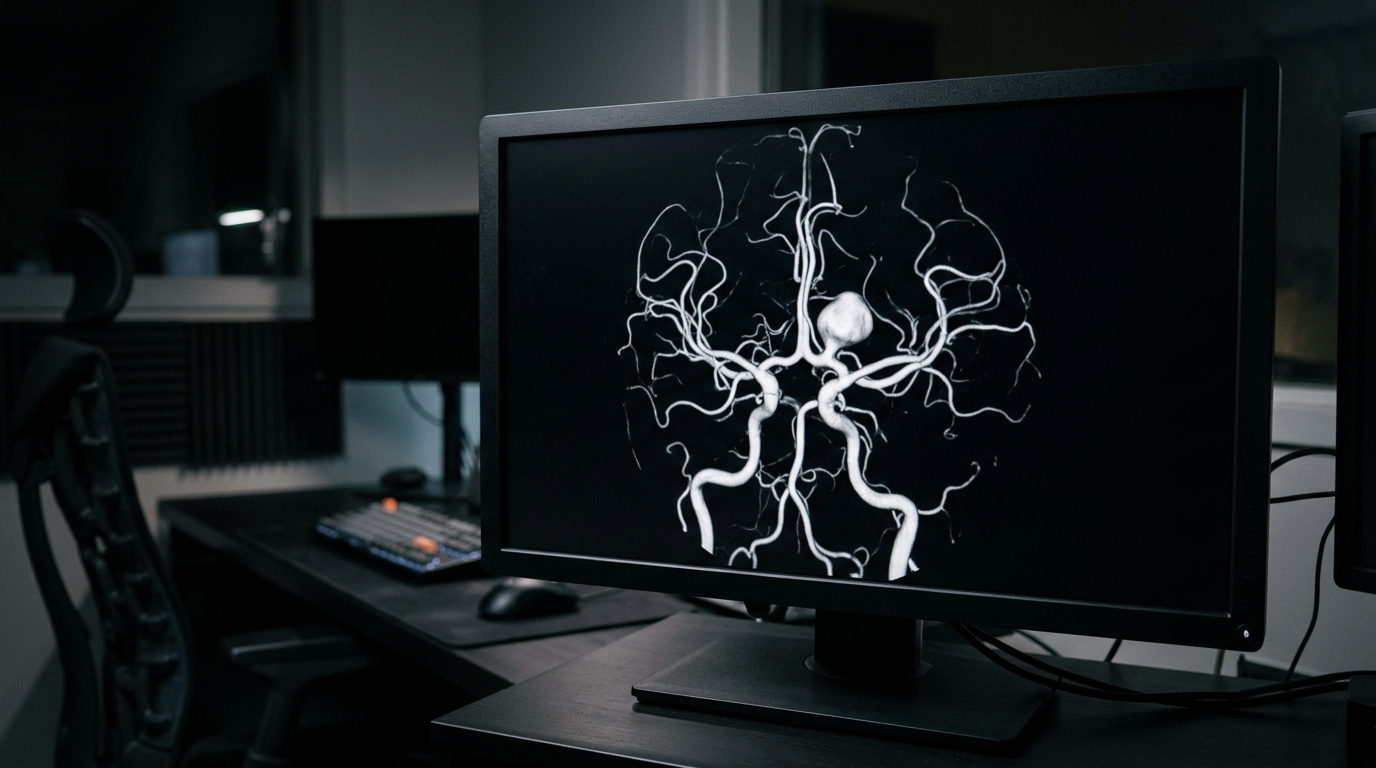
A gradient boosting machine learning model incorporating the systemic immune-inflammation index demonstrated superior predictive efficacy for identifying intracranial aneurysm rupture, according to a retrospective development and validation study published in Frontiers in Neurology. Developed by a research team at The First Affiliated Hospital of Bengbu Medical College in Handan, China, the computational framework was designed to address the persistent clinical challenge of early detection in patients presenting with intracranial aneurysms.
The retrospective investigation enrolled a total of 311 patients diagnosed with intracranial aneurysms to construct and evaluate the predictive models. Within this patient cohort, 194 individuals were diagnosed with unruptured aneurysms, while the remaining 117 individuals presented with confirmed ruptured intracranial aneurysms. The primary objective of the clinical research was to develop and validate machine learning architectures that utilize the systemic immune-inflammation index alongside other clinical variables to assess rupture status.
To select the most informative predictive parameters from the clinical data, the researchers implemented a comprehensive three-tiered feature selection framework. This systematic analytical pipeline began with univariate statistical analysis, followed by the application of the Boruta algorithm and least absolute shrinkage and selection operator (LASSO) regression. Through this multi-stage filtering process, the team isolated significant clinical and laboratory features while minimizing redundancy across the available patient measurements.
The initial univariate analysis revealed that several specific laboratory indicators and anatomical characteristics differed significantly between patients with ruptured and unruptured aneurysms at a significance threshold of P < 0.05. These identified predictor variables included the systemic immune-inflammation index (SII), blood glucose (GLU), fibrinogen (FIB), creatinine (Cr), and uric acid (UA), along with the specific anatomical location of the intracranial aneurysm.
The authors trained and evaluated four supervised machine learning algorithms: Logistic Regression (LR), Random Forest (RF), Support Vector Machine (SVC), and a gradient boosting machine (GBM). For model development, the researchers allocated 70 percent of the patient cohort to the training dataset, while reserving the remaining 30 percent of the data to validate model generalizability. Model performance was comprehensively evaluated across the cohorts using the area under the receiver operating characteristic curve, classification accuracy, sensitivity, and specificity.
Among the four tested machine learning algorithms, the gradient boosting machine exhibited optimal predictive performance, achieving an area under the curve of 0.983 with a 95 percent confidence interval spanning from 0.959 to 0.999. In comparison, the Random Forest model demonstrated the next highest discrimination with an area under the curve of 0.967, followed by Logistic Regression at 0.947, and the Support Vector Machine algorithm, which yielded an area under the curve of 0.939.
To evaluate model interpretability and explain the contributions of individual variables to rupture prediction, the investigators conducted SHapley Additive exPlanations (SHAP) analysis. This interpretability framework established that the systemic immune-inflammation index served as the single most important predictor within the model, exhibiting a non-linear positive correlation with rupture risk. Based on these findings, the authors concluded that the gradient boosting machine provides superior predictive capability and that the systemic immune-inflammation index functions as a significant inflammatory biomarker for clinical risk assessment.
Subject of Research: Machine learning prediction of intracranial aneurysm rupture using inflammatory biomarkers
Article Title: Machine learning model predicting intracranial aneurysm rupture based on systemic immune-inflammation index: a retrospective development and validation study
Article References: Zhang, T., Lv, Y., Han, G., Li, L., Xu, D., Tang, H., Jiang, Z., & Li, J. (2026). Machine learning model predicting intracranial aneurysm rupture based on systemic immune-inflammation index: a retrospective development and validation study. Frontiers in Neurology, 17, Article 1922756. https://doi.org/10.3389/fneur.2026.1922756
Image Credits: AI Generated
DOI: 10.3389/fneur.2026.1922756
Keywords: intracranial aneurysm, aneurysm rupture, systemic immune-inflammation index, gradient boosting machine, machine learning, SHAP analysis, random forest, support vector machine, logistic regression, Boruta algorithm, LASSO regression, inflammatory biomarkers, fibrinogen, creatinine, uric acid, aneurysm location
News Source: Ophelia Keating. (November 26, 2026). Gradient Boosting Model Accurately Predicts Intracranial Aneurysm Rupture Using Inflammatory Index. Scienmag.