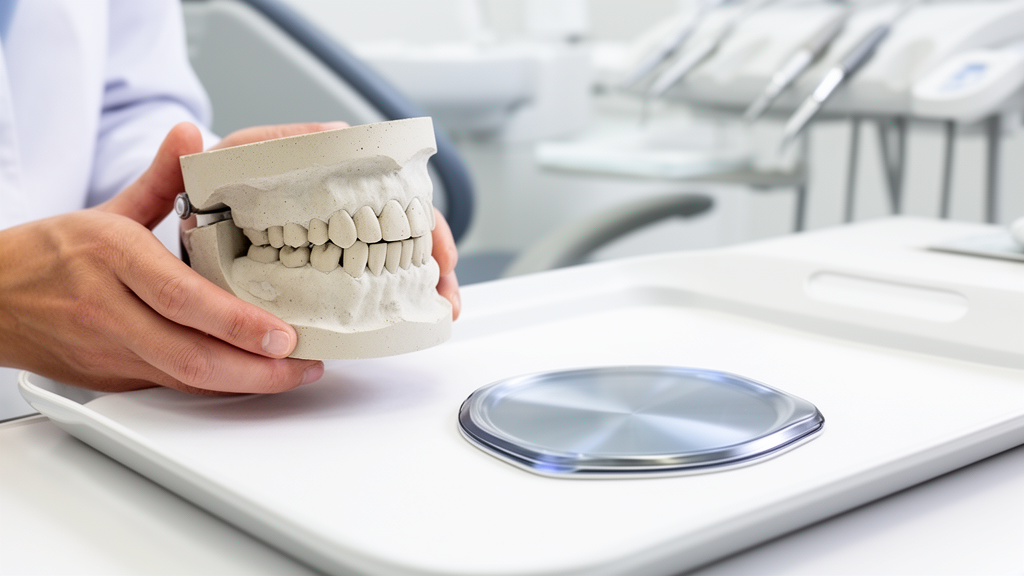
A comprehensive umbrella review evaluating computerized occlusal analysis technologies in clinical dentistry has found that digital bite systems do not provide sufficient evidence to justify replacing conventional diagnostic methods. Occlusal analysis, which examines the static and dynamic contact relationships between maxillary and mandibular teeth, underpins masticatory function, oral comfort, and the structural longevity of natural and restored dentitions. While computerized devices such as sensor-based arrays, intraoral scanners, and jaw-tracking tools are widely promoted as objective and quantitative alternatives to traditional indicators, an overview synthesizing twenty-three systematic reviews reveals that the existing scientific literature remains overwhelmingly narrative, methodologically weak, and inconsistent in its findings. The authors concluded that current review-level evidence fails to prove that digital technologies improve clinical outcomes or chair-side efficiency.
For decades, chair-side assessment of occlusal contacts has relied almost exclusively on qualitative indicators, including articulating paper, silk, foil, shim-stock, and occlusal indicator wax. Although these materials are familiar, inexpensive, and quick to apply during routine clinical appointments, they record little more than the spatial location of a contact. Furthermore, research demonstrates that the size and color intensity of an articulating paper mark correlate poorly with the actual magnitude of occlusal force, leaving interpretation subjective and dependent on clinician experience. To provide quantitative occlusal evaluations, various computerized technologies have been introduced over the past thirty years. These systems include sensor-based devices such as T-Scan, OccluSense, and Accura, which capture contact location, relative force, and timing in real time. Other index technologies comprise post-bite pressure-sensitive films like Dental Prescale, intraoral scanner systems that model maxillomandibular relationships through virtual articulation software, and jaw-tracking devices recording mandibular movement through optical, electronic, electromagnetic, or ultrasonic principles.
To synthesize the fragmented evidence scattered across various dental disciplines, researchers conducted an overview following Joanna Briggs Institute methodology for umbrella reviews, reporting their process using the Preferred Reporting Items for Overviews of Reviews statement and completing the PRISMA 2020 checklist. The review protocol was registered in the PROSPERO database under registration number CRD420261468028. The authors established predefined eligibility criteria according to PICOS, focusing on systematic reviews evaluating children or adults undergoing occlusal assessment or dental treatment across natural dentition, restorative care, prosthodontics, implantology, orthodontics, or temporomandibular joint evaluation. The search queried six databases from inception to August 2, 2026, without language restriction: PubMed/MEDLINE, Epistemonikos, Lens.org, LILACS, SciELO, and the Cochrane Database of Systematic Reviews. Additional procedures specified in the protocol included forward and backward citation searching, hand-searching of key digital dentistry journals, and checking trial registries. A supplementary search executed at peer review identified reviews of jaw-motion tracking that omitted occlusion-specific terminology.
The screening workflow began with 269 database records, from which 53 duplicates and 30 records misclassified by Epistemonikos as systematic reviews were eliminated, leaving 186 unique publications for screening. Title and abstract screening excluded 165 records focused on non-systematic reports, appliance manufacturing, restorative dental materials, or unrelated medical topics. One report was excluded after full-text evaluation because it lacked defined eligibility criteria, selection methods, or study appraisal. Together with reviews uncovered through peer review and supplementary jaw-tracking searches, twenty-three systematic reviews published between 2012 and 2026 were ultimately included in the synthesis. These reviews examined 432 unique primary studies comprising 347 clinical studies, 61 in vitro studies, and 24 unclassified investigations, with only two reviews conducting formal quantitative meta-analyses.
To determine primary study duplication across reviews, researchers calculated the corrected covered area using a citation matrix. Across all twenty-three reviews containing 501 study occurrences and 432 unique primary studies, the overall corrected covered area was 0.7 percent, representing slight overlap. This low overlap reflects the broad scope of the corpus, whose diverse clinical domains draw from separate literatures. However, when analyzed by technology clusters defined after data extraction, overlap was noticeably higher. In the sensor-based and occlusal-force cluster spanning nine reviews, the overlap was 1.5 percent, but an implant-supported prosthesis sub-cluster of three reviews exhibited moderate overlap at 7.9 percent. The virtual articulation and intraoral scanner cluster comprising ten reviews showed slight overlap at 3.1 percent, sharing 31 studies. In the jaw-tracking cluster of seven reviews, overall overlap was 0.9 percent, but a condylar-guidance pair evaluating articulator programming shared nine primary studies, representing a high pairwise overlap of 12.9 percent.
Methodological quality of included reviews was evaluated using AMSTAR-2 and ROBIS instruments. Under AMSTAR-2 criteria, all twenty-three reviews were rated as critically low confidence. This uniform rating was driven by two widespread critical flaws: only one review provided a list of excluded studies with justifications, and no review systematically assessed publication bias or small-study effects. In a sensitivity analysis applying the standard AMSTAR-2 rule that treats publication bias as not applicable to reviews without meta-analyses, nine reviews rose to low confidence, while fourteen remained critically low. The ROBIS tool provided greater discrimination among the reviews, classifying five reviews at low risk of bias, eight at unclear risk, and ten at high risk of bias. High risk of bias frequently stemmed from restricted database searches, unverified search strategies, absence of formal primary study appraisal, or authors declaring favorable conclusions in favor of digital devices without having evaluated a comparative control group.
Regarding measurement accuracy and validity, sixteen systematic reviews reached conclusions against a defined conventional indicator or reference standard. Six reviews reported favorable findings, nine reported mixed results, and one review reached an unfavourable verdict. Reviews of sensor-based devices like T-Scan reported that digital systems offered greater objectivity than articulating paper in recording contact locations. Conversely, a systematic review synthesizing 39 primary studies concluded that digital systems reliably detect contact locations but possess limited validity for measuring occlusal contact intensity and contact area, recommending that they serve only as adjuncts to traditional assessments. For virtual articulation and intraoral scanner records, reviews noted acceptable fidelity for static records but identified diminished accuracy during eccentric mandibular excursions. In jaw-tracking reviews, findings were similarly mixed: one review found computerized jaw analysis more accurate than wax protrusive records for articulator programming, whereas another determined that clinical axiographic and ultrasonic devices exhibited lower accuracy than laboratory optoelectronic systems.
Reliability and reproducibility outcomes across the included reviews displayed notable inconsistency, with twelve reviews addressing these measurement properties within defined comparisons. Four reviews reported favorable results, eight reached mixed verdicts, and ten did not address reproducibility. Several reviews highlighted substantial technical limitations, demonstrating that measurement reproducibility was operator-dependent, varied across clinical environments, and was compromised in posterior arches for intraoral scanners. One sensor review noted that acceptable inter-examiner consistency occurred only when examiners received prior training, while another documented poor data reproducibility among device shortcomings. Diagnostic performance was evaluated in only one systematic review, which examined whether computerized jaw tracking could accurately identify temporomandibular joint internal derangement. Comparing electronic axiography and kinesiography recordings against magnetic resonance imaging reference standards, that review found poor diagnostic agreement between tracking recordings and imaging, leading the authors to conclude that available scientific evidence does not justify using jaw-motion tracking as a diagnostic instrument for joint disorders.
Evidence regarding clinical therapy outcomes and chair-side efficiency was remarkably sparse across the included reviews. In the clinical outcomes domain, only one review directly compared device-guided treatment with conventional techniques: that review observed improved masticatory efficiency and patient satisfaction when removable prostheses were adjusted using T-Scan rather than articulating paper, though this finding was derived from only four small studies. Other reviews reporting clinical improvements, such as decreased disclusion time or reduced muscle pain after T-Scan equilibration, evaluated studies that lacked conventional comparator groups. Similarly, studies noting changes in occlusal force or bite efficiency following implant placement or splint therapy used digital devices simply as measurement tools rather than evaluating device efficacy. Chair-side efficiency was virtually unmeasured. Only two reviews examined procedural duration: one recorded favorable efficiency in only five of seventeen primary studies, while another reported conflicting trials showing fewer adjustments in one trial but no difference in time or volume in another.
In their discussion, the authors emphasized that the literature on computerized occlusal analysis exhibits the characteristic patterns of an early-stage technological field, where commercial adoption and optimistic claims have outpaced rigorous evaluative methodology. Current review-level findings do not support replacing standard occlusal indicators with digital devices, nor do they demonstrate that computerized bite registration improves patient health outcomes. The authors cautioned that this absence of high-quality comparative evidence applies with particular importance to irreversible procedures like computerized occlusal equilibration, especially given that the relationship between dental occlusion and temporomandibular disorders remains clinically controversial. For clinical researchers, the authors outlined clear methodological priorities: future systematic reviews must pre-register protocols, publish excluded-study lists, and systematically assess publication bias. Moreover, primary research should shift from descriptive bench testing toward well-controlled clinical trials assessing patient-centered outcomes, treatment longevity, and objective workflow timing, while transparently reporting primary study funding and commercial device manufacturer involvement.
Subject of Research: Umbrella review of computerized occlusal analysis technologies in clinical dentistry
Article Title: Computerized occlusal analysis technologies (T-scan and digital systems) in clinical dentistry: An umbrella review of systematic reviews
Article References: Bharali, K., Hazarika, K., & Deuri, N. (2027). Computerized occlusal analysis technologies (T-scan and digital systems) in clinical dentistry: An umbrella review of systematic reviews. Digital Dentistry Journal, 5(1), Article 100132. https://doi.org/10.1016/j.ddj.2026.100132
Image Credits: AI Generated
DOI: 10.1016/j.ddj.2026.100132
Keywords: occlusal analysis, T-Scan, digital dentistry, intraoral scanners, virtual articulation, jaw-motion tracking, articulating paper, AMSTAR-2, ROBIS, bite force, occlusal equilibration, temporomandibular disorders, prosthodontics, OccluSense, axiography, kinesiography, Dental Prescale, umbrella review
News Source: Ophelia Keating. (November 26, 2026). Review Finds Digital Bite Analysis Technologies Cannot Yet Replace Conventional Dental Methods. Scienmag.