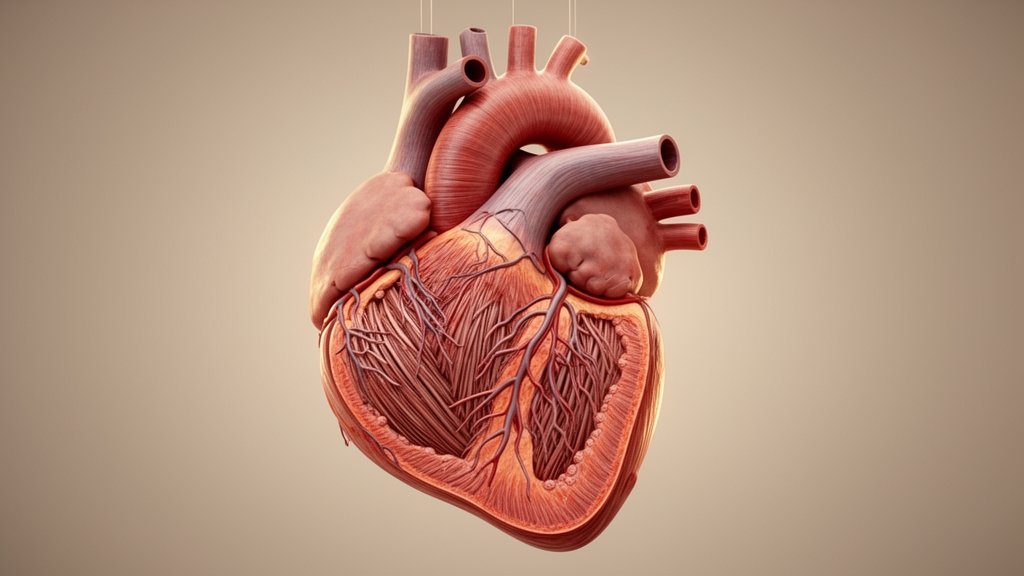
In preclinical models of viral myocarditis, declines in cardiac function measured by echocardiography reflect systemic inflammatory responses rather than purely localized myocardial damage, according to a murine investigation published in Basic Research in Cardiology. Researchers investigating coxsackievirus B3 infection engineered a cardiomyocyte-detargeted viral variant to selectively abrogate viral replication within cardiac tissue while allowing systemic infection to proceed unabated. By decoupling local myocardial infection from systemic disease, the research team demonstrated that profound reductions in cardiac output develop rapidly during acute infection even when cardiomyocyte injury, troponin T release, and histological inflammatory infiltrates in the heart are entirely absent. These findings reveal that standard non-invasive functional readouts constitute a composite phenotype, cautioning against the common experimental assumption that reduced pump performance directly mirrors the severity of histological myocarditis.
Murine coxsackievirus B3 infection serves as the most widely used experimental system for analyzing viral myocarditis and post-viral inflammatory heart disease, but the multiphasic course of the disease involves widespread extra-cardiac pathology that complicates functional assessments. Intraperitoneal inoculation of the virus routinely induces fulminant exocrine pancreatitis and acute hepatitis alongside systemic cytokine cascades during the acute phase around day three post-infection, preceding peak immune cell infiltration in the myocardium at days seven and eight. In typical experimental settings, investigators rely on transthoracic echocardiography as a primary non-invasive functional readout, adhering to animal welfare principles while monitoring cardiac performance over time. Because systemic infection and cardiac viral replication occur concurrently in wild-type infections, previous studies could not isolate whether depressed hemodynamic measures stemmed directly from local cardiomyocyte damage or secondary systemic vascular alterations.
To experimentally disentangle myocardial and systemic drivers of cardiac dysfunction, the investigators employed microRNA-guided viral detargeting, an approach that exploits endogenous, tissue-specific microRNAs to selectively repress viral replication. Public expression atlases and initial quantitative profiling identified microRNA-1 and microRNA-208 as candidate regulatory molecules due to their enriched expression in striated muscle tissue. In uninfected and infected mice, microRNA-1 exhibited robust, sustained expression in cardiac and skeletal muscle with negligible presence in the liver, pancreas, or control cell cultures. MicroRNA-208 displayed cardiac specificity but lower overall abundance and heterogeneous regulation following infection. The researchers engineered recombinant viral genomes containing three tandem target sites for microRNA-1 or microRNA-208 inserted into the 3 prime untranslated region of the coxsackievirus B3 genome, alongside a control virus carrying target sites for the non-mammalian Caenorhabditis elegans microRNA-39.
Initial cell culture evaluations in HeLa cells, which lack endogenous microRNA-1 and microRNA-208 expression, demonstrated that the microRNA-208-targeted variant suffered from an intrinsic replication defect, producing smaller plaques and substantially lower viral yields. In contrast, the microRNA-1-detargeted construct, designated CVB3-1, exhibited cytopathic effects, viral genome replication, and viral capsid protein VP1 synthesis indistinguishable from the control virus CVB3-39. When tested in primary embryonic cardiomyocytes expressing endogenous microRNA-1, CVB3-1 displayed robust attenuation, yielding significant reductions in infectious titers, viral RNA levels, and VP1 protein expression by eight hours post-infection that deepened further at twenty-four hours. Having verified that microRNA-1 targeting selectively restricted viral replication in cardiomyocytes without impairing general viral fitness in non-target environments, the researchers advanced CVB3-1 into controlled animal experiments alongside the CVB3-39 control strain.
Six- to seven-week-old male C57BL/6J mice were inoculated intraperitoneally with one hundred thousand plaque-forming units of either the detargeted CVB3-1 virus or the control CVB3-39 virus, with evaluations conducted during the acute phase at day three and the subacute phase at day seven. In the myocardium, microRNA-1 detargeting achieved striking suppression of viral replication. Plaque assays showed an approximate three-log reduction in infectious myocardial titers in CVB3-1-infected mice at day three relative to controls, which widened to an approximate six- to seven-log reduction at day seven, with viral loads approaching the limit of detection. Quantitative reverse transcription polymerase chain reaction confirmed parallel drops in cardiac viral genome copy numbers. In skeletal muscle tissues including the gastrocnemius and quadriceps femoris, viral titers were markedly lower than in the heart, showing modest differences between strains only at day seven and confirming that the detargeting strategy exerted its primary suppressive impact on sustained cardiac replication.
Critically, the suppression of viral replication in the myocardium did not alter systemic viral replication hubs or overall disease severity. The exocrine pancreas represents the obligatory primary replication site following intraperitoneal inoculation, where virus amplifies before establishing viremia and seeding distant organs. Pancreatic viral titers at day three were virtually identical between CVB3-1 and CVB3-39 cohorts, and histological examination demonstrated complete destruction of acinar tissue accompanied by dense leukocyte infiltration and marked surges in serum lipase activity in both groups. By day seven, pancreatic viral loads declined alongside the loss of permissive acinar cells. Both viral cohorts exhibited equivalent clinical morbidity, showing identical survival rates, progressive body weight loss across seven days, and indistinguishable changes in liver mass, adipose tissue depletion, and skeletal muscle mass trajectories.
Hepatic pathology and circulating cytokine cascades similarly confirmed that systemic immune activation proceeded identically irrespective of cardiac detargeting. High viral titers and viral RNA loads were detected in liver tissue at day three in both cohorts, declining by day seven. Histological scoring revealed severe multifocal acute hepatitis and hepatocellular necrosis at day three that largely resolved by day seven in both groups. Parallel elevations in serum aspartate aminotransferase, alanine aminotransferase, and lactate dehydrogenase accompanied transient declines in serum albumin. Hepatic immune cell profiling by flow cytometry demonstrated marked infiltration of inflammatory Ly6C-high monocytes and monocyte-derived macrophages, while liver transcriptional assays revealed robust induction of interferon-beta, the interferon-stimulated gene Ifit3, and proinflammatory mediators including interleukin-1-beta, tumor necrosis factor-alpha, CCL2, and CXCL10. Multiplex serum analysis confirmed transient systemic spikes in circulating interferons, cytokines, and chemokines peaking at day three in both infected groups.
Despite this massive systemic disease, microRNA-1 detargeting completely abolished histological myocarditis and cardiomyocyte injury. Control mice infected with CVB3-39 exhibited marked elevations in serum high-sensitivity troponin T at day three that persisted through day seven, indicating sustained cardiomyocyte membrane disruption and necrosis. In contrast, CVB3-1-infected mice maintained troponin T concentrations at baseline levels throughout the experimental timeline. Histological evaluation of cardiac tissue stained with hematoxylin and eosin showed extensive immune cell infiltration, myocyte necrosis, and diffuse architectural disruption at day seven in control hearts, whereas hearts from CVB3-1-infected mice exhibited completely preserved myocardial tissue architecture without inflammatory foci or necrotic lesions. Flow cytometry confirmed a massive accumulation of infiltrating CD45-positive leukocytes, myeloid cells, Ly6C-high monocytes, and neutrophils in control hearts at day seven, whereas cardiac immune cell counts in CVB3-1 mice remained at uninfected baseline levels.
Serial transthoracic echocardiography conducted under continuous physiological monitoring revealed that substantial cardiac dysfunction developed despite the complete absence of cardiac necrosis and inflammation. At day three post-infection, CVB3-1-infected mice exhibited significant reductions in cardiac output and stroke volume compared with their pre-infection baselines. Left ventricular end-diastolic volume and end-diastolic internal diameter were markedly decreased, while left ventricular ejection fraction remained entirely preserved. Transmitral pulsed-wave Doppler confirmed compromised ventricular filling, showing reduced early mitral inflow velocities. Because left ventricular end-diastolic volume did not differ between CVB3-1 and CVB3-39 mice at day three, the initial reduction in ventricular filling was driven by systemic infection and altered hemodynamic loading conditions rather than local myocardial viral proliferation.
While systemic infection accounted for a baseline deficit in filling and output, comparisons between the two viral strains identified a distinct, additional functional impairment attributable to early viral activity in the heart. At day three, mice infected with the control CVB3-39 virus exhibited an even greater reduction in cardiac output than CVB3-1-infected animals despite having comparable ventricular end-diastolic volumes. Speckle-tracking analysis revealed that global longitudinal strain was preserved in CVB3-1 mice at day three but significantly reduced in control mice, pointing to acute contractile impairment linked to early cardiomyocyte viral infection and troponin release prior to immune cell influx. By day seven, cardiac output remained similarly depressed in both groups, and global longitudinal strain had declined across both cohorts without significant differences between strains, demonstrating that deformation parameters lose discriminatory specificity during the subacute phase.
The study authors noted that the early drop in ventricular end-diastolic volume and cardiac output in CVB3-1 mice aligns mechanistically with altered vascular regulation during acute systemic inflammation. Proinflammatory cytokines such as tumor necrosis factor-alpha and interleukin-1-beta, which were elevated in serum in both cohorts, can stimulate inducible nitric oxide synthase, leading to systemic vasodilation, altered venous capacitance, and reduced cardiac preload. However, because invasive conductance catheterization and direct vascular resistance measurements were not performed due to animal welfare and feasibility considerations, specific hemodynamic loading alterations could not be directly quantified. Furthermore, the findings indicate that ejection fraction is an insensitive metric in this setting, as normal systolic emptying percentages coexisted with severe underfilling and reduced systemic flow.
In summary, the investigation demonstrates that echocardiographic abnormalities in experimental murine viral myocarditis represent a composite phenotype reflecting both systemic circulatory disturbance and direct cardiac involvement. The findings emphasize that decreased cardiac output in preclinical infection models cannot be assumed to scale proportionally with the extent of myocardial inflammation or tissue destruction. The authors conclude that accurate phenotyping in experimental myocarditis requires integrating non-invasive imaging with longitudinal virological assays, detailed histopathology, flow cytometry, and multi-organ immunological profiling to avoid misattributing systemic infectious sequelae entirely to local heart disease.
Subject of Research: Preclinical investigation of systemic versus myocardial mechanisms driving cardiac dysfunction in viral myocarditis
Article Title: Dissecting myocardial and systemic drivers of cardiac dysfunction in the murine CVB3 myocarditis model using microRNA-guided viral detargeting
Article References: Ochs, S., Pinkert, S., Borowski, S., Huis in ’t Veld, L. G. M., Kelm, N., Geisler, A., Fechner, H., Kaya, Z., Hausen, A., Klingel, K., Gaida, M. M., & Beling, A. (2026). Dissecting myocardial and systemic drivers of cardiac dysfunction in the murine CVB3 myocarditis model using microRNA-guided viral detargeting. Basic Research in Cardiology, 121(4), 775-799. https://doi.org/10.1007/s00395-026-01187-4
Image Credits: AI Generated
DOI: 10.1007/s00395-026-01187-4
Keywords: Coxsackievirus B3, Viral Myocarditis, MicroRNA-Guided Detargeting, miR-1, Cardiac Output, Left Ventricular End-Diastolic Volume, Echocardiography, Troponin T, Systemic Inflammation, Pancreatitis, Acute Hepatitis, Global Longitudinal Strain, C57BL/6J Mice, Cardiomyocyte Injury, Type I Interferon, Proinflammatory Cytokines
News Source: Kristina Jarvis. (November 26, 2026). Systemic Infection Drives Cardiac Dysfunction in Mice Even Without Direct Myocarditis. Scienmag.