Researchers in Japan have introduced a conceptual framework for artificial intelligence-generated self-representations termed Self-Mirroring Twins, designed to reframe persuasive technology by establishing adjustable boundaries between self and other for metacognitive behavior change. Developed by Tetsunari Inamura from Tamagawa University, Takato Horii and Minoru Asada from Osaka University, Shingo Shimoda from Nagoya University, and Makoto Kureha from Yamaguchi University, the work was published as a conceptual analysis in Frontiers in Artificial Intelligence within the section on AI for Human Learning and Behavior Change. The authors note that while artificial intelligence-generated self-representations are actively being explored as interactive dialogue partners to encourage reflection, existing approaches leave key operational parameters underspecified. In particular, current systems do not clearly define what attributes should be preserved from a user, what attributes should be transformed, or how large that transformation should be to successfully foster reflection and self-regulation.
To address this lack of specification, the conceptual framework introduces Self-Mirroring Twins, or SeMT, which explicitly assigns complementary psychological roles to preserved and transformed features while treating the overall magnitude of transformation as individually adjustable. According to the authors’ core hypothesis, retaining user-derived features supports judgments of personal applicability, allowing an individual to perceive the twin as directly relevant to their own identity and circumstances. At the same time, introducing interpretable transformations provides essential cognitive material for considering alternative actions and novel behavioral pathways.
Within the proposed interactive dialogue structure, both human users and the Self-Mirroring Twin possess the capacity to offer advice, but the process model specifically focuses on user-generated advice. The authors examine how articulating strategies for an artificial counterpart may actively support a person in applying those same strategies to themselves.
The framework defines a Self-Mirroring Twin through concrete, specified features along with structured opportunities for dialogue and self-application. To ensure rigorous evaluation in human-agent interaction, the conceptual design maintains strict separation between system settings, perceived personal relevance, and later observable behavior.
For individual adjustment, the conceptual account links system calibration to a computational motor-coaching model that selects goal discrepancies. However, the authors explicitly identify translating these selected goal discrepancies into visual display transformations as an ongoing modeling task that remains to be solved.
Although direct human validation of the Self-Mirroring Twins framework is currently pending, the authors outline clear comparative investigations to guide future empirical testing. The framework specifies formal comparisons to determine whether retained user-derived features and selected transformation magnitudes genuinely improve later appropriate strategy use beyond the effects of matched explanation activity. Furthermore, a separate empirical comparison is established to test whether adaptive, ongoing updating provides measurable advantages over individually calibrated fixed settings in behavior change support systems.
Subject of Research: Conceptual analysis of Self-Mirroring Twins for metacognitive behavior change
Article Title: Self-mirroring twins: reframing persuasive technology through adjustable self–other boundaries for metacognitive behavior change
Article References: Inamura, T., Horii, T., Shimoda, S., Kureha, M., & Asada, M. (2026). Self-mirroring twins: reframing persuasive technology through adjustable self–other boundaries for metacognitive behavior change. Frontiers in Artificial Intelligence, 9, Article 1982916. https://doi.org/10.3389/frai.2026.1982916
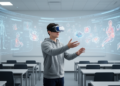
Image Credits: AI Generated
DOI: 10.3389/frai.2026.1982916
Keywords: Self-Mirroring Twins, persuasive technology, metacognitive behavior change, self-other boundaries, AI-generated self-representations, digital twins, human-agent interaction, metacognition, behavior change support systems, user-generated advice, motor-coaching model, goal discrepancies, display transformations, conceptual analysis, self-regulation, personal applicability, adaptive updating
News Source: Denise Maddox. (November 26, 2026). Conceptual Framework Proposes Self-Mirroring Twins with Adjustable Boundaries for Behavior Change. Scienmag.