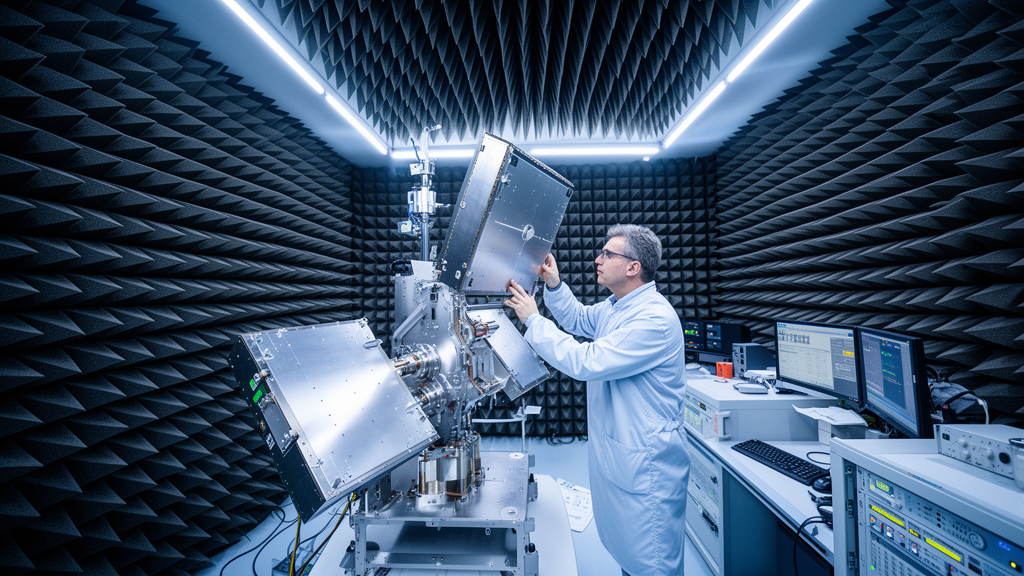
A comprehensive review by researchers at Tsinghua University systematically details how artificial intelligence is transforming radar signal processing across the entire sensing pipeline. Published in the Chinese Journal of Aeronautics, the study led by Professor Yu Liu examines the transition of active electromagnetic sensing from conventional statistical models and handcrafted feature engineering toward data-driven architectures and collaborative hardware-software optimization. Radar operates continuously day and night under adverse weather conditions, supplying vital observations regarding target positions, environmental parameters, and motion dynamics. However, modern operational environments increasingly present dynamic and intricate scenarios where legacy analytical techniques encounter severe operational limitations, driving the development of machine learning solutions spanning waveform design, target detection, classification, tracking, interference mitigation, imaging, and physical hardware implementation.
In traditional radar architectures, processing schemes rely heavily on idealized mathematical representations and manually crafted attributes that struggle when environmental conditions fluctuate rapidly. To overcome these constraints, the comprehensive review documents how contemporary machine learning frameworks optimize the initial stages of the radar signal chain. Specifically, artificial intelligence supports multi-objective optimization in radar waveform design while accommodating physical hardware limitations. This capability enables modern radar systems to dynamically adapt their transmitted waveforms according to evolving environmental conditions.
Downstream detection and target recognition have similarly evolved through modern deep learning architectures capable of extracting complex patterns directly from multidimensional measurements. For target detection, artificial intelligence models including convolutional neural networks, Transformers, and graph neural networks extract discriminative representations from raw signal streams, frequency-domain data, time-frequency distributions, and multi-domain fusion inputs. In target recognition tasks, these computational models demonstrate advanced capabilities in characterizing high-resolution range profiles, synthetic aperture radar imagery, polarization states, and time-frequency signatures. By learning representative features across diverse signal domains, deep learning methods improve the separation of targets from ambient noise without requiring manual parameter adjustments.
Target tracking and interference mitigation represent additional operational stages where learning-based methodologies deliver measurable processing enhancements over classical analytical approaches. The review outlines how learning algorithms enhance target trajectory prediction, measurement data association, and multi-source information fusion, particularly when objects undergo complex maneuvers or when observation sensors suffer from missing measurements. Concurrently, clutter suppression and anti-jamming capabilities benefit from adaptive machine learning mechanisms that identify and counter diverse electronic jamming threats. By modeling complex environmental clutter structures, these algorithms significantly improve the contrast between targets and ambient backgrounds, allowing radar receivers to maintain situational awareness in contested or heavily cluttered electromagnetic environments.
For radar imaging, the research team highlights a shift toward hybrid model-data-driven methodologies that integrate established physical priors with empirical data-driven learning. Rather than relying entirely on black-box artificial intelligence or purely analytical imaging equations, hybrid frameworks combine electromagnetic wave propagation theory and detection principles with deep neural network architectures. This integration enhances spatial resolution and structural robustness under non-ideal imaging conditions while preserving fundamental physical interpretability. Furthermore, physical deployment requires intelligent hardware implementations that effectively balance processing accuracy, algorithmic latency, total power consumption, and production cost across heterogeneous platforms, including graphics processing units, field-programmable gate arrays, application-specific integrated circuits, and digital signal processors.
Beyond optimizing discrete algorithmic stages, artificial intelligence is expanding the functional boundaries and mission profiles of active electromagnetic sensing systems. The review highlights growing utility in marine surveillance, intelligent transportation infrastructure, non-invasive healthcare monitoring, and integrated sensing and communication architectures. These multifaceted operational environments require next-generation radar systems to extract rich cross-domain information, fuse multimodal observational streams, and execute autonomous, adaptive operational decisions in real time. As radar systems take on broader responsibilities alongside communication networks and biomedical monitors, intelligent processing enables robust signal interpretation across complex physical domains.
Despite significant technical advancements, the authors emphasize that substantial operational challenges must be resolved before artificial intelligence can achieve reliable, large-scale deployment in critical radar systems. Real-world radar training datasets are frequently constrained in scale, imbalanced across operational categories, corrupted by noise, and exceptionally labor-intensive to annotate. Furthermore, models optimized within specific operational parameters often exhibit poor generalizability when deployed across differing hardware platforms, operating frequency bands, sea states, terrain geometries, or unfamiliar target postures. In addition, many deep neural network topologies demand substantial computational throughput, hindering direct implementation on resource-constrained embedded radar processors, while the uninterpretable black-box nature of deep networks continues to raise valid reliability concerns in high-consequence aerospace applications.
To address these technical bottlenecks, the review identifies several vital research priorities shaping the future trajectory of intelligent radar systems. Developing lightweight machine learning frameworks through model pruning, parameter quantization, knowledge distillation, low-rank adaptation, and hardware-friendly architecture design remains essential for achieving real-time operational execution on embedded hardware. In parallel, physics-guided deep learning frameworks will continue merging electromagnetic theory, target motion models, and physical sensing principles with flexible data-driven training. The integration of pre-trained large foundation models and multimodal sensing frameworks is anticipated to further elevate scene comprehension. Ultimately, the synthesis of cognitive radar principles and distributed intelligent radar networks will guide the discipline toward elevated operational autonomy, collaborative processing, and real-time environmental adaptability.
Subject of Research: Artificial intelligence applications and challenges in radar signal processing
Article Title: AI-facilitated radar signal processing: A comprehensive review
Article References: AI-facilitated radar signal processing: A comprehensive review. Original publication (Bibliographic details unavailable.)
Image Credits: AI Generated
DOI: Not provided
Keywords: radar signal processing, artificial intelligence, waveform design, target detection, target recognition, target tracking, clutter suppression, anti-jamming, radar imaging, physics-guided deep learning, heterogeneous hardware, cognitive radar, distributed radar networks, synthetic aperture radar, high-resolution range profile, integrated sensing and communication, Chinese Journal of Aeronautics, lightweight AI models
News Source: Blake Davidson. (November 26, 2026). Review Details How Artificial Intelligence Transforms Radar Signal Processing. Scienmag.