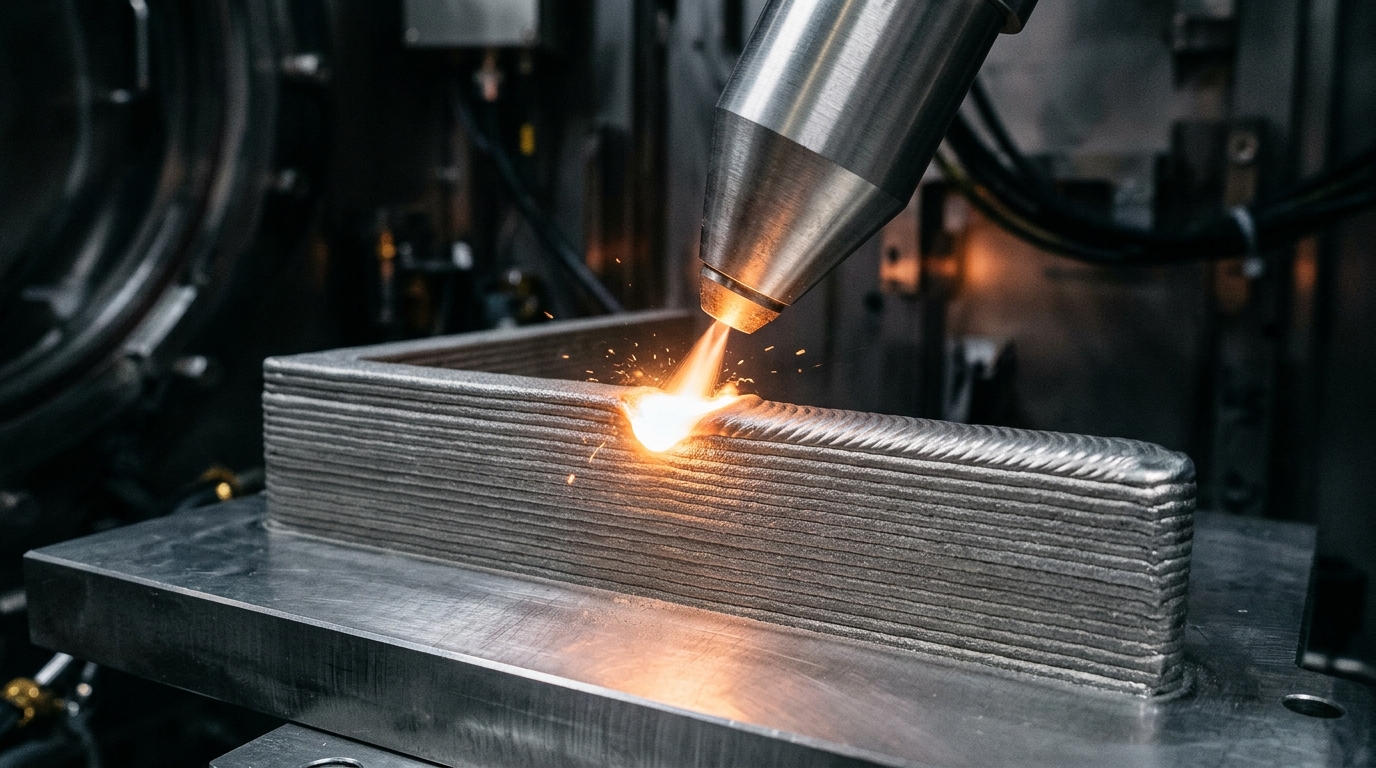
Researchers have demonstrated a machine learning and deep learning framework integrated with the NSGA-II optimization algorithm to predict and optimize deposition geometries in micro-plasma metal additive manufacturing. Across experimental evaluations, the integrated approach achieved an absolute difference between desired and predicted deposition height and width of less than ±0.1 millimeters for single-layer depositions and less than ±0.2 millimeters for each layer of multi-layer builds.
Achieving consistent deposition geometry in micro-plasma metal additive manufacturing, or µ-PMAM, presents major technical challenges due to complicated interactions among process parameters and the physical dynamics of deposition layers. To capture these behaviors, the investigators deployed a high dynamic range camera to record real-time videos of deposition processes across different combinations of µ-PMAM operational parameters.
The study examined two metal alloy systems across distinct manufacturing arrangements. Single-layer depositions were produced using Ti6Al4V titanium alloy, while both single-layer and multi-layer depositions were fabricated using SS 316L stainless steel to study single- and multi-layer geometric characteristics under varied conditions.
Datasets were generated directly from the real-time high dynamic range video feeds. The research team extracted still images from each recorded video, annotated the resulting image datasets, and applied feature scaling for single-layer deposition data. For the multi-layer depositions, the authors developed and implemented a newly proposed histogram-based multi-modal technique to process the visual data.
To evaluate predictive capabilities, six machine learning algorithms were trained on the single-layer datasets and three deep learning architectures were trained on the multi-layer datasets. All selected models were trained, tested, and validated using 70 percent, 20 percent, and 10 percent of the generated data, respectively, and were evaluated using mean absolute error and the coefficient of determination.
Performance assessments identified the random forest algorithm as the top-performing machine learning model for single-layer geometry prediction. For multi-layer depositions, the self-attention temporal convolutional network delivered the best performance among the deep learning models evaluated.
The leading predictive models were integrated with NSGA-II to perform multi-objective optimization. The optimization routine utilized objective functions based on the difference between the desired and algorithm-predicted deposition height, deposition width, and aspect ratio to secure the closest possible match between the planned and predicted geometries.
By maintaining tight geometric tolerances across both single- and multi-layer fabrications, the authors reported that the results highlight the potential of artificial intelligence to provide scalable solutions, enable closed-loop process control, and support digital twinning frameworks in additive manufacturing.
Subject of Research: Machine learning prediction and multi-objective optimization of deposition geometry in micro-plasma metal additive manufacturing
Article Title: Machine learning based geometry predictions for single and multi-layer depositions and their multi-objective optimization using NSGA-II
Article References: Vaishnav, A., Negi, B. S., Jain, N. K., & Nikam, D. (2026). Machine learning based geometry predictions for single and multi-layer depositions and their multi-objective optimization using NSGA-II. Frontiers in Mechanical Engineering, 12, 1976911. https://doi.org/10.3389/fmech.2026.1976911
Image Credits: AI Generated
DOI: 10.3389/fmech.2026.1976911
Keywords: µ-PMAM, micro-plasma metal additive manufacturing, deposition geometry, machine learning, deep learning, NSGA-II, multi-objective optimization, random forest, self-attention temporal convolutional network, Ti6Al4V, SS 316L, high dynamic range camera, real-time video dataset, mean absolute error, coefficient of determination, closed-loop control, digital twinning
News Source: Denise Maddox. (November 25, 2026). Machine Learning and NSGA-II Optimize Deposition Geometry in Additive Manufacturing. Scienmag.