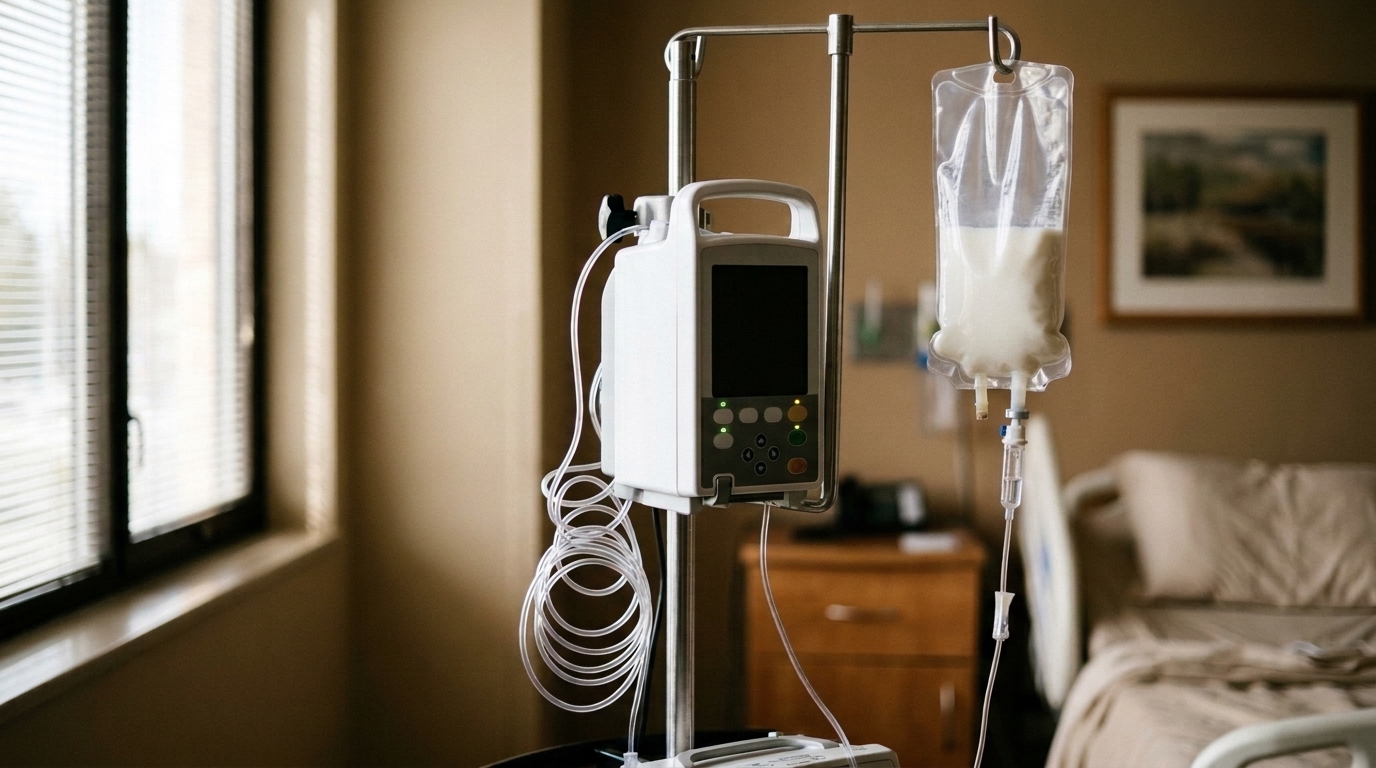
A comprehensive educational framework published in Clinical Nutrition Open Science establishes standardized clinical definitions, multi-tiered classification systems, and structured reporting criteria for intestinal failure in adult patients. Authored by clinical nutrition specialist Loris Pironi, the review synthesizes formal guidelines and position papers from the European Society of Clinical Nutrition and Metabolism alongside international diagnostic coding frameworks. Intestinal failure represents the rarest and least understood form of organ failure, developing when the gastrointestinal tract suffers a critical reduction in functional capacity below the minimal threshold required to absorb macronutrients, water, or electrolytes to maintain health or growth. Because the clinical manifestation necessitates intravenous supplementation as a replacement therapy analogous to haemodialysis in chronic kidney failure, standardizing diagnostic parameters is essential to harmonize care across varying national healthcare organizations and international research registries.
The established diagnostic definition of intestinal failure strictly demands the concurrent presence of two distinct clinical criteria: a proven physiological reduction in gut absorption involving proteins, lipids, carbohydrates, or fluid and electrolytes, and an absolute clinical requirement for intravenous supplementation. The framework notes that impaired gut absorption resulting exclusively in isolated micronutrient deficiencies does not meet the diagnostic threshold for intestinal failure. Furthermore, intravenous supplementation and intestinal failure must not be treated as interchangeable synonyms, because clinical nutrition infusions are occasionally administered to patients with preserved digestive capacity who decline oral or enteral nutrition or present with severe non-failure malnutrition. To maintain diagnostic precision, conditions where impaired absorptive capacity can be successfully stabilized using oral dietary adjustments, enteral tube feeding, or refeeding enteroclysis without intravenous therapy are categorized under the distinct terminology of intestinal insufficiency or intestinal deficiency.
To evaluate patient progression and therapeutic needs across varied clinical settings, the educational consensus establishes a functional classification dividing intestinal failure into three distinct categories based on onset velocity, metabolic stability, and anticipated clinical outcome. Type I acute intestinal failure represents a short-term, generally self-limiting condition that frequently follows major postoperative abdominal surgery or acute critical illness, typically requiring brief ward-based multidisciplinary management over several days. Type II prolonged acute intestinal failure arises in metabolically unstable patients experiencing major intra-abdominal catastrophes, such as open abdomen scenarios, acute enterocutaneous fistulas, or severe systemic sepsis accompanied by multiple organ dysfunction syndrome. This prolonged acute phase demands highly specialized multidisciplinary intensive care and intravenous supplementation over weeks or months, resulting in complete spontaneous functional recovery in approximately forty percent of affected individuals, transition to enteral nutrition in ten percent, and progression to chronic dependency in half of all cases.
Type III chronic intestinal failure develops in metabolically stable patients who require long-term intravenous supplementation administered across months, years, or lifelong durations, typically delivered within home parenteral nutrition programs. The prevalence of chronic intestinal failure resulting from benign medical conditions has been documented to range from five to eighty individuals per million population, with substantial variation driven by national healthcare infrastructures, organizational access, and regional treatment strategies. While Type II prolonged acute cases carry an estimated in-hospital mortality rate between nine and fifteen percent, chronic stable cohorts demonstrate five-year overall survival rates of approximately seventy percent among benign etiologies, contrasted sharply with survival measured in months among advanced, incurable end-stage malignancies.
Beyond functional categorization, the educational consensus articulates a pathophysiological classification detailing the five primary anatomical and mechanical mechanisms that induce gut failure: short bowel syndrome, enterocutaneous fistulas, intestinal dysmotility, mechanical obstruction, and extensive mucosal disease. Short bowel syndrome serves as the predominant etiology of chronic intestinal failure, accounting for approximately sixty percent of adult home parenteral nutrition recipients. In adults, short bowel syndrome is defined as retaining less than two hundred centimeters of residual small bowel in continuity beyond the ligament of Treitz, most frequently occurring after massive surgical resection for mesenteric ischemia, severe Crohn’s disease, abdominal radiation enteritis, postoperative catastrophes, or strangulated internal adhesions. A functional subtype is recognized when residual anatomical length exceeds two hundred centimeters but profound absorptive failure persists due to severe underlying enteropathy, aggressive mucosal disease, or rapid gastrointestinal transit.
Anatomically, short bowel syndrome is classified into three configurations that dictate clinical adaptation and long-term weaning probability: Type 1 ending in an end jejunostomy or ileostomy, Type 2 featuring a jejuno-colonic anastomosis typically joining remnant jejunum to the left colon, and Type 3 preserving a jejuno-ileo-colonic anastomosis with an intact ileocecal valve and continuous colon. The likelihood of successfully achieving nutritional autonomy and weaning off parenteral nutrition increases from twenty percent in end jejunostomy anatomy to fifty percent in jejunocolic junctions and eighty percent in jejuno-ileocolic configurations, provided sufficient healthy small bowel remains intact.
The postoperative timeline in short bowel syndrome follows three successive clinical phases termed the early, rehabilitative, and maintenance periods. The initial postoperative phase encompasses three to four weeks of acute hospitalization marked by prolonged acute intestinal failure, metabolic instability, and intense fluid shifts. This transition leads into the rehabilitative phase, which extends over twelve months in end jejunostomies, twenty-four months in jejunocolic anatomies, and thirty-six months or longer in jejuno-ileocolic junctions. When natural adaptation reaches a plateau, non-transplant reconstructive surgery or intestinotrophic medications like glucagon-like peptide-2 analogues may facilitate further rehabilitation before the patient transitions into the definitive maintenance phase of either stable intestinal insufficiency or lifelong home parenteral nutrition dependence.
The remaining four pathophysiological mechanisms represent distinct clinical challenges requiring targeted multidisciplinary interventions. Enterocutaneous fistulas involve abnormal structural communications between the bowel and the external skin, or entero-atmospheric communications in an open abdomen, accounting for seven percent of adult chronic intestinal failure cases when high-output drainage persists past metabolic stabilization. Intestinal dysmotility accounts for approximately twenty percent of chronic intestinal failure and stems from impaired neuromuscular propulsion without fixed structural luminal blockage. Dysmotility manifests as chronic intestinal pseudo-obstruction with diagnostic radiologic bowel dilation and air-fluid levels, or as enteric dysmotility lacking dilation, both of which severely compromise oral intake through persistent vomiting and pain.
Because clinical medicine lacks a single biochemical marker of intestinal failure severity equivalent to serum creatinine in renal disease or arterial oxygenation in respiratory failure, the paper presents an objective severity scale validated across international multicenter studies. Chronic intestinal failure severity is categorized into eight distinct grades derived from the daily mean volume and compositional type of intravenous supplementation required per week. Infusions are categorized as either fluid and electrolyte admixtures alone or macronutrient-bearing parenteral nutrition formulas, stratified into volume tiers: tier one requiring one thousand milliliters per day or less, tier two spanning one thousand one to two thousand milliliters, tier three spanning two thousand one to three thousand milliliters, and tier four exceeding three thousand milliliters daily. Patients receiving fluids and electrolytes alone exhibit lower complication rates and reduced mortality compared with those requiring caloric parenteral nutrition, while clinical risks of catheter-related bloodstream infections and cholestatic liver disease increase progressively alongside higher parenteral infusion volumes.
The consensus describes four standardized clinical scenarios governing home parenteral nutrition delivery: primary life-saving replacement therapy for chronic intestinal failure of benign origin, supportive treatment for intestinal failure complicating curative cancer therapy, palliative infusion programs to prevent starvation in patients with incurable advanced cancer, and specialized nutritional therapy for patients possessing intact digestive tracts who cannot tolerate or decline oral and enteral routes. Safe and sustainable long-term provision requires a rigorous four-phase implementation pathway incorporating definitive clinical indication with informed patient consent, structural feasibility confirmation within the home environment, technical system implementation, and specialized longitudinal training covering central venous line care, flow regulation, and emergency complication protocols. Standardized minimum reporting templates incorporating underlying disease mechanisms, surgical measurements, infusion volumes, and caloric delivery are recommended to unite international registry platforms and improve multicenter clinical trial quality.
Subject of Research: Diagnostic definitions, multi-tiered classifications, and home parenteral nutrition standards for adult intestinal failure
Article Title: Intestinal failure in adults: Definition, classification and indications to home parenteral nutrition
Article References: Pironi, L. (2026). Intestinal failure in adults: Definition, classification and indications to home parenteral nutrition. Clinical Nutrition Open Science, 70, Article 100733. https://doi.org/10.1016/j.nutos.2026.100733
Image Credits: AI Generated
DOI: 10.1016/j.nutos.2026.100733
Keywords: intestinal failure, chronic intestinal failure, home parenteral nutrition, short bowel syndrome, enterocutaneous fistula, intestinal dysmotility, chronic intestinal pseudo-obstruction, intravenous supplementation, ESPEN guidelines, intestinal adaptation, jejunostomy, catheter-related bloodstream infection, intestinal failure-associated liver disease, parenteral nutrition, ICD-11, malabsorption, gut function
News Source: Ophelia Keating. (November 25, 2026). Clinical Consensus Defines Diagnostic Standards and Care Frameworks for Intestinal Failure. Scienmag.